 blog
blog
Buy Natural Handmade Soap Bars Online: A Complete Guide
Table of Contents
- Why Natural Handmade Soap Bars Stand Out From Commercial Options
- Benefits of Cold Process Soap for Your Skin
- How to Choose Natural Soap for Sensitive Skin
- Organic Vegan Soap Bars: What Makes Them Different
- Key Ingredients to Look For and Avoid
- How to Buy Natural Handmade Soap Bars Online: A Step-by-Step Guide
- Making Your Handmade Soap Last Longer
- Frequently Asked Questions
Last Updated: September 23, 2026
Why Natural Handmade Soap Bars Stand Out From Commercial Options
Natural handmade soap bars differ fundamentally from mass-produced commercial soaps in chemistry and process.
Commercial soaps are often made through hot-process manufacturing, which strips away natural glycerin during production. That glycerin is then sold separately as a premium ingredient, leaving the finished bar harsh and drying. Handmade soaps, particularly those made using cold-process methods, retain the glycerin naturally produced during saponification. This means your skin gets moisturized while you cleanse, not stripped bare.
Artisanally crafted soaps use whole plant-based ingredients like shea butter, coconut oil, and olive oil that deliver therapeutic benefits synthetic fragrances cannot replicate. When you buy natural handmade soap bars online, you're choosing a product made with intention and genuine care for what touches your skin.
Benefits of Cold Process Soap for Your Skin
Cold-processed soap is made by combining oils and lye at low temperatures, then allowing the mixture to cure for 4-6 weeks. This slow process preserves heat-sensitive nutrients and essential oils that would otherwise degrade. The result is a gentler, more effective cleanser.
Cold-process soap creates a denser bar with superior lather and longevity. The extended curing time allows the soap to fully harden, lasting longer in the shower without crumbling or dissolving quickly.
The moisturizing properties of cold-processed bars come from retained glycerin and nourishing oils. Skin that's been damaged by conventional soaps often shows visible improvement within two weeks of switching to a cold-process bar. Dryness diminishes, redness fades, and the skin barrier begins to repair itself.
How to Choose Natural Soap for Sensitive Skin
Choosing natural soap for sensitive skin requires understanding what triggers reactions. Common culprits include synthetic fragrances, essential oils at high concentrations, and plant-derived compounds that don't suit every skin type.
Common Natural Allergens in Handmade Soap
Sensitive skin doesn't discriminate between synthetic and natural irritants. Several plant-based ingredients marketed as gentle can trigger reactions in reactive skin types:
Essential oils are concentrated plant extracts. Lavender, tea tree, eucalyptus, and citrus oils are common allergens that can cause contact dermatitis or photosensitivity even at 2-3% concentration. For fragrance-sensitive skin, unscented bars or those fragmented with hydrosols (water-based plant extracts) are safer.
Coconut oil, while plant-based, has a comedogenic rating of 4 on a scale of 0-5, meaning it can clog pores and trigger breakouts in acne-prone skin. For sensitive, acne-prone skin, look for soaps emphasizing olive oil, jojoba oil, or rice bran oil instead.
Beeswax and lanolin are animal-derived and common allergens. Vegan bars reduce allergen exposure for sensitive skin.
Fragrance compounds, whether essential oil or synthetic, are the leading cause of contact dermatitis. For reactive skin, unscented is safer than any scented option.
Botanicals like calendula, chamomile, and rose hip are soothing for many but can trigger reactions in people with plant allergies or ragweed sensitivity. If you have seasonal allergies, test these carefully.
Reading for Allergen Safety
Identify sensitivities through a patch test: apply lather to your inner arm or behind your ear and wait 24-48 hours. No redness, itching, or burning indicates the soap is likely safe.
When buying natural handmade soap bars online for sensitive skin, prioritize transparency. Quality producers list every ingredient and sourcing. Look for bars explicitly marketed for sensitive skin and check customer reviews from people with similar concerns.
Avoid vague terminology like "fragrance" or "botanical blend." Quality soaps list "essential oil of lavender" specifically. If a producer won't disclose exact ingredients, shop elsewhere.
pH and the Skin Barrier Connection
Natural handmade soaps have a pH of 8-10, higher than skin's natural 4.5-5.5. This temporarily disrupts the barrier, but retained glycerin in cold-process soap restores it quickly. Commercial soaps have neutral pH but lack glycerin, leaving skin tight and dry. For sensitive skin, a cold-process bar with high glycerin content is gentler than a commercial bar with neutral pH.
Dermatologist-tested doesn't guarantee fragrance-free or allergen-free. For highly reactive skin, choose unscented or hydrosol-fragmented bars over essential oil-scented varieties.
Organic Vegan Soap Bars: What Makes Them Different
Plant-Based Ingredients and Ethical Sourcing
Organic vegan soap bars exclude all animal products, no tallow, lanolin, or beeswax. They rely on plant-based oils like coconut, palm, olive, and shea butter for lather and conditioning.
Organic certification means ingredients are grown without synthetic pesticides, herbicides, or fertilizers. Organic oils are cleaner and more potent. Wildcrafted botanicals add therapeutic compounds cultivated varieties lack.
Ethical sourcing ensures fair pay and safe conditions. Many makers source certified sustainable palm oil to avoid rainforest destruction, or use alternatives like shea butter.
Certifications That Matter
Look for recognized certifications: USDA Organic verifies federal standards, and Leaping Bunny confirms no animal testing occurred.
Vegan and Fair Trade certifications are third-party verifications that hold producers accountable.
Key Ingredients to Look For and Avoid
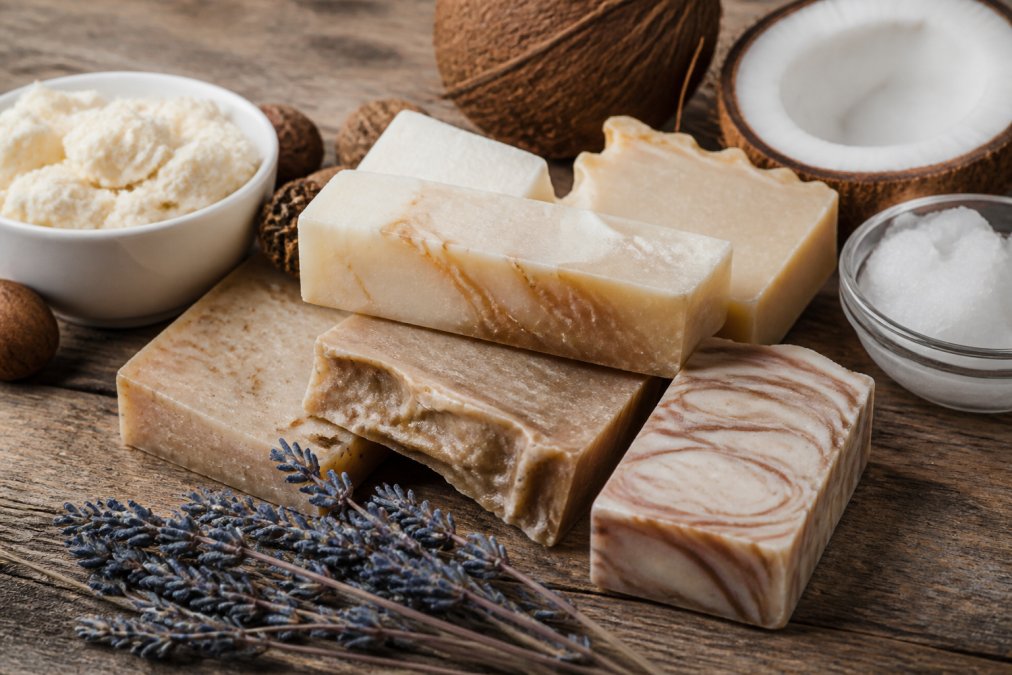
Quality natural handmade soap bars are built on a foundation of nourishing oils and the glycerin naturally produced during saponification. Understanding what these ingredients do, and why they matter, helps you make informed choices.
Ingredients That Deliver Real Benefits
Shea butter is a triglyceride-rich fat that mimics skin's natural lipid barrier. It provides deep moisturizing and reduces inflammation through compounds like oleic and stearic acid. In handmade soap, shea butter contributes to lather quality while conditioning the skin during cleansing.
Coconut oil creates rich lather through high lauric acid content and has mild antimicrobial properties, though it's comedogenic for some individuals.
Olive oil is gentle and conditioning, rich in oleic acid and polyphenols. It's one of the slowest oils to saponify, meaning it remains in the finished bar as a conditioning agent rather than converting entirely to soap. This is why olive oil-heavy soaps feel creamier.
Glycerin is the humectant byproduct of saponification. It draws moisture from the air into the skin, preventing dryness. Commercial soaps strip this out; handmade soaps retain it. This is the single biggest difference in how your skin feels after washing.
Essential oils like lavender, tea tree, and eucalyptus add therapeutic benefits and scent without synthetic chemicals, though they're concentrated and can irritate sensitive skin at high concentrations.
Hydrosols (also called floral waters or hydrolats) are the water-based byproduct of essential oil distillation. They provide subtle fragrance and some of the therapeutic properties of essential oils at a much lower concentration, making them safer for sensitive skin.
Why pH Matters: Handmade Soap vs. Commercial Detergents
Handmade soap is true soap, the result of oils reacting with lye, creating soap molecules and glycerin. The finished bar has a pH of 8-10, higher than skin's natural 4.5-5.5.
Your skin maintains acidic pH to protect itself. High-pH soap temporarily disrupts the barrier, but skin re-acidifies within 30 minutes to an hour. Retained glycerin accelerates this by drawing moisture back into skin.
Commercial "soaps" are often synthetic detergents with neutral pH that don't disrupt the barrier but lack glycerin, leaving skin tight and dry. For most people, handmade soap's glycerin benefit outweighs temporary pH elevation.
Ingredients to Avoid
Parabens are synthetic preservatives linked to hormone disruption concerns. They're not in true handmade soap because high pH naturally prevents bacterial growth.
Sulfates are harsh surfactants that strip natural oils and cause irritation. They shouldn't appear in quality handmade soap.
Synthetic fragrances often contain dozens of undisclosed chemicals. Fragrance is the leading cause of contact dermatitis. Look for soaps fragmented with essential oils or hydrosols instead, or choose unscented bars entirely.
Triclosan and triclocarban disrupt hormone regulation and contribute to antibiotic resistance.
Checking the Ingredient List
Quality producers list ingredients by weight. The first few should be oils, coconut, olive, or shea. If water or glycerin appears first, the bar may be diluted.
How to Buy Natural Handmade Soap Bars Online: A Step-by-Step Guide
Reading Labels and Ingredient Lists
Start by examining the ingredient list before adding anything to your cart. Quality producers list ingredients in descending order by weight, exactly as required by regulations. The first few ingredients should be oils, coconut, olive, shea, or similar.
Assessing Quality and Longevity
Read customer reviews specifically addressing how long the soap lasts. A quality bar should last 4-6 weeks with daily use. If reviews mention the soap dissolving quickly or crumbling, that indicates poor formulation or curing.
Making Your Handmade Soap Last Longer
A quality soap bar should last weeks, not days. The key is proper storage and use. Keep your soap in a well-draining soap dish that allows air circulation. Soap sitting in standing water dissolves faster than soap that dries between uses.
Frequently Asked Questions
What makes natural handmade soap bars better than drugstore options?
Natural handmade soap bars retain glycerin, a natural humectant that commercial manufacturers strip out. Artisanal soaps are typically cold-processed, which preserves beneficial oils and plant extracts. They contain no synthetic fragrances, sulfates, or parabens, making them gentler on your skin barrier. Handcrafted small-batch production also means higher quality control and fresher ingredients compared to mass-produced alternatives.
How do I know if a soap is truly natural when buying online?
Check the ingredient list for recognizable items like coconut oil, olive oil, shea butter, and essential oils. Avoid long chemical names you don't recognize. Look for certifications like cruelty-free, vegan, or dermatologist-tested. Read customer reviews mentioning ingredient transparency and actual skin results. Reputable artisanal soap makers provide complete ingredient breakdowns and explain their cold-process or natural saponification methods.
Are handmade soap bars safe for sensitive skin and eczema?
Many people with sensitive skin benefit from natural handmade soaps because they lack synthetic fragrances and harsh chemicals. However, sensitivity varies by individual. If you have eczema or reactive skin, look for unscented or lightly scented options made with glycerin-rich formulas. Patch test first. Some natural soaps still contain essential oils that can irritate sensitive skin, so verify the full ingredient list before purchasing. Contact the maker directly if you have specific concerns.
How long do natural handmade soap bars actually last?
Artisanal soap bars' longevity depends on bar size, water hardness, and drying practices. To extend lifespan, store your soap on a well-draining soap dish between uses and keep it dry. Avoid leaving it sitting in standing water, which softens the bar faster.