 blog
Which Natural Hand Cream Works Best for Dry Skin?
Last Updated: October 25, 2026
Quick Summary
The best natural hand cream dry skin formulations combine three functional ingredient types: humectants like glycerin to draw water into skin, emollients like jojoba oil to soften and fill gaps between cells, and occlusives like shea butter to seal and slow water loss. A balanced formula addresses all three problems rather than just one.
- Check the first five ingredients for one humectant, one emollient oil, and one occlusive butter as a signal of effective formulation.
- Glycerin's hydration benefits are well established, while shea butter has good evidence for improving barrier function and reducing water loss.
- Apply natural hand cream after every hand wash for severely dry hands, or at minimum twice daily for moderate dryness to maintain the protective cycle.
- Fragrance is the most common cause of allergic contact dermatitis in hand creams, including natural and plant-derived fragrances like lavender and tea tree.
- Homemade hand creams last 2 to 4 weeks refrigerated and work well if you prepare batches monthly, but commercial options ensure longer freshness.
Table of Contents
- What Makes a Natural Hand Cream Effective for Dry Skin
- Hand Cream Ingredients for Dry Skin That Actually Work
- Natural Hand Cream for Sensitive Skin: What to Avoid
- How Often to Apply Hand Cream for Best Results
- Making a Homemade Hand Moisturizer for Dry Skin
- Choosing the Right Natural Hand Cream for Your Skin Concern
- Start Your Natural Hand Care Routine Today
- Frequently Asked Questions
What Makes a Natural Hand Cream Effective for Dry Skin
A natural hand cream dry skin formulations must repair damage, lock in hydration, and protect against future dryness. At FORYOURSOAP.COM, effective hand care combines the right ingredients with consistent application.
Most hand creams fail because they focus on one problem: they hydrate without protecting, or protect without nourishing. The best formulations address both with complementary ingredients.
Hand Cream Ingredients for Dry Skin That Actually Work
Most roundups list ingredients without explaining what each does. A more useful approach sorts them by function: humectants, emollients, and occlusives. A well-built natural hand cream dry skin product uses all three in the right order.
The Three Functional Categories
Humectants draw water into the outer layer of skin. Glycerin is the most common and best-studied; aloe vera, honey, and plant-derived amino acids also qualify.
Emollients soften skin by filling gaps between cells.
Occlusives sit on the surface and slow water loss.
A cream with only humectants hydrates briefly then fails; one with only occlusives protects but feels greasy and never addresses the water deficit.
Reading an Ingredient List Like an Editor
Ingredient lists are ordered by concentration until the 1% mark, so the first five ingredients tell you most of what you need. Glycerin or aloe in the first three plus a butter in the first five signals a balanced formula. A butter first with no glycerin means protection without much hydration. Fragrance or botanical extract before the preservative may mean a high scent load for sensitive skin.
Watch for claims that outrun the evidence. "Plant-based" describes origin, not performance. "Chemical-free" is meaningless because water is a chemical. "Dermatologist-tested" usually means a small patch test, not clinical proof for your skin. The ingredient list and its order are more reliable than the front label.
Plant-Based Butters and Oils in Practice
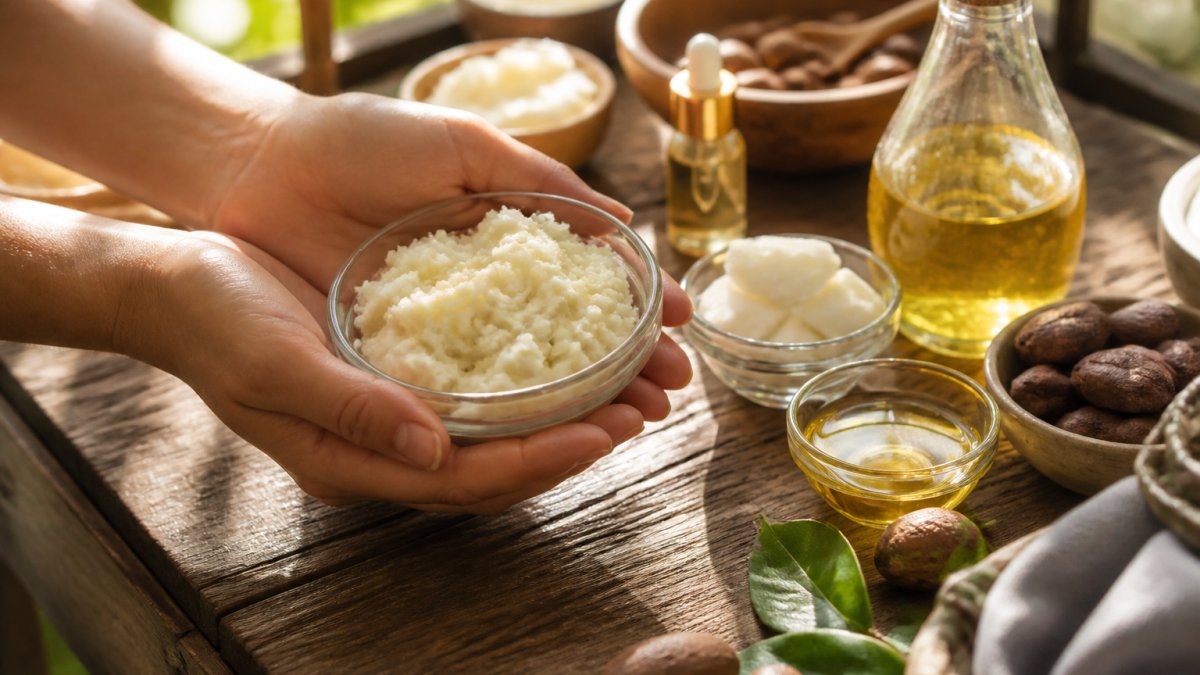
Shea butter is the most reliable natural occlusive for hands because its oleic and stearic acid profile closely matches skin lipids; it absorbs slowly but thoroughly and creates a lasting layer.
Jojoba oil is a liquid wax ester resembling human sebum, so it absorbs faster than most plant oils. Sunflower oil, high in linoleic acid, suits dry but uncracked skin; avocado oil is heavier and better for very dry hands.
What the Evidence Actually Supports
Glycerin's ability to improve skin hydration is well established (pubmed.ncbi.nlm.nih.gov). Shea and other plant butters have good evidence for improving barrier function and reducing transepidermal water loss, though most studies are small.
For a deeper look at how these same butters perform across product formats, see our guide on Benefits Of Our Shea Cocoa And Mango Butter 3 Butter Soap.
Natural hand creams work best when they combine three functional ingredient types in the right order.
| Ingredient Type | Function | Examples |
|---|---|---|
| Humectants | Draw water into outer skin layer | Glycerin, aloe vera, honey |
| Emollients | Fill gaps between cells, soften skin | Jojoba, sunflower, avocado oils |
| Occlusives | Seal surface, slow water loss | Shea butter, cocoa butter, beeswax |
Natural Hand Cream for Sensitive Skin: What to Avoid
Sensitive hands are often dry because the skin is reacting, not because it lacks oil. A cream can be plant-based, fragrance-free on the front label, and still trigger a reaction, because "natural" and "gentle" are not the same thing. Learn to read labels for likely contact allergens, then patch test new products.
The Fragrance Problem, Including "Natural" Fragrance
Fragrance is the most common cause of allergic contact dermatitis in cosmetics, including fragrances labeled natural or plant-derived. "Fragrance" on a label is a catch-all that can hide dozens of undisclosed compounds.
For reactive skin, the safest label is "fragrance-free," not "unscented." Unscented can mean a masking fragrance was added; fragrance-free means none was added, though essential oils may still be present, so read the full list.
A Practical Fragrance-Allergen Checklist
The EU requires disclosure of 26 fragrance allergens above a threshold, and many U.S. brands follow voluntarily. A short list covers most reactions:
- Limonene and linalool, citrus and floral compounds; they oxidize on the shelf and become more allergenic over time.
- Citronellol, geraniol, and eugenol, common in rose, geranium, and clove oils.
- Cinnamal and cinnamyl alcohol, cinnamon-derived, a frequent cause of reactions in lip and hand products.
If a cream lists several of these, treat it as a scented product even if the front label says natural. For sensitive skin, the simpler the ingredient list, the better.
Other Ingredients to Screen Out
Lavender, tea tree, and citrus extracts sound soothing, but the compounds that give them scent are the ones that trigger sensitivity; a truly gentle cream often skips them. Mineral oil and petroleum-derived ingredients are not typical allergens, but plant-based occlusives like shea and cocoa butter substitute well. Preservatives are necessary in any water-containing cream, and a preservative-free cream is not automatically gentler, because microbial contamination is a bigger risk.
How to Patch Test Without Wasting a Tube
A patch test is the cheapest way to find out whether a new cream is likely to work. Apply a small amount to the inner forearm, cover with a bandage, and leave for 24 hours. Check for redness, itching, or swelling; if none, apply to the side of your hand and wait another 24 hours.
When to See a Professional
If your hands are cracked, bleeding, or itchy beyond ordinary dryness, or a reaction spreads beyond the application site, see a dermatologist. Contact dermatitis is treatable, but identifying the trigger usually requires clinical patch testing. For broader irritant patterns, explore our Best Natural Soap for Sensitive Skin: A 2026 Guide.
How Often to Apply Hand Cream for Best Results
Application frequency matters more than most people realize: even the best hand cream won't maintain hydration through a full day of washing and exposure.
For moderate dryness, morning and evening application often suffices. Consistency is key: skipping breaks the protective cycle.
Winter dryness typically requires more frequent application than summer. If your hands are frequently wet or exposed to harsh conditions, increase frequency accordingly.
Making a Homemade Hand Moisturizer for Dry Skin
Creating your own hand cream gives you complete control over ingredients and freshness. Many people find homemade versions work better than commercial options because they skip preservatives and fillers that can irritate sensitive skin.
Simple DIY Recipes
A basic formula requires just three components: a butter, an oil, and optional essential oil for scent (skip this if your skin is sensitive).
Simple Two-Ingredient Cream:
- 1/4 cup shea butter
- 1/4 cup jojoba oil
Melt the shea butter gently over low heat or in a double boiler. Add the jojoba oil and mix thoroughly.
Richer Three-Ingredient Blend:
- 3 tablespoons shea butter
- 2 tablespoons cocoa butter
- 3 tablespoons sunflower oil
Follow the same melting process. This version feels heavier and lasts longer on the skin, better for severe dryness or nighttime application.
With Humectant Addition:
- 1/4 cup shea butter
- 1/4 cup jojoba oil
- 1 tablespoon vegetable glycerin
Mix glycerin thoroughly into the warm melted butters and oil before cooling.
When to Buy vs. When to Make
Homemade creams work well but require honest assessment of your effort and shelf life expectations. Homemade versions last 2-4 weeks refrigerated, longer if you skip water-based ingredients like aloe.
Making your own makes sense if you're willing to prepare batches monthly and store them properly. It's cost-effective for frequent users. If you apply sporadically or prefer convenience, a quality commercial natural cream saves time and ensures freshness.
Choosing the Right Natural Hand Cream for Your Skin Concern
Different dryness patterns require different solutions. Matching your specific situation to the right cream type dramatically improves results.
Seasonal and Occupational Dryness
Winter dryness affects most people temporarily. Seasonal hand cream needs to be heavier than your summer choice, with stronger sealing ingredients.
Occupational dryness is different. If your hands are frequently wet, dishwashing, healthcare, cleaning, the problem isn't air exposure but water stripping your natural oils.
Gardeners and outdoor workers face sun exposure and soil contact. Their hands need UV protection alongside moisture.
Severe Cracking and Irritation
When your hands are visibly cracked or bleeding, basic moisturizing isn't enough. You need a cream that reduces inflammation while healing the barrier.
Application changes too. With severe cracking, apply cream more frequently but in thinner layers to avoid trapping bacteria in deep cracks.
If cracking persists beyond two weeks of consistent cream use, or if you see signs of infection, consult a healthcare provider. Severe hand dryness sometimes signals underlying conditions requiring medical attention.
Start Your Natural Hand Care Routine Today
Effective hand care starts with understanding your specific dryness pattern and matching it to the right natural ingredients. Whether you choose a commercial natural cream or make your own, consistency matters more than perfection.
FORYOURSOAP.COM offers Hand Cream formulations crafted with the plant-based butters and oils that actually work for dry skin. Our artisan approach means no unnecessary additives, just the ingredients your hands need.
Frequently Asked Questions
What ingredients should I look for in a natural hand cream for dry skin?
Look for plant-based butters like shea butter and cocoa butter, which form a protective barrier and absorb slowly into skin. Humectants such as aloe vera and glycerin draw moisture into the skin. Plant oils like avocado oil, sunflower oil, and jojoba oil nourish without leaving a greasy feel. Avoid synthetic fragrances and mineral oil if you have sensitive skin; instead, choose fragrance-free options or products scented with essential oils.
How often should you apply hand cream to dry hands?
Apply hand cream at least twice daily: once in the morning and once before bed. For severely dry or cracked hands, apply after every handwashing and whenever your hands feel tight or uncomfortable. Consistent application helps repair and maintain your skin barrier. During winter or in dry climates, you may need more frequent applications to prevent cracking and irritation.
Can I make a homemade hand moisturizer for dry skin?
Yes. A simple recipe combines melted shea butter or cocoa butter with a plant oil like avocado or jojoba oil in a 2:1 ratio. Add a few drops of essential oil if desired and pour into a jar to cool. Homemade creams work well for mild dryness, but they lack preservatives, so use within a few weeks. For severe dryness or sensitive skin, a professionally formulated natural hand cream often provides more stable, tested results.
Is fragrance-free hand cream better for sensitive skin?
Fragrance-free hand cream is often better for sensitive skin because both synthetic fragrances and some essential oils can trigger irritation or allergic reactions. If you prefer scent, patch test a small amount on your inner arm first. Look for products labeled fragrance-free rather than unscented, as unscented may still contain masking fragrances. Always check the ingredient list for potential allergens before purchasing.
Natural hand care doesn't require complicated routines or expensive products. It requires the right ingredients applied consistently. Whether you're managing seasonal dryness, occupational exposure, or sensitive skin alongside dryness, a thoughtful approach using plant-based butters, oils, and humectants delivers real results. Build your routine around your specific concern, adjust as seasons change, and give it time to work. Your hands will thank you.