 blog
blog
Unscented Artisan Soap for Eczema: A 2026 Guide
Table of Contents
- Why Unscented Artisan Soap Matters for Eczema-Prone Skin
- Fragrance-Free Soap for Eczema: Understanding the Difference
- Ingredients to Avoid in Soap for Sensitive Skin
- Goat Milk Soap for Eczema: Properties and Benefits
- Oatmeal Soap for Sensitive Skin: Soothing and Gentle Cleansing
- How to Choose and Test Unscented Artisan Soap
- Kids' Soaps with Toys: Safety Considerations for Young Children
- Frequently Asked Questions
Last Updated: October 5, 2026
Why Unscented Artisan Soap Matters for Eczema-Prone Skin
Unscented artisan soap for eczema addresses a critical gap: most commercial soaps contain fragrances and harsh chemicals that trigger flare-ups. At FORYOURSOAP.COM, we offer gentler alternatives that cleanse without compromising the skin barrier.
Fragrance-free means no added scents; unscented may still contain masking fragrances. For eczema-prone skin, true fragrance-free formulations are essential because even "natural" essential oils can trigger sensitivity and redness.
With eczema, your skin barrier is already compromised, itching and irritation stem from moisture loss and increased permeability. A quality unscented artisan soap preserves that barrier rather than stripping it.
Fragrance-Free Soap for Eczema: Understanding the Difference
Fragrance-free soap for eczema contains no added perfumes, essential oils, or fragrance compounds, only the natural scent of the base oils and ingredients.
"Unscented" and "fragrance-free" aren't identical. Unscented products may contain masking fragrances that can irritate sensitive skin as much as intentional perfumes.
Verify the ingredient list directly rather than trusting marketing language. Look for products that explicitly state "fragrance-free" and avoid those listing "fragrance," "parfum," "essential oils," or "natural fragrance." Even botanical scents like lavender or chamomile can trigger flare-ups.
Fragrance molecules penetrate the already-compromised skin barrier of eczema-prone individuals, causing inflammation, itching, and redness. Removing fragrance eliminates this pathway of irritation.
Ingredients to Avoid in Soap for Sensitive Skin
Ingredients to avoid in soap for sensitive skin extend well beyond fragrance.
Common irritants to avoid:
- Sulfates - Sodium lauryl sulfate (SLS) and sodium laureth sulfate (SLES) strip natural oils and disrupt the skin barrier
- Synthetic dyes and colorants - These can trigger allergic reactions and flare-ups
- Parabens - Preservatives that some people with eczema find irritating
- Alcohol - Drying and potentially sensitizing to compromised skin
- Artificial fragrances and essential oils - Even "natural" oils can cause inflammation
- Triclosan and antibacterial agents - Unnecessary and potentially harmful to skin microbiome
- Lanolin - While natural, it's a common allergen for atopic dermatitis sufferers
Prioritize artisan soap for eczema with short, recognizable ingredient lists. A bar with five simple ingredients beats one with thirty complex compounds. Cold-process soaps, crafted slowly without high heat, are often preferred for sensitive skin.
Goat Milk Soap for Eczema: Properties and Benefits
Goat milk soap for eczema is often discussed for its potential benefits. The useful question isn't "is goat milk good for eczema?", it's "what else is in the bar, and what is it doing to my skin barrier?"
What goat milk actually contributes to a bar
- Fat content: Goat milk is roughly 3-4% butterfat, which saponifies into a creamier lather and leaves more superfat (unsaponified oil) in the finished bar. That residual oil is what most people mean when they say a goat milk bar feels less stripping.
- Lactic acid: A naturally occurring alpha-hydroxy acid. In a rinse-off bar, contact time is short, so the exfoliation effect is mild, far milder than a leave-on lactic acid serum. Don't expect a chemical exfoliant; expect a slightly softer feel.
- Protein and mineral content: Casein, whey, calcium, and phosphorus contribute to lather texture more than skin biology.
- Natural pH of the milk: Fresh goat milk sits around pH 6.5-6.7, but the finished bar's pH is driven by saponification chemistry. A well-made goat milk bar lands around pH 9-10.
The pH reality check most guides skip
True soap, goat milk, olive oil, or tallow, is alkaline, while the skin's acid mantle sits around pH 4.5-5.5. Any true soap temporarily raises skin surface pH; for active eczema that swing can feel drying or stinging.
What to look for on the label
- Goat milk listed early in the ingredients (by weight), not as a token near the end
- A short oil list, olive, coconut, shea, cocoa butter, castor, with no fragrance, parfum, essential oils, or dyes
- A stated superfat percentage if the maker publishes one; 5-8% is a common range for sensitive-skin bars
- No "goat milk fragrance", this is a synthetic scent, not milk, and it defeats the purpose
A comparison worth making
| Bar type | Typical pH | Cleansing strength | Best fit |
|---|---|---|---|
| Cold-process goat milk, high superfat | ~9-10 | Gentle | Dry, reactive skin that tolerates true soap |
| Cold-process olive oil (Castile-style) | ~9-10 | Very gentle, low lather | Very dry skin; slow to trace, long cure |
| Syndet / detergent bar | ~5.5-7 | Gentle, pH-matched | Active flares, acid-mantle sensitivity |
| Commercial "moisturizing" bar | ~9-10 | Moderate to strong | General use, not eczema-first |
If you've reacted to dairy proteins before, patch test any milk-based bar on your inner forearm for 24-48 hours.
Oatmeal Soap for Sensitive Skin: Soothing and Gentle Cleansing
Oatmeal soap for sensitive skin is often sought for its soothing properties. Colloidal oatmeal, finely milled oat suspended in liquid, is recognized by the FDA as a skin protectant.
How colloidal oatmeal actually works
- Avenanthramides: Polyphenols unique to oats that reduce inflammatory signaling molecules, the mechanism behind itch relief.
- Beta-glucans: Polysaccharides that form a thin film on the skin, holding water in and slowing transepidermal water loss.
- Starch and lipids: Contribute a creamy, low-slip lather and a mild buffing action.
In a rinse-off bar, contact time is short.
Colloidal vs. coarse: what the label tells you
- "Colloidal oatmeal" or "Avena sativa (oat) kernel flour" usually means finely milled oat that won't scratch.
- "Oatmeal," "rolled oats," or "whole oat" can mean visible flakes embedded in the bar, decorative and abrasive on compromised skin.
- "Oat milk" is a liquid infusion with lower avenanthramide content than concentrated colloidal oat.
Oatmeal vs. goat milk vs. plain gentle bars
| Feature | Oatmeal bar | Goat milk bar | Plain high-superfat bar |
|---|---|---|---|
| Primary soothing mechanism | Avenanthramides, beta-glucans | Fat content, mild lactic acid | Residual oils only |
| Lather | Creamy, low | Creamy, medium | Varies by oil blend |
| Best for | Itchy, reactive skin | Dry, tight skin | Skin that reacts to everything |
| Watch for | Coarse flakes, added fragrance | Added "milk" fragrance | Hidden essential oils |
Selection criteria you can apply to any bar
- Scent status: The label should say fragrance-free, not just unscented. Masking fragrances are common in oat bars.
- Full ingredient disclosure: If the maker won't list every ingredient, skip it. "Proprietary blend" is a red flag.
- Soap type: True soap (saponified oils) vs. syndet. Both can be gentle; syndets are pH-matched and often better tolerated during a flare.
- Cure time: Cold-process bars need 4-6 weeks to cure; under-cured bars are more alkaline and drying.
- Suitability claims: Be skeptical of "eczema soap." Soap cleanses; it does not treat eczema.
When to stop experimenting and see a clinician
Gentle cleansing and consistent moisturizing can help support skin health. If you experience persistent skin concerns, it's always best to consult a dermatologist or primary care clinician.
How to Choose and Test Unscented Artisan Soap
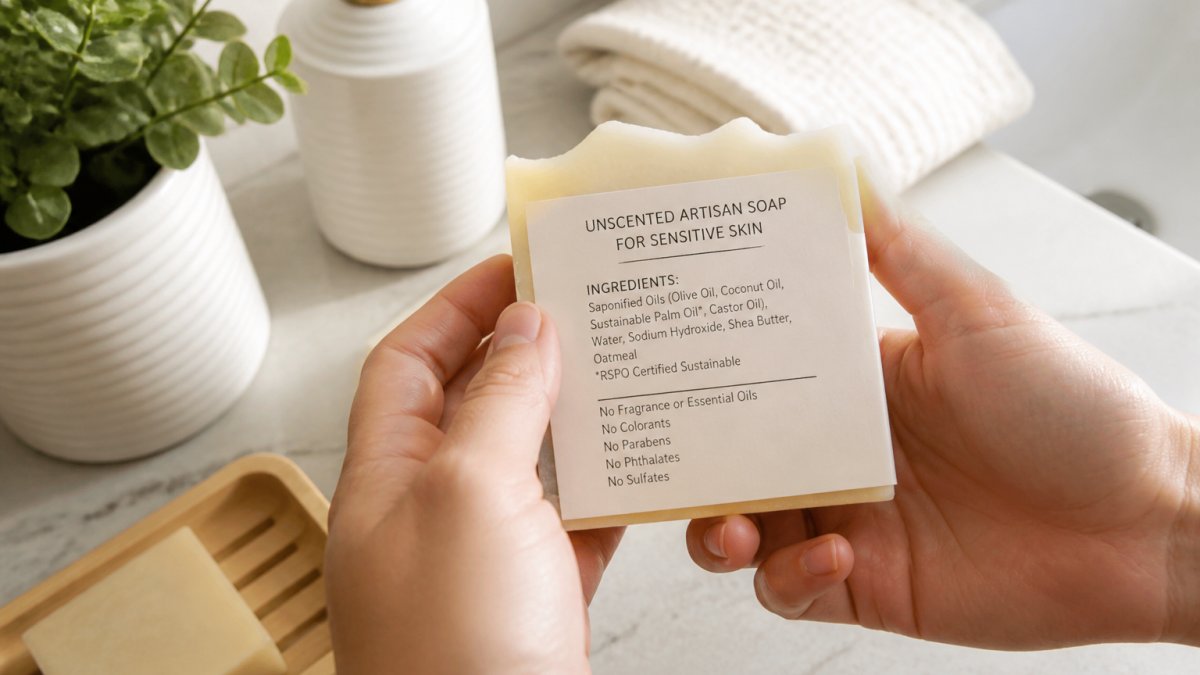
Choosing unscented artisan soap for eczema requires a methodical approach: dig into the ingredient list, not just the packaging claims.
Reading Labels and Verifying Ingredient Lists
Ingredients are listed by weight, so the first few items make up the bulk of the soap. Look for:
- Oils as primary ingredients: Coconut, olive, palm, or shea butter indicate a moisturizing base
- Minimal additives: Fewer than ten total ingredients is ideal
- Explicit "fragrance-free" statement: Not just "unscented", the label should clearly state fragrance-free
- Natural preservatives or none: If preserved, look for vitamin E, rosemary extract, or similar gentle options
- pH-balanced notation: Some artisans list the pH, which should be close to skin's natural 4.5-5.5 range
Avoid any list that includes fragrance, parfum, essential oils, or dyes. If unsure about an ingredient, research it before purchasing.
Patch Testing Before Full Use
Even with a carefully selected soap, patch testing is essential.
- Choose a small, inconspicuous area - The inner forearm or behind the ear works well
- Wet the area and apply a small amount of soap - Lather gently
- Rinse thoroughly with lukewarm water - Don't leave soap residue
- Wait 24-48 hours - Monitor for redness, itching, burning, or any reaction
- If no reaction occurs, gradually expand use - Start with one small area, then expand over several days
If irritation develops, discontinue immediately.
Kids' Soaps with Toys: Safety Considerations for Young Children
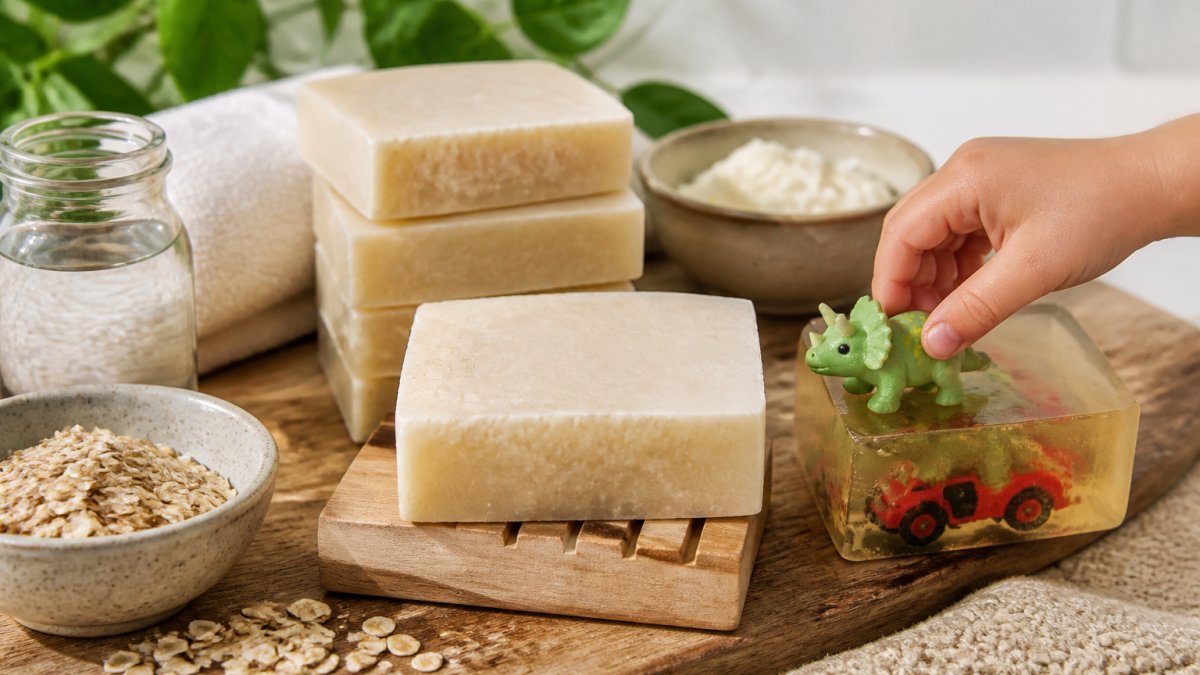
Kids' soaps with toys, including surprise toy soap, kids novelty soap, and bath soap with toy designs, add fun to bath time while introducing children to self-care routines. At FORYOURSOAP.COM, we now offer a curated selection of kids' soaps with embedded toy features, complete with product photos you can review on our site.
Safety must come first. Embedded toys in bath products present a choking hazard, particularly for children under 3. The Consumer Product Safety Commission emphasizes that any small object, including toy pieces that may separate from soap, poses a serious risk to young children who explore objects by putting them in their mouths.
Age-appropriate guidance:
- Under 3 years: Avoid kids' soaps with embedded toys entirely. Use only plain, unscented artisan soap formulated specifically for babies and toddlers
- Ages 3-5: Supervise bath time closely. Ensure the toy remains intact and cannot be separated from the soap. Remove the toy immediately if it shows signs of breaking or separating
- Ages 6 and up: Kids' soaps with toys can be appropriate with continued supervision. Teach children not to bite, chew, or attempt to remove embedded toys
When selecting kids' novelty soap, inspect the product before purchase: the toy should be securely embedded and made of non-toxic materials. Our product pages include detailed photos showing how toys are integrated into each bar, so you can assess safety before buying.
Party favor soap with embedded toys can be a creative gift option for older children's celebrations, but always include a note to parents about age-appropriateness and supervision requirements.
Choosing the right soap for eczema-prone skin can enhance your daily cleansing routine. Unscented artisan soap for eczema can help avoid fragrance triggers, and gentle ingredients like goat milk and oatmeal are often sought for their soothing properties.
Start with patch testing, verify ingredient lists carefully, and give your skin time to adjust. At FORYOURSOAP.COM, we're committed to helping you find the right unscented artisan soap for your skin's unique needs.
Frequently Asked Questions
What is the best unscented artisan soap for eczema-prone skin?
The best unscented artisan soap for eczema contains moisturizing ingredients like goat milk, oatmeal, shea butter, or olive oil while avoiding fragrance, essential oils, and harsh surfactants. Look for cold-process soaps with simple, transparent ingredient lists and no added dyes or preservatives. Patch test any new soap on a small area of skin first, and choose bars labeled fragrance-free rather than unscented, which may contain masking scents.
Is unscented soap the same as fragrance-free soap?
No. Unscented soap may contain fragrance oils designed to mask the soap's natural smell, which can still trigger eczema flare-ups. Fragrance-free soap contains no added scents or masking agents. For eczema-prone skin, fragrance-free is the safer choice. Always check the ingredient list to confirm no fragrance, essential oils, or parfum is listed.
Can oatmeal or goat milk soap help soothe dry, sensitive skin?
Yes. Oatmeal contains compounds that calm irritation and reduce itching, while goat milk is rich in fats and proteins that hydrate and nourish the skin barrier. Both are gentle and non-irritating for eczema-prone skin. These ingredients work best in artisan soaps with minimal additives.
Which soap ingredients should people with eczema avoid?
Avoid fragrance, essential oils, sulfates, parabens, artificial dyes, and harsh exfoliants. Synthetic fragrances and essential oils are common eczema triggers. Choose soaps with short, recognizable ingredient lists and avoid products labeled with vague terms like 'fragrance' or 'parfum.' When in doubt, consult your dermatologist about specific ingredients.