 Ultimate guide
7 Benefits of Handmade Soap for Your Skin
Quick Summary
Handmade soap is typically made in small batches with plant oils and butters, and it often retains glycerin, a humectant that helps attract moisture to the skin. Because it is a cleanser rather than a treatment, the bar's ingredients and fragrance load matter more than the word natural on the label.
- Handmade soap is typically made in small batches by combining oils or fats with an alkali.
- Cold process bars are cured for roughly four to six weeks so water evaporates and the pH settles.
- Superfatting leaves an extra five to eight percent unsaponified oil in the bar, which can feel more conditioning.
- Patch-test a new bar on the inner forearm for 24 to 48 hours before using it on your face or body.
- Stop using any bar if redness, itching, burning or peeling persists, and seek a dermatologist's advice.
Table of Contents
- What Makes Handmade Soap Different From Commercial Bars
- Plant Oils and Butters That Support Skin Comfort
- Why Glycerin Matters for Moisture and Softness
- Handmade Soap for Sensitive Skin: What to Look For
- Handmade Soap for Dry Skin: Gentle Hydration in Every Bar
- Reading Labels and Understanding Soap Formulation
- How to Store Handmade Soap So It Lasts and Stays Gentle
- Trying Handmade Soap on Your Own Skin
- Frequently Asked Questions
7 Benefits of Handmade Soap for Your Skin
Last Updated: October 30, 2026
What Makes Handmade Soap Different From Commercial Bars
Handmade soap is typically made in small batches, and that difference shapes what ends up on your skin. At FORYOURSOAP.COM, we make our bars by hand.
We recommend reading the ingredient list first, because two bars that look alike can be formulated very differently.
Handmade soap is a product of small-batch soapmaking, where oils or fats are combined with an alkali and cured until the bar is ready to use.
Plant Oils and Butters That Support Skin Comfort
Plant oils and butters are the backbone of most handmade bars. You can compare the soap bases to see how these oils are combined in practice. Shea butter, cocoa butter, coconut oil and olive oil are common choices because they are widely used in cosmetic formulation and each brings a different feel to the lather and finished bar. See how this works in our shea, cocoa and mango butter bar.
Why Glycerin Matters for Moisture and Softness
Glycerin is a humectant, meaning it attracts water to the skin's surface. Glycerin is naturally produced during saponification.
Handmade Soap for Sensitive Skin: What to Look For
Sensitive skin is not one condition, and handmade soap is not automatically gentle. The bar's pH, its cleansing intensity, and its fragrance load matter more than the word "natural" on the label.
If your skin reacts easily, read the ingredient list before you buy. Our guide to choosing gentle natural soap explains which ingredients to avoid and why goat milk soap is often a good option. Fragrance and essential oils are common contact allergens, and a bar can be "all natural" and still trigger a reaction.
A practical approach:
- Patch-test on the inner forearm for 24 to 48 hours before using a new bar on your face or body.
- Introduce one new product at a time so you can identify the cause of any reaction.
- Choose unscented or lightly scented bars when you are actively troubleshooting.
- Rinse with lukewarm water and pat dry rather than rubbing.
- Stop using the bar if you notice redness, itching, burning, or peeling that persists.
If irritation spreads, blisters, or does not improve after you stop using the product, discontinue use and seek care from a licensed dermatologist or other qualified professional. Handmade soap is a cleanser, not a treatment for eczema, rosacea, or contact dermatitis.
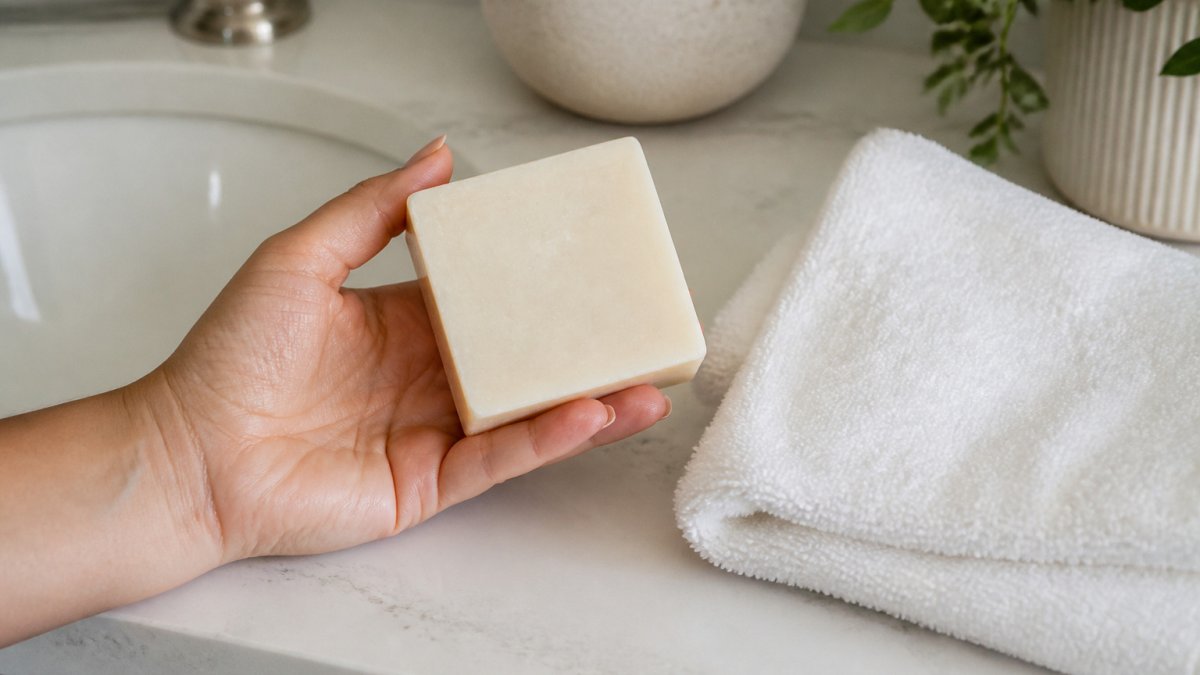
!Close-up of a hand holding a pale, unscented handmade bar of soap beside a folded cotton towel in a bright bathroom
Handmade Soap for Dry Skin: Gentle Hydration in Every Bar
Dry skin often responds well to rinsing with lukewarm water rather than hot. For extra comfort, pair your bar with a hand cream that keeps hands soft between washes.
Hot water and very frequent washing strip more natural oil from the skin, so a soft bar used less aggressively often feels more comfortable than a harsh one used constantly.
Reading Labels and Understanding Soap Formulation
A handmade soap label tells you more than most shoppers realize once you know what to look for. The first thing to understand is that "saponified oils" means the oils have already reacted with an alkali (usually sodium hydroxide) to become soap. You will not find sodium hydroxide listed as an active ingredient in the finished bar because it has been consumed in the reaction; a well-formulated bar has little to no free alkali left. That is why "made with lye" is not a red flag, every true soap is.
Formulation choices show up in the ingredient order and in the process notes:
- Cold process, oils and alkali are combined at lower temperatures, the batter is poured into molds, and the bars cure for roughly four to six weeks (sometimes longer). Curing lets water evaporate, the bar harden, and the pH settle. Cold process typically retains the glycerin created during saponification.
- Hot process, the batter is cooked to accelerate saponification, so the bars can be used sooner, but the texture is often rougher and the cure still improves the final bar.
- Superfatting, a deliberate excess of unsaponified oil (often 5% to 8%) left in the bar to make it less stripping. A higher superfat can feel more conditioning but may produce a softer bar with a shorter shelf life.
- Glycerin, a humectant produced during saponification. Many commercial bars remove it and sell it separately; most handmade bars retain it, which contributes to the softer after-feel.
Fragrance allergens such as limonene and linalool may appear near the end of the list; their presence does not make a bar unsafe, but it is useful information if you have reacted to scented products before. Vague labels that list "fragrance" without further detail or omit the oils used are worth questioning.
Compare two bars side by side: look at the first five ingredients (the bulk of the recipe), the superfat or process notes if given, and whether fragrance allergens are declared. That comparison tells you more than any single marketing claim.
A Note on Our Kids' Soap Line
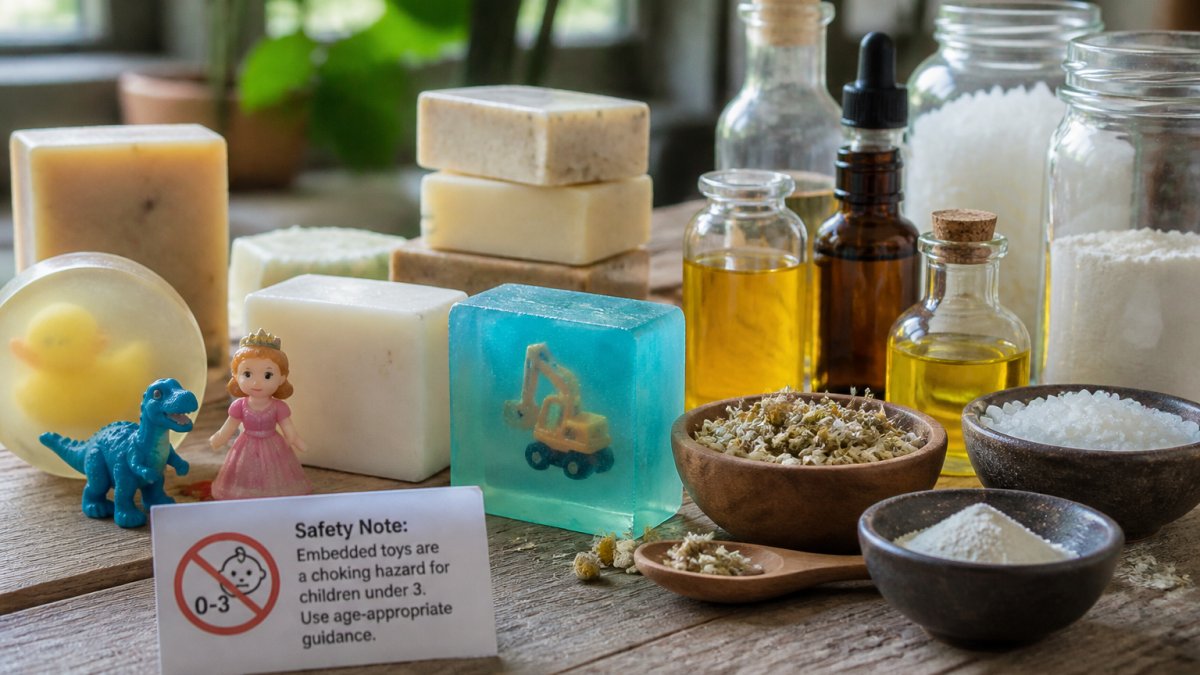
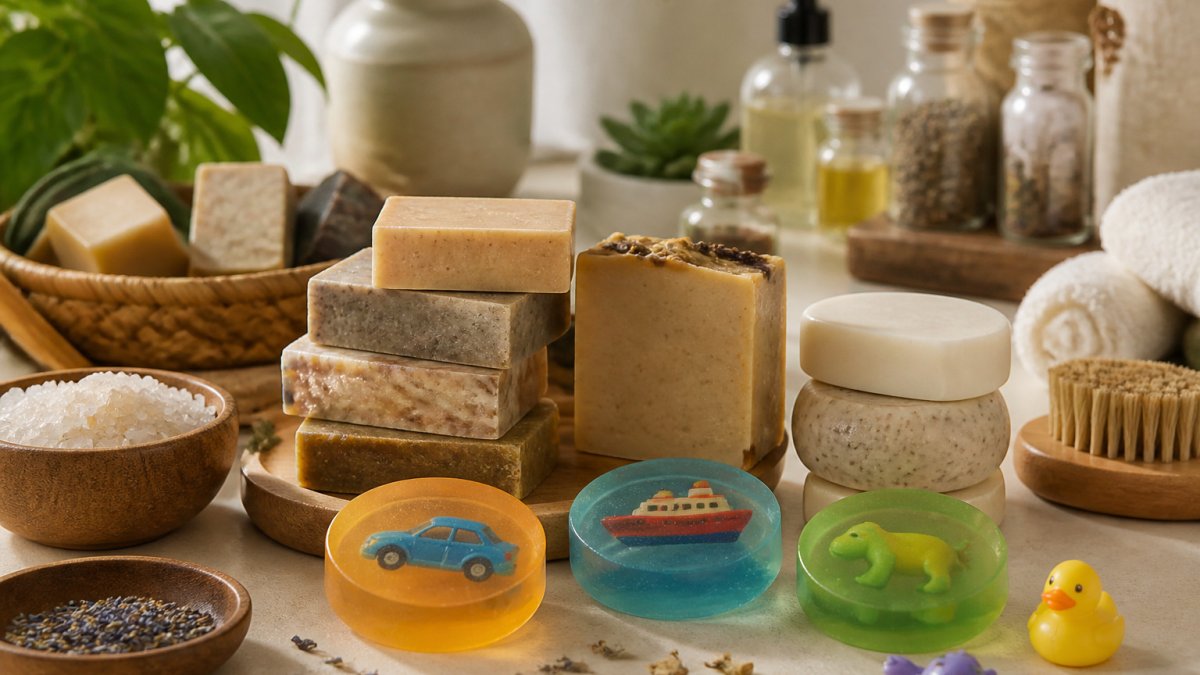
We also make a kids' soap line with a toy inside, a surprise toy soap and kids novelty soap. These bath soap with toy and party favor soap options are a fun way to make bath time more playful.
Embedded toys are a choking hazard for children under 3. These bars are not intended for children under 3 years old, and young children should always be supervised in the bath. For older children, check the toy size and condition once it is revealed, and discard any toy that becomes cracked or broken.
We now have photos of the kids' soaps on the product pages, so you can see the embedded toy and the bar design before ordering. Browse the kids' soap line or request a sample to see the size and finish in person.
The table below sums up the formulation terms covered in this section, so you can compare bars at a glance.
| Term | What it means | Typical note |
|---|---|---|
| Cold process | Oils and alkali combined at lower temperatures | Cures about four to six weeks |
| Hot process | Batter cooked to speed saponification | Can be used sooner; texture often rougher |
| Superfatting | Extra unsaponified oil left in the bar | Often 5% to 8%; can feel more conditioning |
| Glycerin | Humectant produced during saponification | Most handmade bars retain it |
| Saponified oils | Oils already reacted with an alkali | Sodium hydroxide is consumed in the reaction |
How to Store Handmade Soap So It Lasts and Stays Gentle
Keep bars on a draining dish so water does not sit under them, and let them air dry between uses.
Trying Handmade Soap on Your Own Skin
The simplest way to find out whether handmade soap suits you is to test one bar for a week or two and pay attention to how your skin feels afterward.
Keep notes on what you notice, including tightness, softness and any irritation. That record will tell you more than any general claim, including ours.
Frequently Asked Questions
Can handmade soap help dry or sensitive skin?
It can, when the formula is gentle. Handmade soaps often use plant oils, butters and glycerin, which help the skin hold moisture. Sensitive skin still reacts to individual ingredients, so a fragrance-free bar with a short, simple ingredient list is the safer starting point. Patch test a new bar on your inner arm for a few days before using it on your face or body, and stop using it if redness, itching or stinging appears.
Can handmade soap cause skin irritation?
Yes. Handmade soap is still a soap, and any soap can irritate skin, especially if it contains essential oils, strong botanicals or residual lye that was not properly cured. Naturally derived does not always mean non-irritating. Look for soaps that are well cured, clearly labeled with their ingredients, and free of added fragrance if your skin reacts easily. If irritation persists, consult a dermatologist.
Is handmade soap suitable for the face?
Many people use handmade soap on the face, but its pH and surfactant strength vary by bar. Choose a gentle, mild formula and use lukewarm water. If your face is prone to dryness or breakouts, a moisturizer afterward helps protect the skin barrier. Test on a small area first.
How should handmade soap be stored between uses?
Keep it on a draining soap dish so water does not pool underneath, and let it dry fully between uses. Avoid sealed plastic containers while the bar is wet, since trapped moisture softens it quickly. Store bars in a cool, dry spot away from direct sunlight, which can fade colors and change scent over time.
Ready to find a bar that suits your routine? FORYOURSOAP.COM offers handmade artisan soaps, hand creams and bath salts, and new customers can take 10% off their first purchase.