 Ultimate guide
Do Essential Oils Really Help Your Skin?
Last Updated: October 28, 2026
Quick Summary
Essential oils skincare can offer pleasant scent and some benefits, but the evidence is limited and mostly from small or early-stage studies. Results depend on the skin problem, the concentration used, and how your skin reacts, so patch test every new product.
- Leave-on facial products should generally stay between 0.5% and 1% essential oil concentration.
- Rinse-off products like bar soap typically use 1% to 3%, since they wash away quickly.
- People with eczema, rosacea, or a history of contact dermatitis face a higher risk of reactions.
- Pregnant people should check with their prenatal care provider before using concentrated essential oils.
- Fragrance oils are not the same as essential oils and may contain sensitizing ingredients.
Table of Contents
- What Essential Oils Are and How They Are Made
- Potential Skincare Benefits of Essential Oils and What the Evidence Shows
- Essential Oil Dilution for Skin: Safe Concentrations by Product Type
- Essential Oils for Sensitive Skin: Who Should Avoid Them or Ask First
- Essential Oils in Skincare Safety: Phototoxicity, Sun Exposure and Fragrance Oils
- Choosing Your Next Bath or Skincare Product From FORYOURSOAP.COM
- Frequently Asked Questions
What Essential Oils Are and How They Are Made
Essential oils are concentrated aromatic compounds extracted from plants, usually by steam distillation or cold pressing. A single bottle can hold the chemical essence of pounds of flowers, leaves, or peel, which is why they smell so strong and why they are used with care on skin.
Potential Skincare Benefits of Essential Oils and What the Evidence Shows
We think the most useful question is not "does this oil work?" but "for which skin problem, at what concentration, and how do I know it is helping?" That framing keeps expectations realistic and makes it easier to notice when a product is not doing what its label says.
Common Oils and Their Skin Uses
- Sandalwood, geranium, bergamot: Chosen for scent in facial and body products. Bergamot is phototoxic (see the sun exposure section below).
Evidence Quality and Its Limits
Many claims you will see online rest on small or early-stage research, in vitro studies, or user testimonials. Those sources can be useful, but they do not establish that a product will work on your skin. Be skeptical of any product that promises to cure a condition with an oil alone.
Essential Oil Dilution for Skin: Safe Concentrations by Product Type
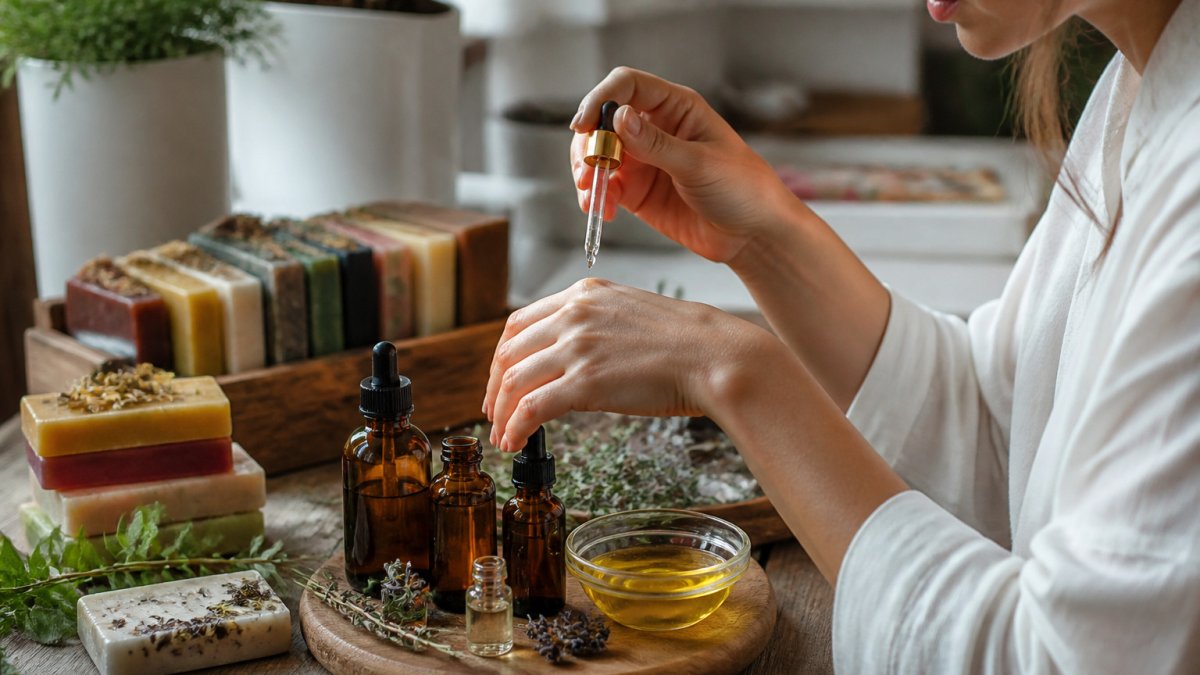
Essential oils are almost always diluted in a carrier oil or built into a finished product before they touch skin. Dilution is the single most effective way to reduce irritation and sensitization in essential oils skincare, and it is also where most online advice fails: "dilute well" tells you nothing you can act on. The table below gives working ranges by product type, drawn from widely used aromatherapy and cosmetic-formulation guidance. Treat them as ceilings for a first trial, not targets to hit.
| Product type | Typical essential oil concentration | Why |
|---|---|---|
| Leave-on facial serum, cream, or oil | 0.5%-1% | Facial skin is thinner and more reactive; contact time is long |
| Body lotion or body oil | 1%-2% | Thicker skin, larger surface area, still leave-on |
| Massage or bath oil | 1%-3% | Short-to-medium contact, often rinsed or diluted in water |
| Bar soap, body wash, shampoo (rinse-off) | 1%-3%, occasionally higher | Rinsed quickly, so exposure is brief |
| Spot treatment (tea tree on a blemish) | Up to 5% for a short course | Higher risk of irritation; limit duration and area |
| Undiluted "neat" application | Not recommended for leave-on use | Highest risk of burns, sensitization, and phototoxicity |
How to Read a Percentage in Practice
For rinse-off products such as bar soap, the oil is distributed through the bar and washed away, which is why soap is often a gentler way to enjoy an aroma than a leave-on serum. Even so, the upper end of the range matters: a strongly scented bar held against sensitive skin in a hot shower can still provoke a reaction.
Dilution Is Not the Only Variable
A practical approach is to start below the ceiling for your product type, use it for a week, and only increase if your skin stays calm. If you are layering products, add up the exposure, a 1% serum under a 2% body lotion is not the same as either alone.
Essential Oils for Sensitive Skin: Who Should Avoid Them or Ask First
Most essential-oil reactions happen in people who did not know they were in a higher-risk group. The list below is not a reason to panic, it is a reason to patch test more carefully, choose lower concentrations, or ask a clinician before using a concentrated oil.
Skin Conditions That Raise the Risk
- Eczema and atopic dermatitis: a damaged skin barrier lets more of any ingredient through, so fragrance and essential oils sting and sensitize more readily. Fragrance-free products are usually the safer default during a flare.
- Rosacea: many people with rosacea find strong fragrance, menthol-heavy oils, and citrus oils trigger flushing or stinging. Gentler, low-concentration products are the place to start.
- Contact dermatitis (history of): if you have reacted to a fragrance, a cosmetic, or a plant before, you are more likely to react again. Patch test every new product, not just the first one.
- Psoriasis and other barrier-disrupted conditions: cracked or inflamed skin absorbs more and reacts faster; keep concentrations low and avoid open areas.
- Very dry or compromised skin: even without a diagnosis, skin that is cracked, windburned, or recently exfoliated is more permeable.
Pregnancy and Nursing
Pregnancy is a time to be conservative with concentrated essential oils rather than to avoid all scented products. Many people choose to limit or skip essential oils during the first trimester and to keep later use to low concentrations in rinse-off products. Some oils are traditionally avoided in pregnancy, including rosemary, sage, and wintergreen, though the human evidence is limited. Because the stakes are higher and the research is thin, check with your prenatal care provider before using concentrated oils, and do not rely on a blog list of "safe" oils.
Children and Households With Young Children
Children have thinner skin and a larger skin-to-body-weight ratio, so the same product delivers a larger relative dose. Keep essential oils out of reach, do not apply concentrated oils to children, and be cautious with products marketed as calming or respiratory-friendly for kids. If a child has reacted to a scented product before, treat that as a signal to avoid similar ones. For bath products, supervise use and follow the age guidance on the package.
Medications and Medical Treatment
Some essential oils can interact with medications or affect how the skin responds to treatment. If you are using prescription topicals (retinoids, acids, or medicated creams), adding a fragranced oil on top can increase irritation. If you are on medication or undergoing treatment and are unsure, ask a pharmacist or your prescriber before adding a concentrated oil to your routine. This is especially relevant if you are being treated for a skin condition, since a new product can complicate how your clinician judges progress.
How to Decide for Yourself
A simple rule: the more reactive your skin, the lower the concentration and the shorter the contact time you should start with. Choose rinse-off products first, patch test every new item, and keep a short note of what you used and how your skin responded. Find a gentle, well-chosen natural soap for sensitive skin and learn which ingredients to avoid. If a dermatologist has advised avoiding fragrance, look for products labeled unscented, and read the full ingredient list, since "unscented" and "fragrance-free" are not always the same thing. Explore unscented artisan soap designed for eczema-prone skin and learn how to patch test.
Patch Testing Protocol and What to Do After a Reaction
If a reaction occurs, stop using the product, rinse the area with lukewarm water, and avoid scratching. If swelling, blistering, or breathing symptoms develop, seek medical care promptly.
Essential Oils in Skincare Safety: Phototoxicity, Sun Exposure and Fragrance Oils
Fragrance oils are not the same as essential oils. They are often synthetic and may contain sensitizing ingredients that do not appear on the label as essential oils would. If you have a sensitivity, check whether the product lists its fragrance components.
Choosing Your Next Bath or Skincare Product From FORYOURSOAP.COM
Our Soap Samples page is a place to begin. Request a sample set to test a soap before you commit to a full purchase.
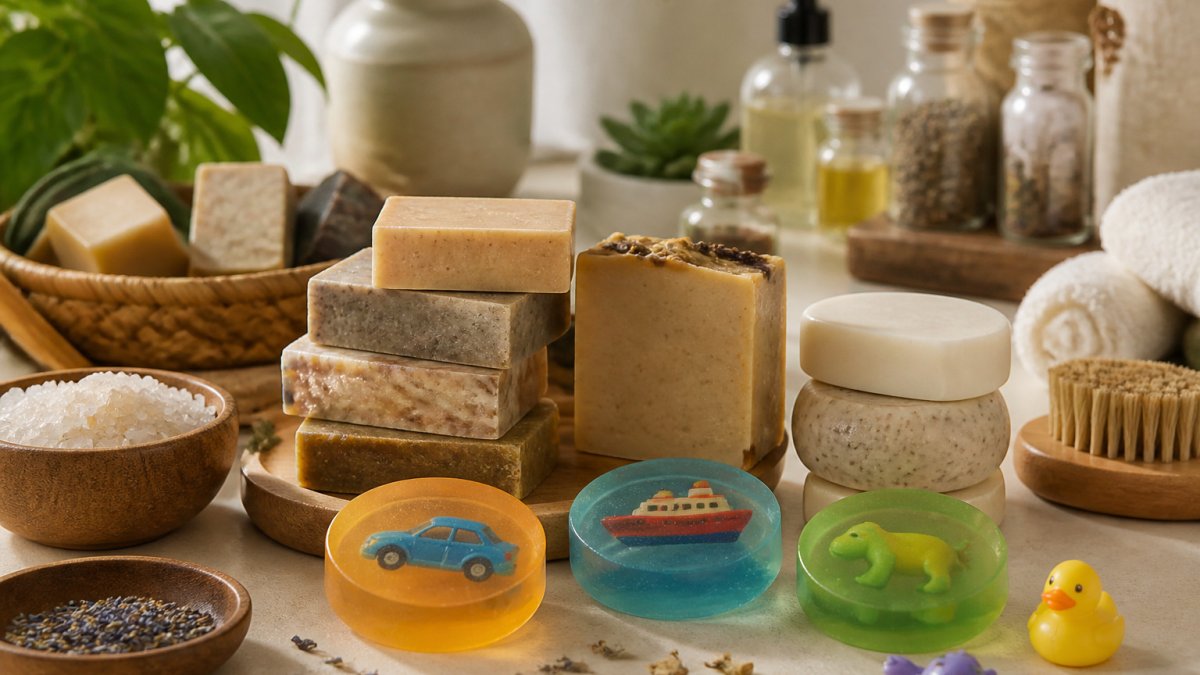
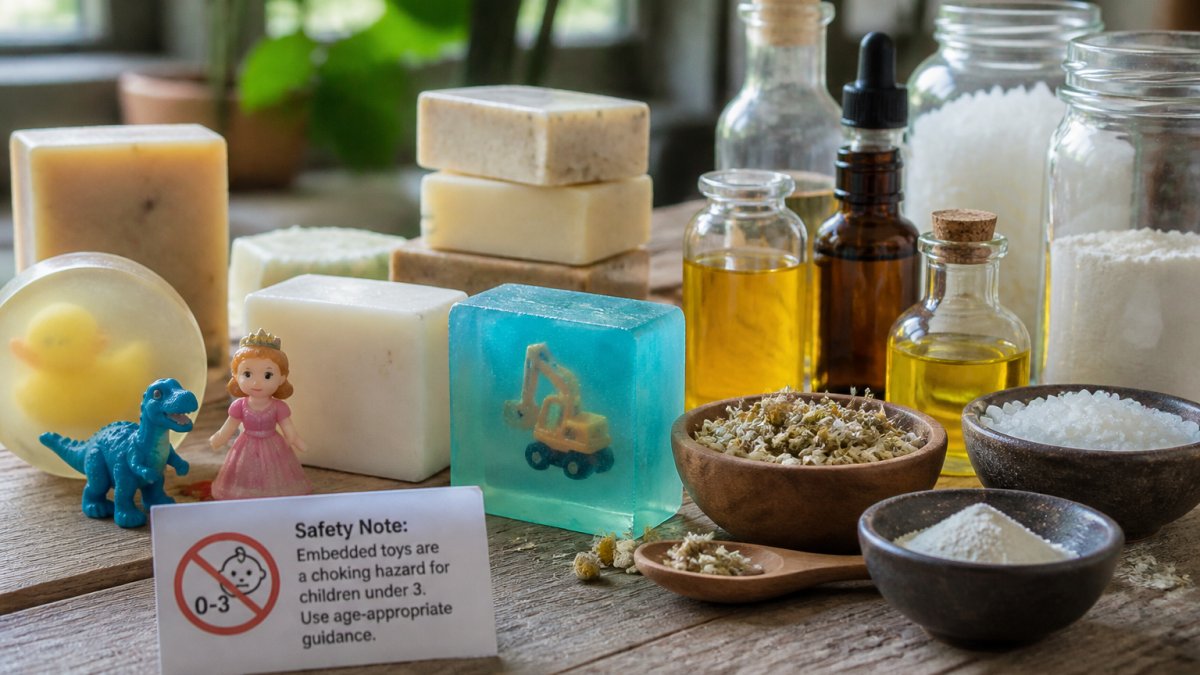
Kids soap with a toy inside. Our kids' soap line puts a small toy inside each bar, which makes bath time playful and gives party guests a memorable favor. The toy is embedded in the soap, and it is a choking hazard for children under 3, so keep these for older children and supervise use. Choose age-appropriate products, read the packaging guidance, and never leave a child alone with a bar. We now have photos of the kids soaps, so you can see the surprise toy styles before you order. Browse the ready-made soap bundle to find a set that suits your needs.
Check our website for current prices.
Frequently Asked Questions
What are the benefits of essential oils in skincare?
Some essential oils, such as lavender and rosehip, are commonly used in skincare for their soothing, moisturizing and fragrance qualities. Research on their effects on skin is still limited, and most evidence comes from small or laboratory studies rather than large clinical trials. Treat claims about acne treatment or anti-aging as possibilities rather than proven results. Choose products with clear ingredient lists and always patch test before regular use.
Can essential oils irritate sensitive skin?
Yes. Essential oils are concentrated plant compounds, and they can cause redness, itching, stinging or contact dermatitis, especially on sensitive or eczema-prone skin. Fragrance-heavy products carry the same risk. If you have eczema or have been told to avoid fragrance, check with your dermatologist before using any product containing essential oils, and look for unscented options when you need them.
How do you dilute essential oils for skincare?
Essential oils should be mixed with a carrier oil such as jojoba or sweet almond oil before they touch the skin. Many guides suggest lower concentrations for the face and sensitive areas than for the body, but exact limits depend on the oil and the product. Start with a very low concentration, patch test on the inner forearm for at least 24 hours, and stop if any redness or irritation develops.
Are essential oils safe to use on your face?
They can be, but the face is more sensitive than the body, so extra caution is important. Avoid applying undiluted oil near the eyes, and be careful with citrus oils if you will be in the sun, since they can cause phototoxic reactions. Patch test first, use low concentrations and talk with a healthcare provider if you have a skin condition.