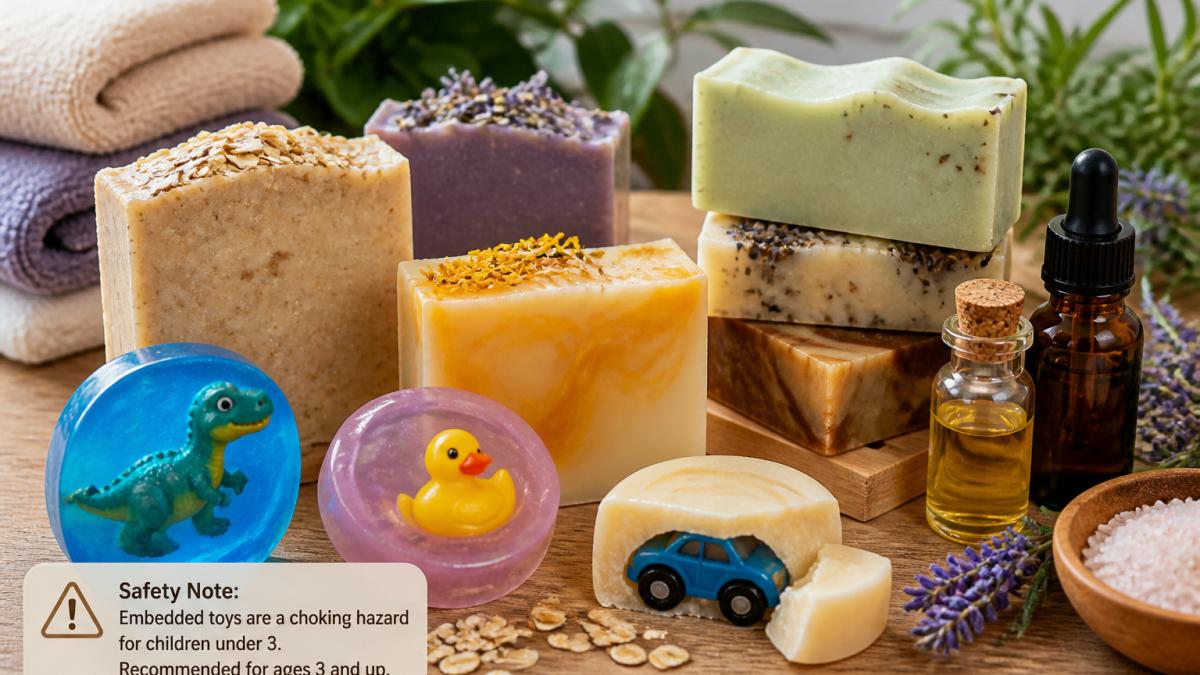
 blog
blog
Best Relaxing Essential Oil Bath Soaps
Table of Contents
- Why Essential Oil Bath Soaps Transform Your Routine
- Benefits of Essential Oils in Soap
- Top Essential Oils for Relaxation in Bath Soaps
- Safety, Dilution, and Skin Sensitivity
- How to Choose High-Quality Artisan Bath Soaps
- Kids Soap with Toy Inside: Safe Fun for Bath Time
- Building Your Evening Ritual with Essential Oil Soaps
- Frequently Asked Questions
Last Updated: October 2, 2026
Why Essential Oil Bath Soaps Transform Your Routine
A warm bath with essential oil bath soaps turns an ordinary evening into a restorative ritual, addressing stress, muscle tension, and skin health through therapeutic-grade essential oils and carrier oils.
Our artisan collection at FORYOURSOAP.COM delivers aromatherapy benefits that persist after your bath ends.
Benefits of Essential Oils in Soap
Aromatherapy and Stress Relief
Essential oils in bath soaps deliver aromatherapy through inhalation and skin absorption. Heat releases aromatic compounds that trigger your olfactory and limbic systems, creating an immediate calming effect.
Lavender, chamomile, and rose are classic stress-relief choices. Consistency matters: using the same scent each evening trains your body to recognize it as a relaxation signal.
The scent lingers on skin and in your bathroom, creating a serene atmosphere into bedtime. Handmade soaps with essential oils use genuine botanical extraction for fragrance.
Skin Health and Natural Cleansing
Essential oil bath soaps offer natural cleansing without stripping your skin barrier, maintaining hydration while removing impurities.
Chamomile and rose combined with carrier oils like coconut or sweet almond oil create a cleanser that respects sensitive skin, reducing breakouts and irritation.
Saponification transforms oils into cleansing molecules; essential oils enhance this while adding skin-nourishing properties.
Top Essential Oils for Relaxation in Bath Soaps
Lavender: The Classic Calming Choice
Lavender essential oil is the foundation of most relaxation-focused bath soaps, widely recognized for promoting calm and pairing well with other essential oils.
Use lavender-infused soaps 30-60 minutes before bed to prepare your nervous system for sleep. The oil is gentle on most skin, though patch-testing is recommended for sensitive skin.
High-quality lavender soap smells like fresh lavender fields, not artificial perfume.
Eucalyptus and Peppermint for Muscle Relief
Eucalyptus and peppermint create cooling or warming effects, ideal for post-workout baths or mornings when you need mental clarity.
Eucalyptus eases muscle aches when combined with warm water; peppermint adds mental clarity, leaving users more alert and focused.
Proper dilution in carrier oils is critical, undiluted essential oils cause skin irritation.
Chamomile and Rose for Sleep Support
Chamomile and rose address sleep quality directly: chamomile reduces anxiety while rose offers a grounding, luxurious sensory experience.
Using chamomile or rose soap as part of your evening ritual helps your body associate the scent with bedtime, easing sleep transitions.
Safety, Dilution, and Skin Sensitivity
Carrier Oil Dilution Ratios and Skin Safety
Essential oils must never be applied directly to skin undiluted. In bath soaps, they're dispersed throughout a carrier oil base at specific ratios that ensure safety and efficacy.
Essential oils are dispersed throughout a carrier oil base at specific ratios that ensure safety and efficacy.
Choose soaps with transparent carrier oil and essential oil concentration information.
Contraindications for Specific Health Conditions
People with certain health conditions should consult their healthcare provider before using essential oil bath soaps. Understanding which oils to avoid is critical:
Pregnancy: Avoid clary sage, rosemary, basil, and juniper oils, which may stimulate uterine contractions or affect hormone balance. Lavender, chamomile, and rose are safer, but medical clearance is recommended.
High Blood Pressure: Rosemary, thyme, and sage can elevate blood pressure. Use calming oils like lavender, chamomile, or ylang-ylang instead.
Asthma or Respiratory Sensitivity: Eucalyptus, peppermint, or tea tree oils can trigger bronchial constriction. Test soaps in well-ventilated spaces and consider fragrance-free options if reactions occur.
Eczema or Psoriasis: Patch-test on unaffected skin and wait 24-48 hours for reactions. Some do well with lower-concentration soaps (1-1.5%); others need fragrance-free options.
Photosensitivity or Sun-Reactive Medications: Citrus oils and certain herbs are phototoxic. Evening use is safe, but daytime application before sun exposure risks burns or hyperpigmentation. Avoid citrus-based soaps during daytime if taking photosensitizing medications.
Sensitive or Reactive Skin: Cinnamon, clove, oregano, and thyme oils cause irritation or contact dermatitis. Choose gentle oils like lavender, chamomile, rose, or geranium instead.
Patch Testing and Post-Bath Skin Care
Patch-test new soaps on your inner forearm or behind the ear. Wait 24 hours to check for reactions (redness, itching, burning, or rash) before full use.
After your bath, apply a hydrating lotion or body oil while skin is still slightly damp to lock in the soap's carrier oil benefits and prevent drying. This completes the ritual: soap prepares your skin, the bath relaxes your nervous system, and post-bath care sustains both.
How to Choose High-Quality Artisan Bath Soaps
Ingredient Transparency and Natural Sourcing
Evaluate artisan soaps through ingredient transparency. Reputable makers list carrier oils, essential oils, and preservatives by name, never vague terms like "fragrance."
Choose soaps with plant-based oils (coconut, olive, sustainably sourced palm, sweet almond, or sunflower).
Essential oils should be listed by their botanical names. "Lavender essential oil" or "Lavandula angustifolia" is transparent. If a label says "fragrance," "parfum," or "natural fragrance," it likely contains synthetic aromatic compounds rather than pure essential oils. Synthetic fragrances offer no aromatherapy benefit and may trigger sensitivities in people with reactive skin.
Therapeutic-Grade Oils Versus Synthetic Alternatives
One of the biggest quality gaps in the market is the confusion between therapeutic-grade essential oils and synthetic fragrance oils. Understanding this distinction is critical for choosing soaps that actually deliver on their aromatherapy promises.
Therapeutic-grade essential oils are pure plant extractions obtained through steam distillation, cold pressing, or solvent extraction. They contain the full spectrum of aromatic and therapeutic compounds from the plant.
Synthetic fragrance oils are chemically engineered to mimic a scent profile. They may smell like lavender, but they lack the therapeutic compounds and often contain petroleum-derived ingredients. Synthetic oils are chemically engineered to mimic a scent profile.
To identify which type a soap contains, ask the maker directly: "Are your essential oils therapeutic-grade or fragrance oils?" Reputable artisan makers will answer clearly and provide sourcing information.
Sustainability and Ethical Sourcing
High-quality artisan soaps should also reflect ethical sourcing practices. This is where many consumers feel misled by greenwashing, brands that claim "natural" or "organic" without backing it up.
Look for these markers of genuine sustainability:
- Carrier oil sourcing: Is the coconut oil fair-trade or sustainably harvested? Is palm oil certified by the Roundtable on Sustainable Palm Oil (RSPO)? Ethical makers specify this.
- Essential oil origin: Where do the lavender, chamomile, or rose oils come from? Reputable makers source from specific regions known for quality (French lavender, Bulgarian rose, Egyptian chamomile) and often partner directly with growers.
- Packaging: Are soaps wrapped in recyclable or compostable materials? Do they minimize plastic use? Sustainable makers invest in eco-friendly packaging even when it costs more.
- Certifications: Look for third-party certifications like USDA Organic (for the carrier oils), Fair Trade, or Leaping Bunny (cruelty-free). These require independent verification, not just brand claims.
A soap maker willing to discuss their sourcing chain and certifications is demonstrating accountability.
What Makes Handmade Soaps Last Longer
Handmade soaps are crafted with care and quality in formulation.
Kids Soap with Toy Inside: Safe Fun for Bath Time
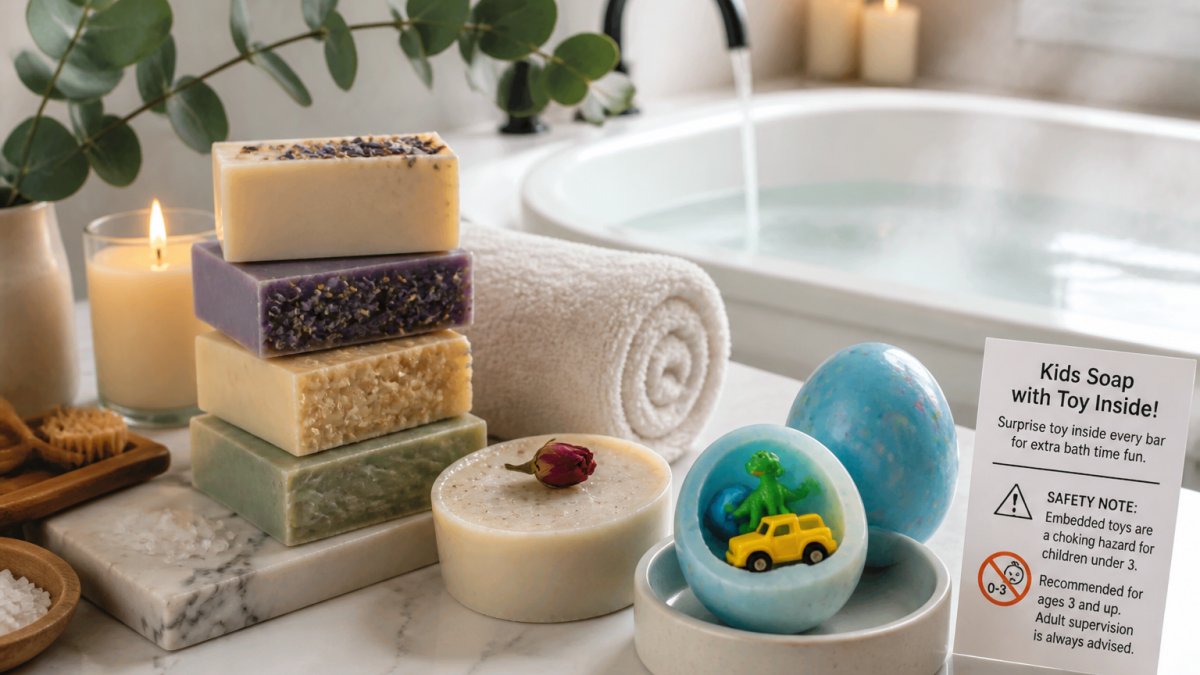
Bath time becomes an adventure when kids soap with toy inside combines cleansing with play. Our novelty kids soap line features embedded toys that surprise children as they use the soap, making hand-washing and bathing more engaging.
Age-Appropriate Guidance and Safety Notes
⚠️ CRITICAL SAFETY NOTE: Embedded toys in kids soap with toy inside present a choking hazard for children under 3 years old. These products are designed for children ages 3 and up only.
For children ages 3-5, supervise the entire bath routine. The toy should be removed and set aside once the soap is used.
Our kids novelty soap collection is formulated with the same care as our adult soaps, natural ingredients, essential oil blends, and carrier oils that are gentle on young skin.
We now have photos of our kids soaps available on our product pages, so you can see exactly how the toys are embedded and what to expect when you receive them.
Building Your Evening Ritual with Essential Oil Soaps
Your evening ritual begins the moment you step into the bathroom. Choosing a specific essential oil soap signals to your body that this time is for restoration.
Start by selecting one soap to use consistently for 2-3 weeks. This allows your body to recognize the scent and begin conditioning the relaxation response. After that period, you can rotate between complementary oils or adjust based on seasonal needs.
The ritual itself is simple: warm bath, your chosen soap, 15-20 minutes of uninterrupted time. No screens, no tasks. This consistency is what transforms a bath into a genuine stress-relief practice.
Building a sustainable self-care routine starts with choosing products that actually support your goals. Essential oil bath soaps from FORYOURSOAP.COM combine genuine aromatherapy benefits, skin-nourishing carrier oils, and handmade quality that lasts.
Frequently Asked Questions
What essential oils are best for relaxing in bath soaps?
Lavender is the most popular choice for relaxation, known for its calming properties and ability to reduce stress. Chamomile and rose also provide soothing effects, while eucalyptus and peppermint offer grounding and invigorating sensations. The best choice depends on whether you want deep relaxation or gentle invigoration. Therapeutic-grade essential oils in artisan bath soaps deliver stronger aromatherapy benefits than synthetic fragrances.
Are essential oil bath soaps safe for sensitive skin?
Essential oil bath soaps can work for sensitive skin, but dilution and quality matter significantly. Handmade artisan soaps often use carrier oils and natural ingredients that are gentler than commercial alternatives. Always check the ingredient list before purchasing. If you have eczema or severe skin sensitivity, patch-test first or consult your dermatologist. Look for soaps made without synthetic dyes, parabens, or harsh chemicals.
What are the benefits of essential oils in soap compared to regular soap?
Essential oils in soap provide aromatherapy benefits that regular soap cannot offer. They support stress relief, mental clarity, and improved sleep quality through inhalation of their floral aroma. Additionally, many essential oils have skin-nourishing properties that enhance cleansing and hydration.
How do I dilute essential oils safely for bath soaps?
Proper dilution is critical for safety. Always use a carrier oil like coconut or jojoba oil to further dilute concentrated oils before adding to bathwater. Never apply undiluted essential oils directly to skin or water. Quality artisan soaps handle this dilution during production.