 ultimate-guide
Why Handmade Soap Costs More: A Complete Breakdown
Table of Contents
- Why Handmade Soap Costs More Than Commercial Bars
- The Saponification Process and Labor Intensity
- Benefits of Cold Process Soap for Your Skin
- Raw Ingredients and Quality Control in Artisan Production
- Handmade vs Commercial Soap Ingredients: What's Really Different
- How to Store Handmade Soap to Make It Last Longer
- Cost-Per-Use Analysis: Is Handmade Soap Worth the Investment
- Conclusion
- Frequently Asked Questions
Last Updated: September 30, 2026
Why Handmade Soap Costs More Than Commercial Bars
Artisan soap bars cost three to five times more than commercial alternatives, but not because of arbitrary pricing. Understanding why handmade soap costs more reveals fundamental differences in production methods, ingredients, and skin benefits.
Every decision in handmade soap production, from ingredient selection to labor intensity to curing time, directly impacts the final price. This guide breaks down where that cost comes from.
The Saponification Process and Labor Intensity
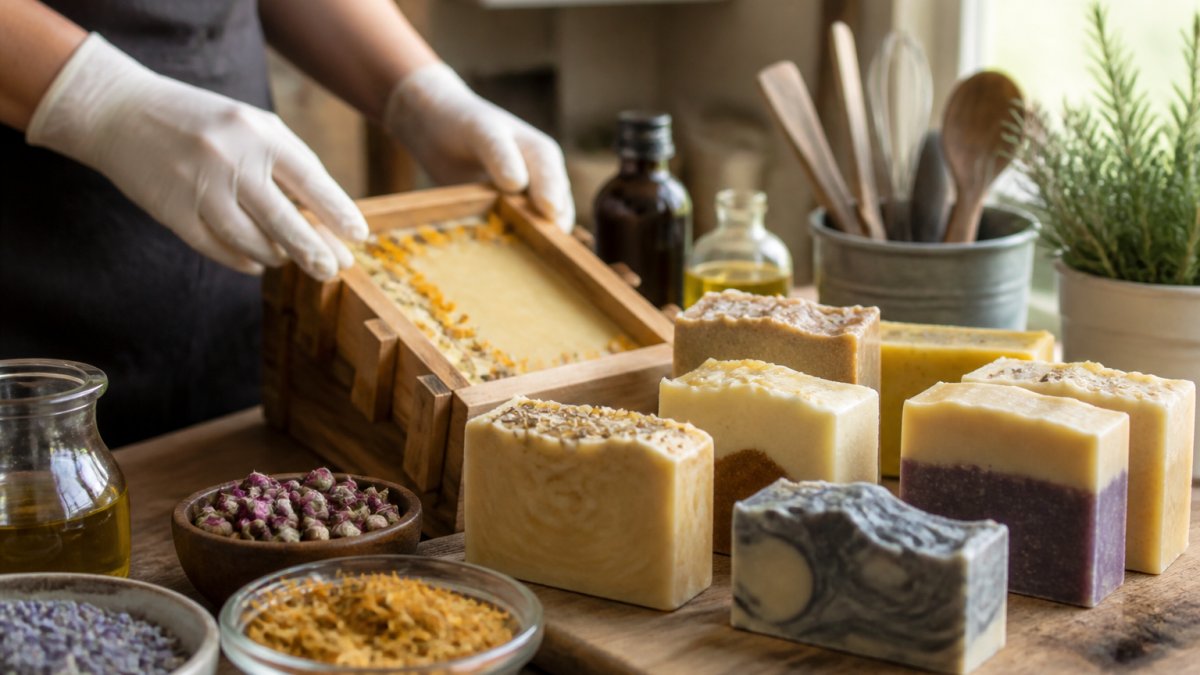
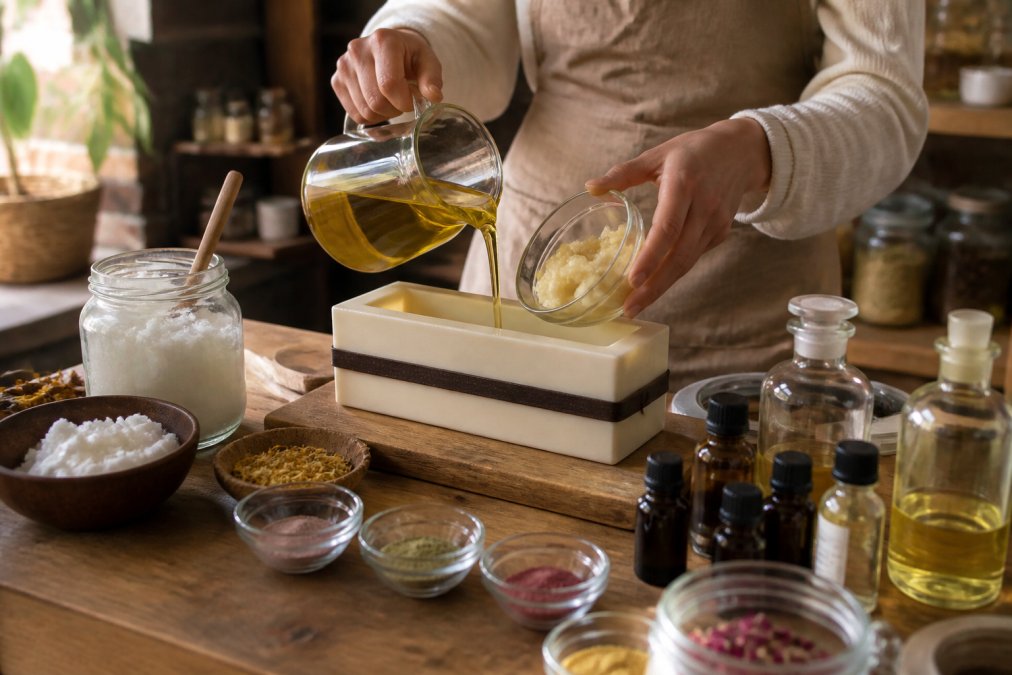
Handmade soap relies on saponification, where oils and butters combine with lye to create soap and glycerin, a process fundamentally different from commercial manufacturing, with substantially higher labor costs.
Cold-process soap making requires careful measurement, temperature control, monitoring, and four to six weeks of curing, all hands-on, with no automation or industrial equipment.
Commercial manufacturers use hot-process methods (saponification in hours) with automated machinery. One operator oversees millions of bars annually, spreading fixed costs across massive volume and driving per-unit cost down dramatically.
Small-batch producers charge for human time and skill, not just ingredients.
Benefits of Cold Process Soap for Your Skin
Cold-process soap preserves natural glycerin produced during saponification. Commercial manufacturers extract and sell this glycerin separately, then add cheap synthetic moisturizers to replace it.
Glycerin is a humectant that draws moisture into skin. Cold-process soap contains 8-10% glycerin, creating moisturizing effects commercial bars lack. People with sensitive skin, eczema, or dry skin often find handmade soap gentler and less drying.
Low saponification temperatures preserve beneficial compounds in premium ingredients like shea butter, coconut oil, and essential oils. Commercial hot-process methods use high heat, damaging these compounds.
People with irritation from commercial soaps often find cold-process handmade versions don't trigger reactions, due to better ingredient quality and manufacturing methods that preserve beneficial properties.
Raw Ingredients and Quality Control in Artisan Production
Artisan makers source premium butters and oils (organic shea butter, raw coconut oil, jojoba oil, argan oil), while commercial manufacturers use lower-grade, refined, or synthetic alternatives costing a fraction as much.
Small-batch quality control is labor-intensive: each batch is tested for cure, hardness, and lather. Defective batches are reworked or discarded. Commercial manufacturers can absorb losses; small producers cannot.
Sourcing premium ingredients in small quantities (5-pound orders) costs more per pound than commercial bulk purchases (500-pound drums).
Handmade vs Commercial Soap Ingredients: What's Really Different
The real difference lies at the molecular level: understanding the chemistry explains why handmade and commercial bars are fundamentally different products.
Soap vs. Detergent: The Molecular Distinction
True handmade soap is created through saponification, where triglycerides react with sodium hydroxide to form sodium fatty acid salts (Checking your browser). The soap molecule has a hydrophilic head and lipophilic tail, allowing it to suspend oil and water-based dirt.
Commercial detergent bars use synthetic surfactants like sodium lauryl sulfate (SLS) and sodium laureth sulfate (SLES), not true soap. These petroleum or plant-derived molecules mimic soap's cleaning action but with different properties: faster lather, longer shelf life, lower cost, and harsher skin effects.
Detergents strip moisture more aggressively than true soap because they don't retain glycerin. Handmade soap leaves behind 8-10% natural glycerin that draws moisture into skin.
Commercial bars labeled "soap" are often detergent bars, the FDA allows this because "soap" has entered common usage. Handmade soap makers use actual saponification, creating true soap molecules that cost more but deliver different skin effects.
Why Ingredient Quality Compounds the Cost Difference
Beyond chemistry, the oils and butters themselves vary dramatically in cost and quality. A handmade soap maker typically sources:
- Shea butter (unrefined, fair-trade sourced): $12-$18 per pound
- Coconut oil (organic, virgin): $8-$14 per pound
- Argan oil (cold-pressed): $25-$40 per pound
- Jojoba oil (pure): $15-$25 per pound
- Essential oils (pure, therapeutic-grade lavender, for example): $8-$15 per milliliter
A handmade bar using premium ingredients and pure essential oil fragrance has a higher raw material cost.
Commercial manufacturers use refined oils, lower-grade butters, and synthetic fragrances at a lower cost per pound, resulting in lower ingredient costs and shelf prices.
Essential Oils vs. Synthetic Fragrances: A Cost and Performance Gap
Fragrances represent one of the most visible cost differences. Pure essential oils require significant plant material: one pound of lavender oil requires 250 pounds of flowers and costs $200-$400. A handmade bar using pure essential oils carries a higher fragrance cost.
Synthetic fragrances cost less per pound, allowing commercial manufacturers to fragrance thousands of bars cheaply.
Essential oils are complex mixtures creating evolving scent profiles. Synthetic fragrances are 5-15 molecules creating static profiles. Handmade soap offers more sophisticated sensory experience, at a price.
Natural Colorants vs. Synthetic Dyes
Color adds another layer. Handmade soap makers often use natural colorants: mica (mineral-based, $8-$15 per ounce), clay (kaolin, bentonite, $2-$5 per pound), plant powders (spirulina, turmeric, $10-$20 per pound), and oxides (iron oxides, $5-$12 per pound). These are safe but expensive per unit of color produced.
Commercial bars use FDA-approved synthetic dyes (FD&C colorants) that cost pennies per pound and produce vivid, consistent colors across every bar. The trade-off: synthetic dyes can irritate sensitive skin, while natural colorants are gentler and often add skincare benefits (clay draws impurities, for example).
The Cumulative Effect
When you combine true saponification (more expensive than synthetic detergent manufacturing), premium oils and butters, pure essential oils, and natural colorants, the ingredient and process costs compound. A handmade bar isn't just "more expensive soap", it's a different product category with different chemistry, different sourcing standards, and different skin effects. The price premium reflects that fundamental difference, not marketing or artisan markup alone.
How to Store Handmade Soap to Make It Last Longer
Handmade soap can soften faster if stored improperly because it retains glycerin and lacks synthetic preservatives. But with correct storage, it lasts as long as or longer than commercial bars.
Keep handmade soap dry between uses with a draining soap dish. Avoid standing water and allow air circulation. Many people rotate between two bars to ensure complete drying.
A bar allowed to dry between uses lasts longer; left in water, it dissolves more quickly. Proper storage extends life significantly.
Cost-Per-Use Analysis: Is Handmade Soap Worth the Investment
The real question is cost per use and total cost of ownership. When factoring in longevity, skin benefits, and usage patterns, the economics shift significantly.
Breaking Down the True Cost Per Use
Handmade bars typically have a higher retail price than commercial bars. But shelf price tells only part of the story.
A handmade bar can last for many showers, while a commercial bar may last for fewer.
Accounting for Skin Health Benefits
For consumers with sensitive skin, eczema, or dermatitis, commercial bars trigger irritation requiring additional spending: medicated treatments ($15-$40), dermatologist visits ($150-$300), and moisturizers ($8-$20). A handmade bar that helps prevent skin irritation can become cost-saving.
Accounting for Actual Usage Patterns
Shower frequency: Not everyone showers daily. A person who showers less frequently extends a bar's life, reducing cost per use proportionally.
The Value Beyond Cost Per Use
Quantifiable cost-per-use analysis misses several value drivers:
Sensory experience: A handmade bar with complex essential oil fragrance and natural color transforms a daily routine into a small ritual. For consumers who prioritize self-care, this psychological value is real, even if not quantifiable in dollars.
The Break-Even Point
For most consumers, handmade soap becomes cost-neutral or cost-saving when:
- Skin sensitivity eliminates secondary skincare purchases (moisturizers, treatments, dermatology visits)
- Usage patterns extend bar life beyond theoretical estimates (soft water, shorter showers, shared household use)
- The consumer values environmental impact, transparency, or supporting small business enough to assign monetary value to those factors
Conclusion
Handmade soap costs more because every step of its production is more expensive. Premium ingredients, labor-intensive cold-process saponification, small-batch quality control, and glycerin retention all drive up the price. But when you understand what you're paying for, better skin feel, longer-lasting bars, natural ingredients, and genuine craftsmanship, the cost makes sense.
| Factor | Handmade Soap | Commercial Soap |
|---|---|---|
| Saponification Method | Cold-process, 4-6 weeks | Hot-process or synthetic, hours |
| Glycerin Content | 8-10%, retained in bar | Extracted and removed |
| Ingredients | Premium oils, butters, essential oils | Synthetic detergents, fragrance oils |
| Labor | Hands-on per batch | Automated, high volume |
| Shelf Life | 30-40 days per bar | 20-25 days per bar |
| Cost Per Use | $0.20-$0.30 | $0.05-$0.15 |
| Skin Feel | Moisturizing, gentle | Cleansing, often drying |
Frequently Asked Questions
What are the primary ingredients that drive up the price of artisan soap?
Premium natural butters, essential oils, and high-quality base oils significantly increase production costs. Essential oils cost substantially more than synthetic fragrances, often 10 to 15 times the price per ounce. Cold-process production also requires extended curing time (4 to 6 weeks), during which ingredients remain unused inventory. Small-batch makers cannot negotiate volume discounts like mass manufacturers, so each ingredient purchase costs more per unit. Quality control testing and hand-pouring labor add further expense that commercial detergent bars eliminate through automation.
How much should a quality bar of handmade soap cost?
Pricing depends on several factors including batch size, ingredient quality, essential oil selection, and local labor costs. For genuine artisan soap made with premium ingredients and cold-process methods, expect prices that reflect the 4 to 6 week curing time, hand-labor involved, and raw material quality. Visit FORYOURSOAP.COM to see current pricing for handmade options that match your budget and ingredient preferences.
Is making homemade soap cheaper than buying it?
While DIY soap can appear cheaper upfront, true cost-per-use often favors purchasing from established makers. Handmade soap can last longer than commercial bars when stored properly, potentially reducing replacement frequency. Artisan producers buy ingredients in larger quantities than home crafters, lowering per-unit costs while maintaining quality. Home production requires equipment investment, safety precautions, and significant time commitment. For most consumers, purchasing quality handmade soap is more cost-effective and safer than attempting production at home.
What's the difference between cold-process soap and commercial detergent bars?
Cold-process soap uses saponification at room temperature, naturally retaining glycerin and beneficial moisturizing properties that commercial detergent bars strip away. Detergent bars use synthetic surfactants and require harsh heat processing, making them faster and cheaper to produce but harsher on skin. Cold-process soaps are biodegradable and pH-balanced, while commercial bars often contain chemical additives and preservatives. The extended curing time for cold-process soap allows proper chemical reactions that improve skin compatibility, justifying the higher price point.