 blog
blog
Natural Essential Oil Soap: A Buyer's Guide
Table of Contents
- Why Natural Essential Oil Soap Matters for Your Skin
- Benefits of Essential Oil Soap
- Best Natural Soap for Sensitive Skin
- Essential Oil Soap vs Fragrance Oil Soap: What's the Real Difference
- How to Choose Quality Natural Essential Oil Soap
- What Makes Artisan Natural Essential Oil Soap Worth the Investment
- Frequently Asked Questions
Last Updated: September 28, 2026
Why Natural Essential Oil Soap Matters for Your Skin
When you're standing in the shower, the soap you choose matters more than most people realize. Your skin absorbs what you put on it, and conventional mass-produced soaps strip away natural oils while leaving behind synthetic chemicals. Natural essential oil soap offers a fundamentally different approach: it cleanses without compromising your skin's protective barrier.
The difference between natural essential oil soap and standard drugstore alternatives goes beyond marketing. Natural soaps crafted with pure essential oils deliver genuine aromatherapy benefits while your skin absorbs botanically-derived ingredients instead of petroleum byproducts. At FORYOURSOAP.COM, we believe your daily cleansing ritual should nourish, not damage.
If you've struggled with irritation, dryness, or that tight feeling after showering, natural essential oil soap addresses the root cause. This guide walks you through what separates quality natural essential oil soap from greenwashed alternatives, how to read ingredient labels like a pro, and which formulations work best for different skin types.
Benefits of Essential Oil Soap
Natural essential oil soap delivers benefits that synthetic fragrances simply cannot match. When essential oils are properly diluted and incorporated into soap, they provide both sensory and skin-level advantages.
The primary benefit is genuine aromatherapy. Unlike fragrance oils that are engineered chemicals, pure essential oils contain volatile compounds that interact with your nervous system. Lavender essential oil in soap can promote relaxation. Peppermint invigorates and awakens. These aren't placebo effects, they're documented properties of plant compounds.
Beyond aromatherapy, natural essential oil soap is gentler on sensitive skin. The saponification process in cold process soap production creates a naturally moisturizing bar because it preserves glycerin. Your skin stays hydrated rather than stripped.
Natural essential oil soap also biodegrades completely. Synthetic fragrances persist in waterways and accumulate in aquatic ecosystems. Essential oils break down naturally, making them better for environmental health. Many people find this matters when choosing products for their families.
The scent retention in quality natural essential oil soap lasts longer than most expect. Properly formulated bars maintain their aroma throughout their lifespan.
Best Natural Soap for Sensitive Skin
Finding the best natural soap for sensitive skin requires understanding what triggers reactions. Fragrance is often the culprit, but so are certain carrier oils and additives.
If you have sensitive skin, look for natural essential oil soap formulated with minimal ingredients. A short ingredient list means fewer potential irritants. The core components should be plant-based oils (coconut, olive, shea butter), water, sodium hydroxide (which converts to salt during saponification), and pure essential oils at appropriate dilution ratios.
Avoid bars listing "fragrance" or "parfum", these are synthetic and unpredictable for reactive skin. Pure essential oils should be named specifically: lavender, chamomile, rose, or tea tree, for example.
Cold process soap is often chosen for sensitive skin because it preserves the natural glycerin and doesn't expose ingredients to high heat. Melt and pour soap, while convenient, often contains additives and preservatives.
Consider unscented options if you're extremely reactive. Some people with conditions like eczema need fragrance-free products entirely. Ask whether unscented bars are available, many artisan makers offer them alongside their scented collections.
Test patch before committing. Order a single bar first and use it on a small area of skin for a week.
Essential Oil Soap vs Fragrance Oil Soap: What's the Real Difference
The distinction between natural essential oil soap and fragrance oil soap determines everything about what you're actually putting on your skin.
Essential oils are plant-derived volatile compounds extracted through pressing, distillation, or other mechanical methods. They contain the actual chemical compounds that give plants their properties. Lavender essential oil contains linalool and linalyl acetate, compounds with documented calming effects. Peppermint contains menthol, which creates that cooling sensation.
Fragrance oils are synthetic or semi-synthetic aromatic compounds created in laboratories. They're engineered to smell appealing and last longer on skin, but they don't contain the active plant compounds that essential oils provide. A fragrance oil labeled "lavender" smells like lavender but contains none of lavender's actual therapeutic properties.
For natural essential oil soap, this matters significantly. You're not just buying a scent, you're choosing whether to include actual plant medicine or just pleasant-smelling chemicals.
Fragrance oils cost less to manufacture, which is why they dominate commercial soap production. They also have higher flash points, meaning they survive the soap-making process more reliably. Essential oils are volatile and can degrade during high-heat processes, which is why cold process becomes essential for preserving them.
The skin experience differs too. Fragrance oil soap often feels more perfumed initially but loses scent quickly. Natural essential oil soap develops its aroma gradually as you use it, and the scent lasts throughout the bar's life.
If you're buying natural essential oil soap specifically for aromatherapy or therapeutic benefits, fragrance oil alternatives defeat the purpose. If you simply want pleasant-smelling soap, fragrance oils work fine, but they're not what "natural" means.
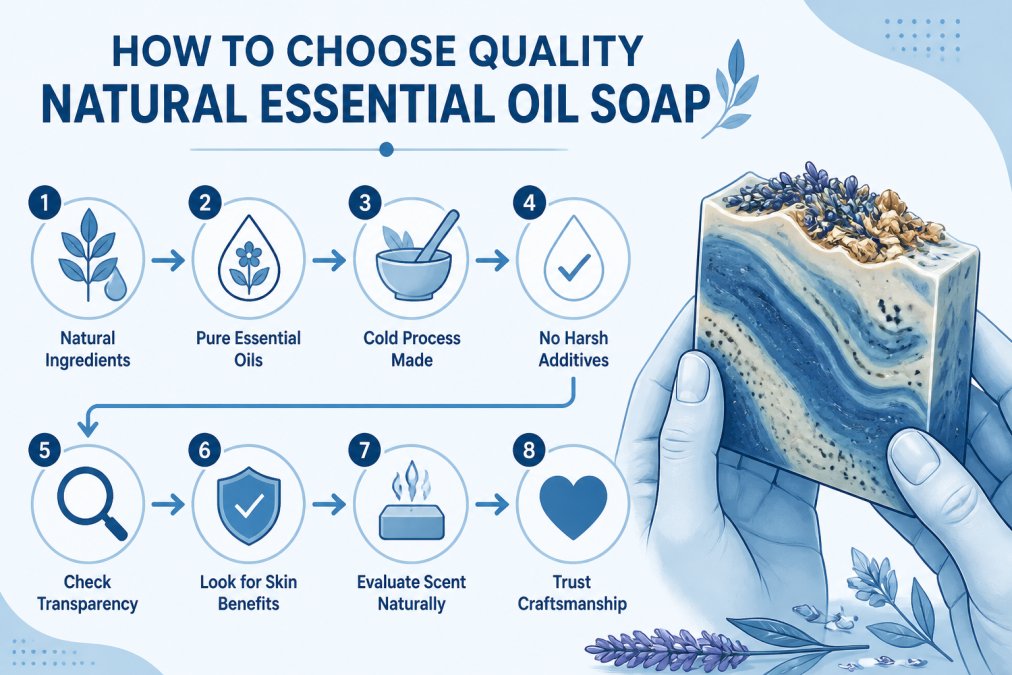
How to Choose Quality Natural Essential Oil Soap
Check the Ingredient List
The ingredient list is your first filter for quality. A legitimate natural essential oil soap should list fewer than 15 ingredients, and you should recognize most of them.
Look for these core components: plant-based oils (coconut, olive, palm, shea butter, jojoba), water, sodium hydroxide, and essential oils. That's the foundation. Anything beyond this should serve a clear purpose.
Avoid these red flags: synthetic fragrance, parabens, sulfates, phthalates, or ingredients you cannot pronounce. If the label says "fragrance" instead of naming specific essential oils, it's not what you're looking for.
Check whether the soap is labeled cold process or melt and pour. Cold process preserves more of the natural glycerin and botanical properties. Melt and pour is faster to produce but often contains additives.
Ingredient order matters. Ingredients are listed by weight, so essential oils should appear near the end (they're used in small, concentrated amounts). If essential oil appears in the first five ingredients, the concentration is likely too high for safe skin use.
Look for Cold Process or Melt and Pour Methods
Cold process soap-making involves mixing oils with sodium hydroxide at lower temperatures and allowing the mixture to cure for 4-6 weeks. This slow process preserves the natural glycerin that forms during saponification and prevents heat damage to essential oils.
Cold process bars are denser and feel more luxurious. The extended curing time allows the soap to fully harden and the pH to stabilize.
Melt and pour soap starts with a pre-made soap base that's melted, fragrance is added, and it's poured into molds to cool. It's faster (ready in days rather than weeks) but typically contains more additives and preservatives. The base is often made with synthetic ingredients or heavily processed oils.
For natural essential oil soap, cold process is a preferred method because it aligns with the philosophy of minimal processing and maximum ingredient integrity.
Verify Dilution Ratios and Skin Safety
Essential oils are potent. A properly formulated natural essential oil soap contains between 0.5% and 2% essential oil by weight, not more.
Some artisan makers use higher concentrations, which can trigger sensitivities or cause photosensitivity issues (especially with citrus oils like lemon or bergamot). Reputable producers document their dilution ratios because they understand skin safety.
Certain essential oils require special caution.
What Makes Artisan Natural Essential Oil Soap Worth the Investment
Artisan natural essential oil soap costs more than mass-produced alternatives, and there are legitimate reasons why. Understanding where your money goes helps you make informed choices about which products justify their price.
Production Time and Method
Cold process production is time-intensive. Each batch requires precise temperature control, careful ingredient measuring, and 4-6 weeks of curing before the soap is ready to sell. A manufacturer cannot rush this process without compromising quality. That time investment translates to higher production costs.
Ingredient Quality and Cost
Quality ingredients drive price significantly. Pure essential oils cost 5-15 times more than synthetic fragrance oils, depending on the oil. Lavender essential oil costs roughly $8-12 per ounce wholesale, while lavender fragrance oil costs $1-2 per ounce. Rose essential oil (true rose otto) runs $25-40 per ounce; synthetic rose fragrance costs $0.50-1 per ounce.
Ethical Sourcing and Sustainability Certifications
Many artisan soap makers prioritize ethical sourcing, and this adds cost. Fair-trade certified essential oils, oils sourced from producers paid fair wages and working under safe conditions, cost 20-40% more than conventionally sourced oils.
Cost-Per-Ounce Reality: Luxury vs. Budget Oils
Not all natural essential oil soaps are equally expensive to make, and understanding the cost structure helps you choose wisely.
The Skin Experience Difference
The difference you experience is real. Artisan natural essential oil soap feels different on your skin. The aromatherapy benefits are genuine because the essential oils are present in meaningful concentrations. Your skin doesn't feel tight or stripped after use because the glycerin is still present.
Frequently Asked Questions
What makes natural essential oil soap better for sensitive skin than commercial soaps?
Natural essential oil soaps avoid harsh synthetic chemicals and detergents that trigger irritation in sensitive skin. Handcrafted soaps using cold process methods preserve skin-safe ingredients. Essential oils, when properly diluted according to safe ratios, can be a good alternative to the irritants found in mass-produced commercial products. Always check the ingredient list and patch-test before full use if you have eczema or known sensitivities.
How long do artisan natural essential oil soaps typically last compared to drugstore brands?
Handcrafted natural essential oil soaps are denser and contain higher concentrations of nourishing base oils and carrier oils. The soap curing process, which takes 4-6 weeks for cold process soaps, creates a harder bar. Store your soap on a well-draining soap dish to maximize longevity.
What's the difference between essential oil soap and fragrance oil soap?
Essential oils are pure botanical extracts, while fragrance oils are synthetic compounds designed solely for scent. Essential oil soaps offer aromatherapy benefits and skin-safe dilution ratios, though they may have lower scent retention. Fragrance oils provide stronger, longer-lasting scent but may irritate sensitive skin. Natural essential oil soaps are generally preferred for wellness-focused routines, while fragrance oil options work better for those prioritizing scent intensity.
How do I know if a natural essential oil soap is truly natural and not greenwashed?
Look for a complete ingredient list showing base oils, carrier oils, essential oil blends, and any natural preservatives. Genuine artisan soaps list ingredients clearly without vague terms like 'fragrance' or 'natural flavoring.' Read customer reviews mentioning actual ingredients and effects on their skin. Handcrafted soaps should explain their saponification and soap curing process.