 How-to
Why Artisan Soap Lasts Longer: The Science Behind Bar Life
Table of Contents
- Why Artisan Soap Lasts Longer: Formulation and Curing
- Why Does Handmade Soap Need to Cure
- How Long Does Handmade Soap Last
- How to Make Bar Soap Last Longer
- How to Store Artisan Soap
- Troubleshooting: Why Your Soap May Not Last
- Kids' Novelty Soaps With Toys: A Special Consideration
- Frequently Asked Questions
Last Updated: October 13, 2026
Why Artisan Soap Lasts Longer: Formulation and Curing
"Why does artisan soap last longer?" is really two questions: use-life (how many showers one bar gives) and shelf life (how long an unused bar stays good). Formulation and curing drive both, differently.
Honestly, artisan soap doesn't automatically outlast every commercial bar, a well-made commercial bar can be very hard. What artisan makers control, and mass production trades away for speed, is the combination of a low-water recipe, a hardness-balanced oil blend, and a long cure.
What "Lasts Longer" Actually Means: Use-Life vs. Shelf Life
Use-life is measured in washes, not weeks. Two people can get very different numbers from the same bar depending on water hardness, how long it sits wet, and whether they lather on the bar or a cloth.
Shelf life is measured in months or years.
To compare bars fairly, weigh one on a kitchen scale before first use, use it under consistent conditions, and weigh it again when spent. That gives you a real number instead of a vibe.
Oil Selection: Hardness Is a Recipe Decision
Soap hardness comes from the fatty acid profile of the oils, not how "premium" the label sounds:
- Lauric and myristic acids (coconut oil, palm kernel oil) create a hard, fast-lathering bar, but they're also water-soluble, so a bar that's all coconut can dissolve quickly despite feeling firm.
- Stearic and palmitic acids (palm oil, tallow, cocoa butter, shea butter) are the workhorses of longevity. They produce a dense, slow-wearing bar with a creamy lather.
- Oleic and linoleic acids (olive, avocado, sunflower, sweet almond) are the soft, conditioning oils. A high-olive bar is gentle and mild, but it wears faster and benefits from a longer cure.
The artisan advantage isn't "better" oils, it's balancing them: push the stearic/palmitic side up for hardness, then add a modest amount of a soft oil for feel. Commercial production often optimizes for lather speed and shelf stability instead.
Water Content: The Variable Most People Never See
Every bar starts with water. Some reacts with lye; the rest keeps the batch workable.
Makers call this a water discount, deliberately using less water than a default recipe. A discounted batch is thicker and harder to pour, but the finished bar is denser and resists dissolving.
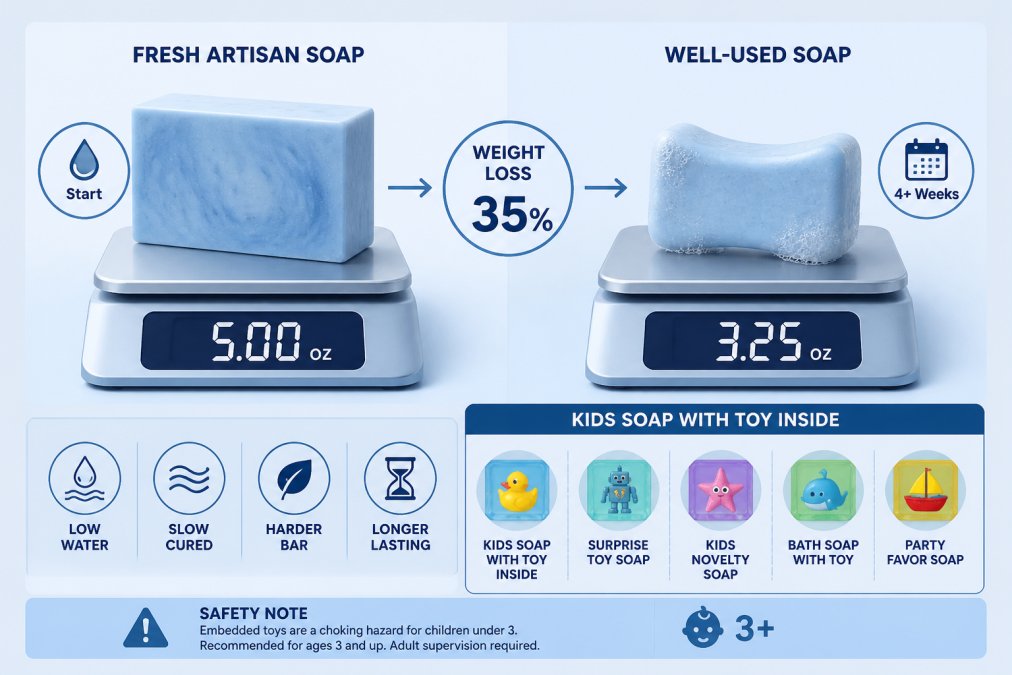
You can see the effect on a scale: a freshly cut bar loses a meaningful percentage of its weight over the first few weeks of curing as water evaporates.
Curing: Why Time Is an Ingredient
Curing is the stretch between cutting the loaf and boxing the bars. Two things happen at once:
- Water evaporates. The bar gets denser and harder, directly extending use-life.
- Saponification finishes. Residual lye reacts with remaining oils, so the bar becomes milder and the lather more stable.
A common artisan timeline runs four to six weeks, with high-olive or high-water batches going eight weeks or longer. A bar pulled at one week feels soft, wears fast, and may crack; the same recipe at eight weeks is a different product.
A Simple Home Test for Bar Longevity
To know whether your bar is actually lasting, stop guessing and measure it.
- Weigh the bar on a kitchen scale before first use. Record the number.
- Use it the same way every day, same cloth or hands, same shower, same drainage.
- Weigh it weekly. A bar losing roughly 0.1 to 0.2 ounces per week is normal; 0.4 ounces or more says something about its water content or your storage.
- Compare two bars side by side under identical conditions for a real answer.
Almost no one runs this test, and it's the only one that separates marketing claims from measurable wear.
Where Artisan Soap Genuinely Wins, and Where It Doesn't
Artisan bars tend to win on density and cure (slower wear, better shape retention) and on lather quality, which means you use less per wash, a quieter contributor to use-life.
They don't automatically win on absolute hardness; a commercial bar built around a high-stearic formula can be very durable.
Why Does Handmade Soap Need to Cure
Curing is the waiting period after soap is made and before it's ready to use. During this time, chemical changes make the bar harder, gentler, and longer-lasting. Skipping it produces bars that fall apart, patience is what separates a bar that lasts from one that doesn't.
Evaporation and Chemical Transformation
Freshly made soap contains excess water and unreacted lye. Curing lets water evaporate slowly, hardening the bar, while the reaction between oils and lye completes fully. That means:
- The bar becomes firmer and less likely to crack
- It becomes gentler on skin as excess lye neutralizes
- The lather improves and becomes more stable
This can't be rushed. A bar cured one week feels soft and crumbly; four to six weeks feels firm and solid.
How Cure Time Affects Firmness and Longevity
Temperature and humidity affect cure time, cool, dry conditions speed it up, warm, humid conditions slow it down, so makers adjust their process to their environment.
How Long Does Handmade Soap Last
The answer depends on what you mean by "last." Use-life and shelf life are two different things.
Use-Life Versus Shelf Life
Use-life is how long a bar lasts while you're using it. A typical 4-6 ounce bar, used daily with proper drying, lasts 3-4 weeks, longer depending on size, water hardness, and frequency.
Shelf life is how long a bar stays good unused. Properly stored artisan soap lasts for years and may harden further, making it last longer when you finally use it.
Comparing Artisan and Commercial Bars
Artisan bars generally last longer in use than commercial bars of the same size because they're denser, lower in water, and made with oils that create harder formulations. A commercial bar might last two weeks with daily use; an artisan bar of similar size often lasts three to four weeks.
Lather quality adds to this: artisan soaps often produce a creamier, more stable lather, so you use less per wash and extend use-life further.
How to Make Bar Soap Last Longer
You control how long your soap lasts after you buy it. The right habits and tools make a real difference.
Keeping Soap Dry Between Uses
Soap dissolves in water. Every time your bar sits in standing water, it loses material and hardens less over time. Keeping it dry between uses is the single most important thing you can do:
- Use a draining soap dish with holes or a slotted design
- Never leave soap sitting in a puddle
- Pat the bar dry after each use if it's very wet
- Store it away from the shower spray
- Let it air dry completely between uses
A draining dish is worth the investment; cheap dishes hold water and ruin even the best bars.
Choosing the Right Tools and Techniques
How you use the soap affects how long it lasts. A washcloth or loofah stretches the bar's life because you use less soap per wash:
- Wet your washcloth or loofah first, then rub it on the soap, so lather forms on the cloth instead of wearing down the bar
- Rotate between bars so each dries completely
- Cut large bars into smaller pieces if they're too big to dry between uses
Smaller pieces dry faster and last just as long in total.
How to Store Artisan Soap
Where and how you store soap affects its longevity, whether you're using it now or saving it.
Environmental Factors That Affect Storage
Heat, humidity, and light all affect soap over time; a cool, dry place preserves it best.
- Heat softens soap and can cause sweating or spots
- High humidity slows remaining hardening
- Direct sunlight fades colors and degrades fragrance oils
- Extreme dryness can cause cracking
The ideal storage is 60-75°F with humidity below 50%, a linen closet or bathroom cabinet usually works.
Storage Solutions for Different Environments
Your storage strategy depends on your climate.
For dry climates:
- Store in an open box or drawer for air circulation
- Wrap in kraft paper to protect from dust
- Check occasionally for cracking
For humid climates:
- Use airtight containers with silica packets
- Store in a cool room away from bathrooms
- Avoid sealed plastic bags, which trap moisture
For warm climates:
- Keep in the coolest room in your home
- Store away from direct sunlight and heat sources
For year-round use:
- Rotate stock so older bars are used first
- Keep a small supply in the bathroom and the rest in storage
Troubleshooting: Why Your Soap May Not Last
Sometimes a bar dissolves faster than expected or feels mushy. Here's what's usually happening.
A soft or mushy bar usually means it isn't fully cured or it's staying too wet between uses.
White spots or streaks are soda ash, a harmless cosmetic change from curing or storage.
A bar that smells off or develops mold was stored in a damp place. Move it somewhere dry immediately.
Kids' Novelty Soaps With Toys: A Special Consideration
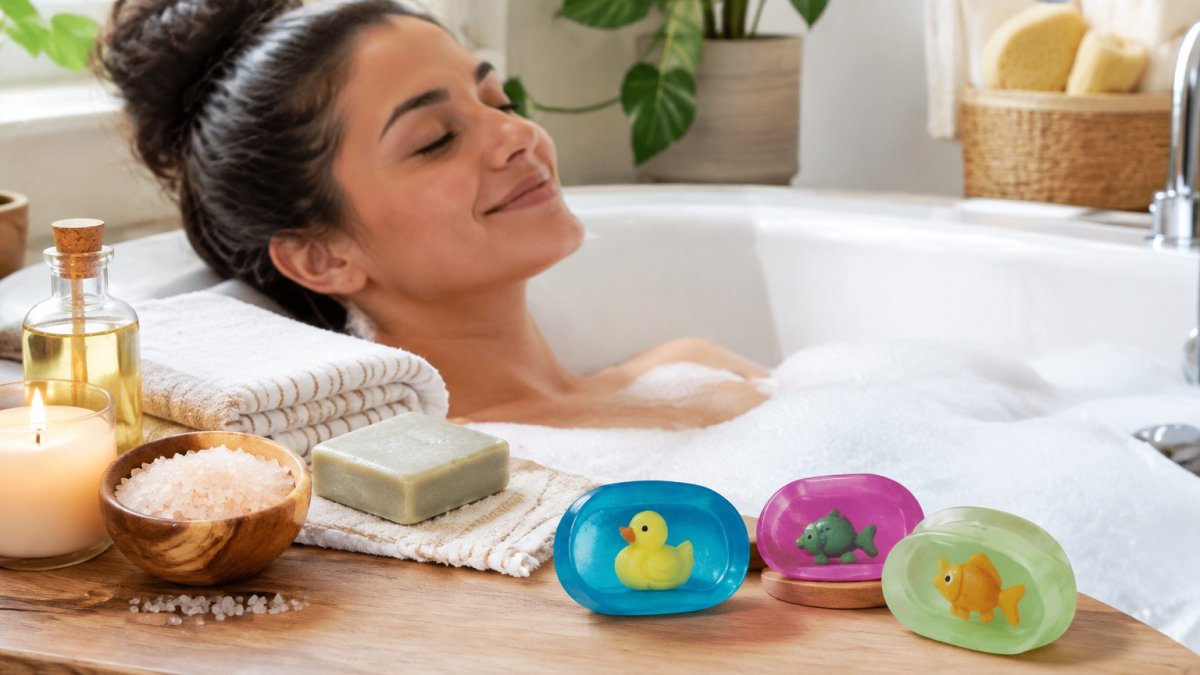
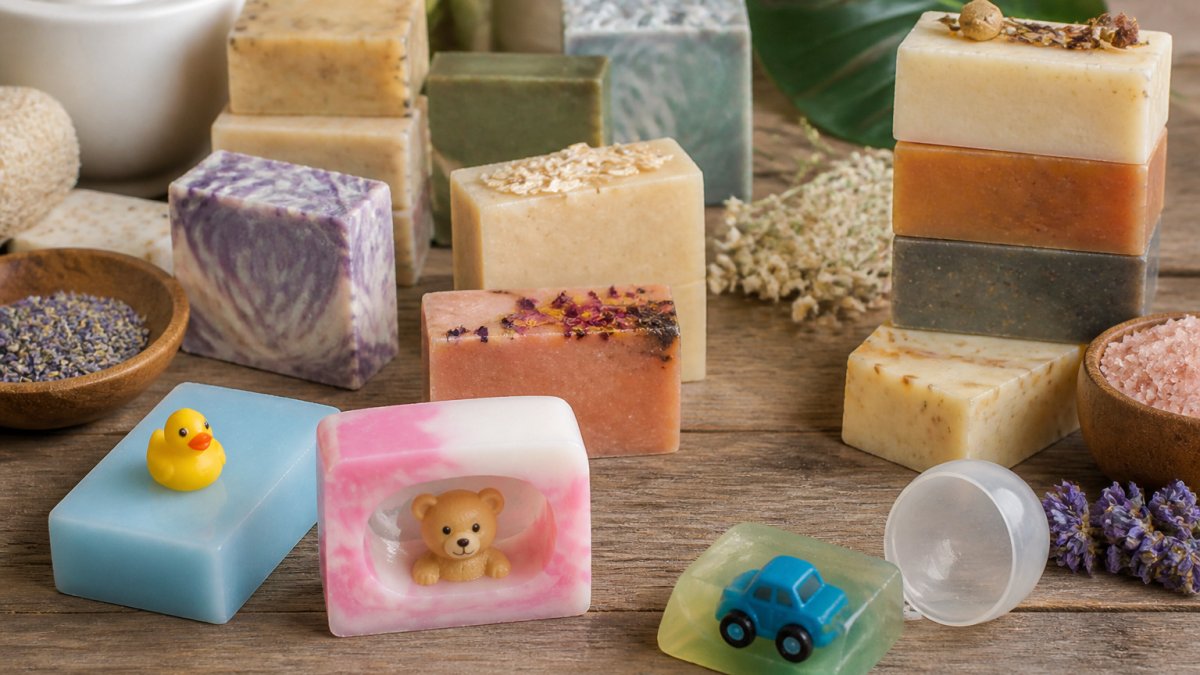
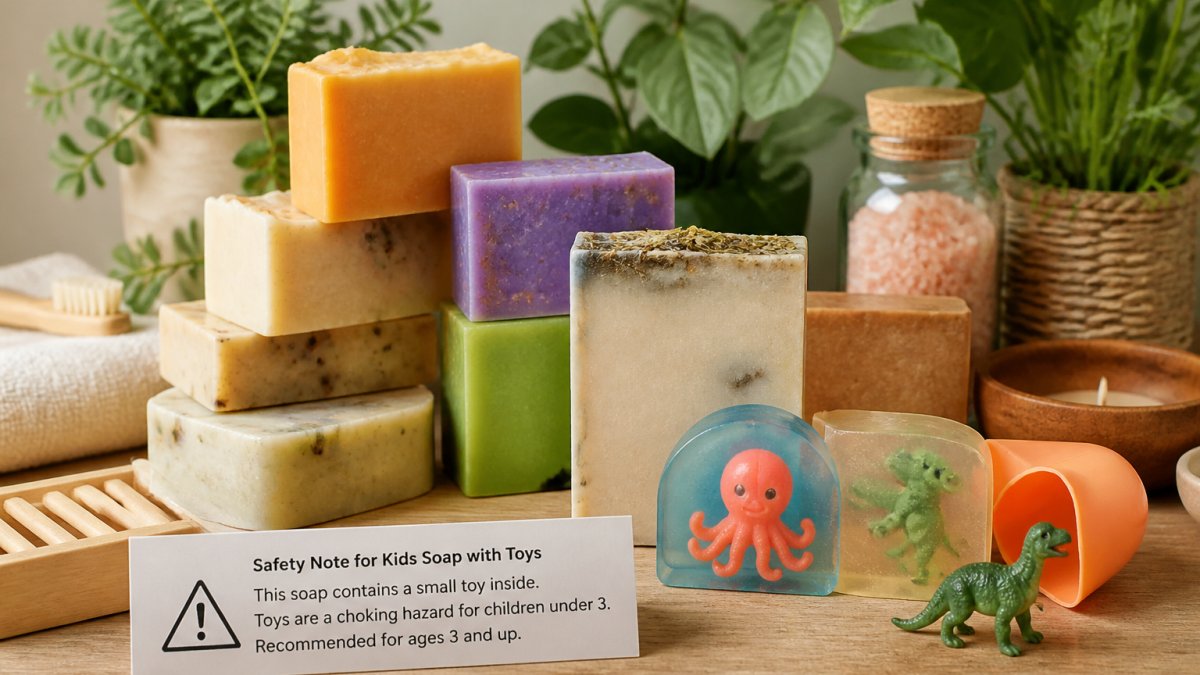
We now offer kids' soaps with embedded toys inside, designed to make bath time fun and engaging. These colorful, playful bars appeal to children and make excellent party favors or gifts.
Important Safety Note: Soaps with embedded toys are a choking hazard for children under 3 years old (Small Parts Ban and Choking Hazard Labeling). Always supervise young children during bath time.
Browse our collection of kids' soaps with toys to see photos and details of each design.
Frequently Asked Questions
Why does artisan soap last longer than commercial bars?
Artisan soap typically lasts longer because of its formulation and curing process. Handmade soaps often use higher-quality oils and lower water content, creating a denser, harder bar. Cold process artisan soaps are cured for 4-6 weeks, allowing excess moisture to evaporate and the bars to harden significantly. Commercial soaps often prioritize quick production, resulting in softer bars that dissolve faster. The difference in longevity can be substantial: a well-made artisan bar may last 2-3 times longer than a mass-produced equivalent.
How long does handmade soap actually last?
Handmade soap longevity depends on formulation, curing time, and usage. A properly cured artisan bar typically lasts 4-8 weeks with daily use, though this varies based on the soap's hardness, your bathing frequency, and how well you keep it dry between uses. Shelf life is different: an unopened handmade soap bar can remain stable for 1-2 years or longer if stored in a cool, dry place. Use-life refers to how long the bar lasts while actively bathing, while shelf life refers to how long it maintains quality before use.
Does keeping my artisan soap dry really make it last longer?
Yes. Water is the primary factor that softens and dissolves soap. When you allow your bar to dry completely between uses, you prevent excess moisture absorption, which maintains its firmness and extends use-life. A draining soap dish or soap saver that allows air circulation is essential. Even small puddles of standing water can significantly reduce how long your bar lasts. Rotating between multiple bars gives each one time to fully air-dry, which is one of the most effective strategies for extending longevity.
What should I do if my artisan soap is soft or crumbles easily?
Soft or crumbly bars usually indicate insufficient curing time or high water content. If you're experiencing this with store-bought soap, ensure you're storing it in a well-ventilated area away from humidity and moisture. Cut the bar into smaller pieces to reduce the surface area exposed to water, or use a washcloth or loofah to minimize direct contact. If the problem persists, the soap may benefit from additional air-drying time before use.
Artisan soap lasts longer because it's made with intention. Quality oils, careful water control, and proper curing create bars that feel better and last longer than mass-produced alternatives. At FORYOURSOAP.COM, every bar is crafted to deliver durability and luxury. Shop our collection of handmade soaps with extensive fragrances and essential oils, and experience the difference artisan quality makes. Use code SOAP10 for 10% off your first purchase, plus an additional 10% with promo code SOAP10.