 How-to
How to Build a Self-Care Ritual That Sticks
Quick Summary
A self-care ritual is a small practice you repeat on purpose, such as a short bath routine, to look after your body and mood. Build one by choosing one anchor moment, adding one small action under ten minutes, and doing it at the same time each day for two weeks.
- Keep the first version under ten minutes so it is easy to repeat.
- Tie the ritual to an existing daily habit, such as brushing your teeth.
- Use the same cues each time, like a candle, a playlist or a specific towel.
- Track the ritual with a simple tick on a calendar for two weeks.
- If you miss a day, do the shortest version within 24 hours.
Table of Contents
- What a Self-Care Ritual Is and Why It Matters
- Self-Care Ritual Ideas to Consider
- Choosing Practices That Fit Your Personal Needs
- How to Create a Self-Care Routine Step by Step
- Building a Self-Care Routine at Home
- How Long Should a Self-Care Ritual Take?
- Keeping Your Ritual Going: Troubleshooting Missed Days
- Start Your Own Ritual with a Simple Bath Routine
- Frequently Asked Questions
How to Build a Self-Care Ritual That Sticks
Last Updated: November 5, 2026
What a Self-Care Ritual Is and Why It Matters
Most people think of self-care as a bubble bath or a day off. A self-care ritual is different. It is a small, repeated practice you do on purpose to look after your body, mind and mood. A simple bath routine can turn an ordinary evening into a moment you actually look forward to.
A ritual works because it repeats. The same steps, at the same time, teach your brain that this is your time to slow down. That repetition is what separates a ritual from a one-off treat.
Why it matters:
- It gives your day a clear pause point
- It makes rest feel planned, not guilty
- It builds a habit you can rely on during stressful weeks
Self-Care Ritual Ideas to Consider
Ritual ideas work best when they are small enough to repeat. Here are options many people start with:
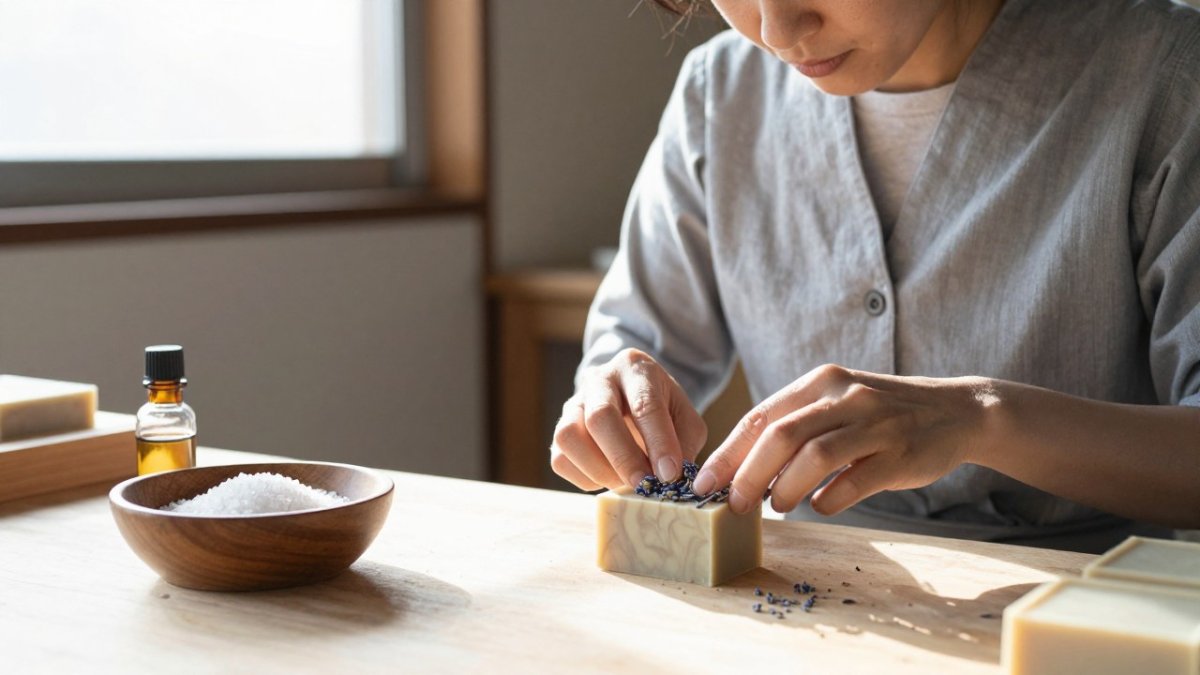
- A warm bath with a handmade soap. Pick a scent you enjoy, like lavender or citrus, and use it the same way each night.
- Five minutes of stretching before bed.
- Journaling three things you noticed that day.
- A cup of tea with the phone set aside.
- A soap gift basket to build a set of bath items you can reuse. Our Soap Gift Basket bundles soap, bath items and self-care treats together.
You do not need all of these. Pick one or two to start.
Choosing Practices That Fit Your Personal Needs
The best ritual is the one that fits your life, not the one a blog says you should have. Instead of copying a list, run a short matching process that connects what you need to what you can realistically do. This is the step most self-care advice skips, and it is the one that decides whether a ritual survives past week two.
Step 1: Name the need. Pick the one that fits this season, not all of them:
- Calm after overstimulating days
- Energy when you feel flat
- Comfort during grief, illness, or stress
- Focus when your attention is scattered
- Connection when you feel isolated
Step 2: Match the need to a sensory channel. Calm tends to respond to warmth, slow breathing, and low light. Energy responds to movement, cool water, and daylight. Comfort responds to texture, scent, and familiar routines. Focus responds to a single repeated cue and a short timer. Connection responds to doing the ritual with someone else or writing a note to someone.
Step 3: Fit it to your real constraints. Answer these honestly:
- Time: How many minutes do you actually have on a normal weekday, not your best day?
- Energy: Is this a high-energy or low-energy season of life?
- Budget: Can this ritual run on what you already own, or does it need a purchase?
- Space: Do you have a tub, a quiet corner, a car, or only a shared bathroom?
- Mobility: Can you do this seated, standing, or lying down, whichever your body needs?
- Caregiving: Can you step away for five minutes, or does the ritual need to happen with a child nearby?
Step 4: Build a two-part ritual. Pair one passive element (a warm soak, a cup of tea, a heated pad) with one active element (three slow breaths, a short stretch, a single journal line). The passive part signals rest; the active part gives the ritual a shape you can repeat.
Step 5: Test for two weeks, then assess fit without judgment. At the end of each week, ask three questions: Did I feel calmer, more energized, or more comfortable afterward? Was it easy to start? Would I do it again? If two of the three answers are yes, keep it. If not, change one variable, not the whole ritual.
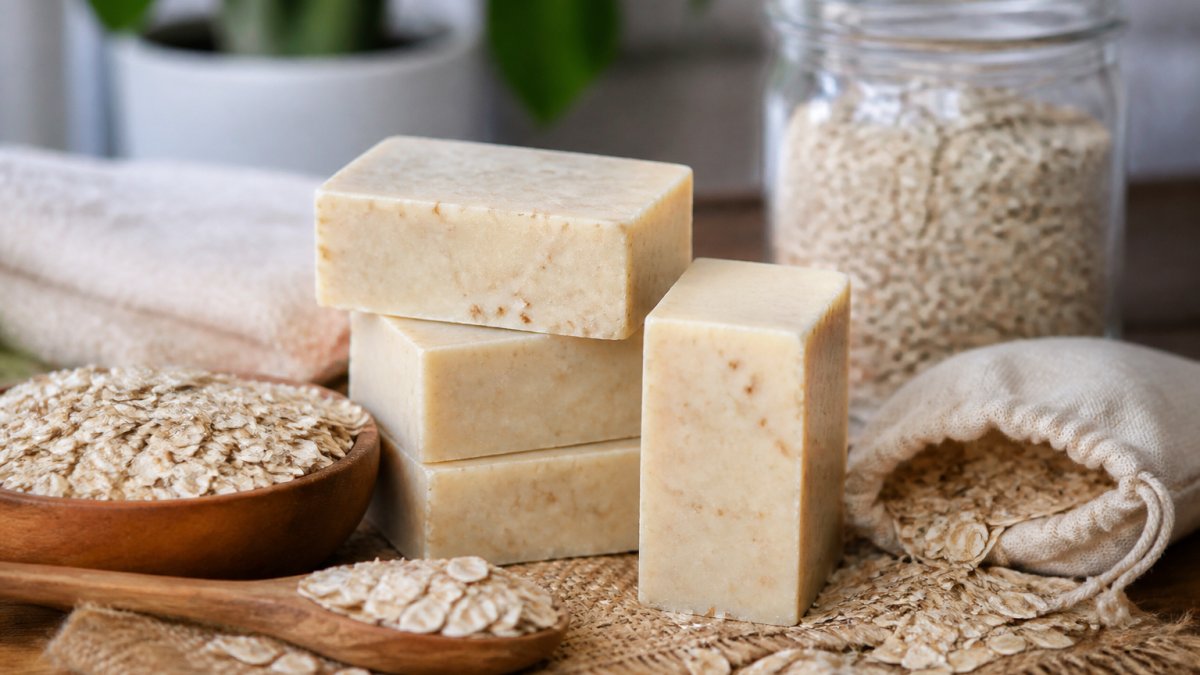
A note on sensitive skin and products. If you have sensitive skin, look for short ingredient lists and test a new product on a small patch first. Before you buy, you can try soap samples to find a scent and texture you like.
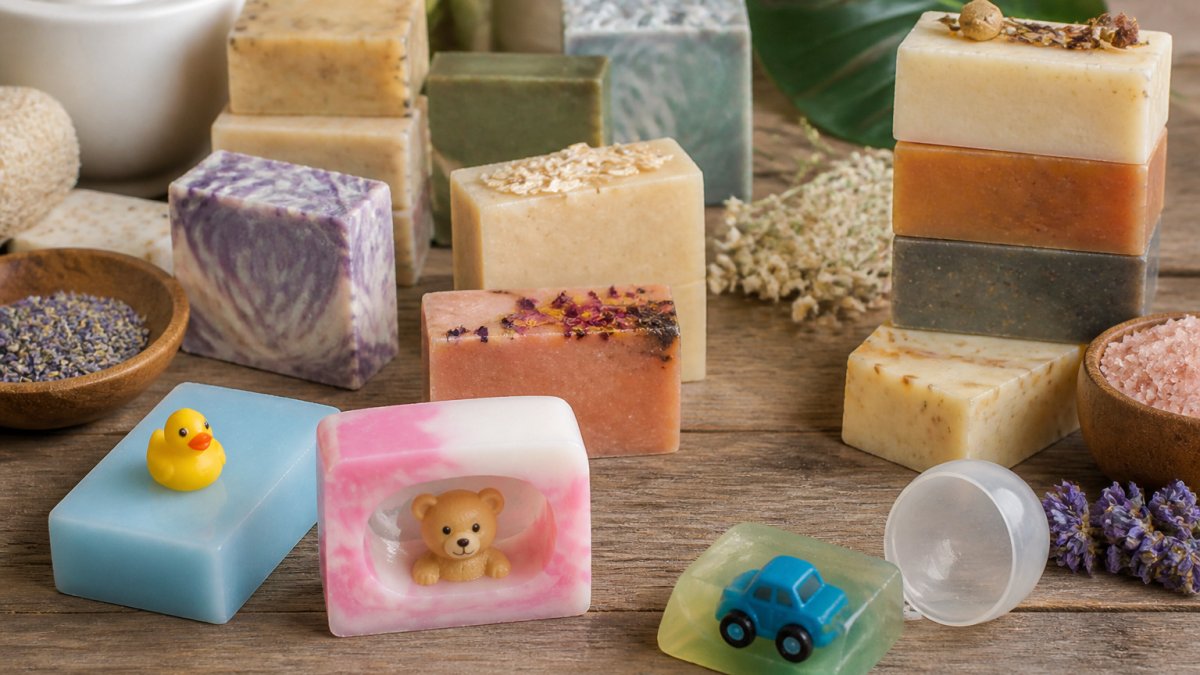
A note on kids in the house. If your ritual happens at bath time with children, our kids' soap line, sometimes called soap with a toy inside or surprise toy soap, can make the routine playful for them while you keep your own quiet moment. Safety note: the embedded toys are a choking hazard for children under 3.
The matching process comes down to five checks against your real life, each with a question to answer honestly.
| Constraint | Question to answer | Why it matters |
|---|---|---|
| Time | How many minutes on a normal weekday? | Sets the ritual's realistic length |
| Energy | High-energy or low-energy season? | Decides how much activity you can take on |
| Budget | Can you use what you already own? | Avoids buying before you know the ritual sticks |
| Space | Tub, quiet corner, car, or shared bathroom? | Determines where the ritual can happen |
| Mobility | Seated, standing, or lying down? | Chooses the physical posture that works for your body |
| Caregiving | Can you step away for five minutes? | Shows whether the ritual needs a child nearby |
How to Create a Self-Care Routine Step by Step
Follow these steps to build a routine that lasts:
- Choose one anchor moment. Pick something you already do daily, such as brushing your teeth.
- Pick one small action. Keep it under ten minutes at first.
- Set a fixed time. Same time, same place, when possible.
- Use the same cues. A candle, a playlist or a specific towel signals "ritual time."
- Track it for two weeks. A simple tick on a calendar is enough.
- Adjust, don't abandon. If it feels like a chore, shorten it or swap the activity.
Watch out: starting with too many steps is the most common reason people quit within a week.
Building a Self-Care Routine at Home
Home is the easiest place to build a ritual because you control the space. Dim the lights, set out a towel and keep your bath items within reach.
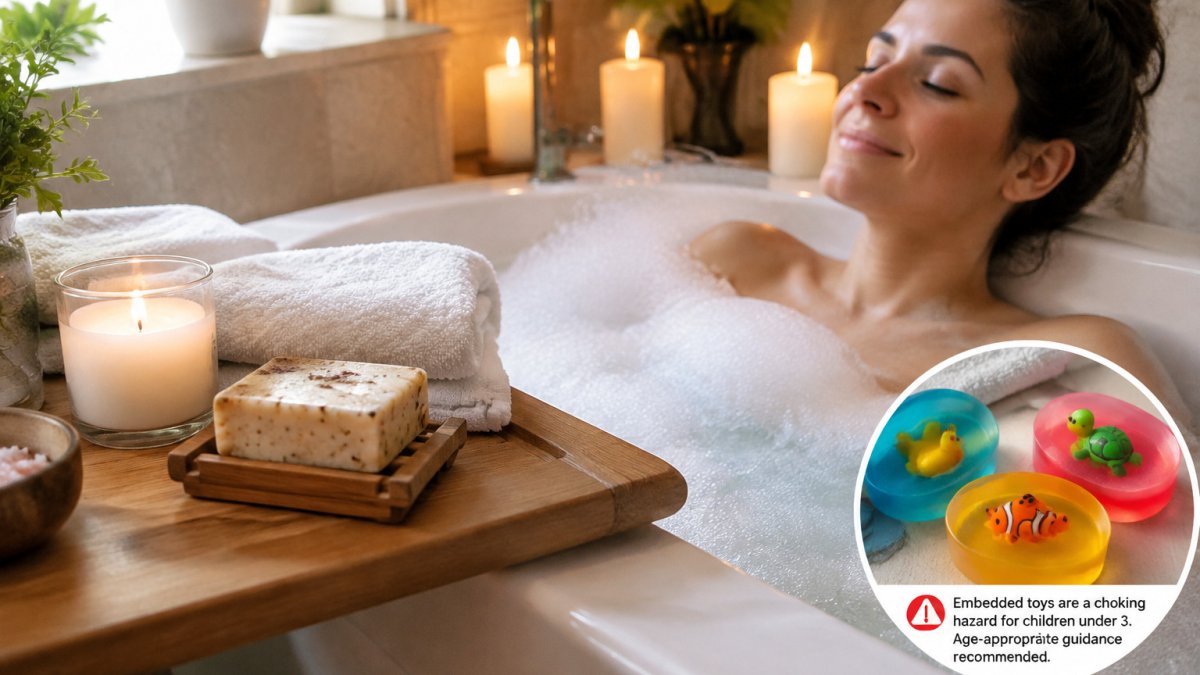
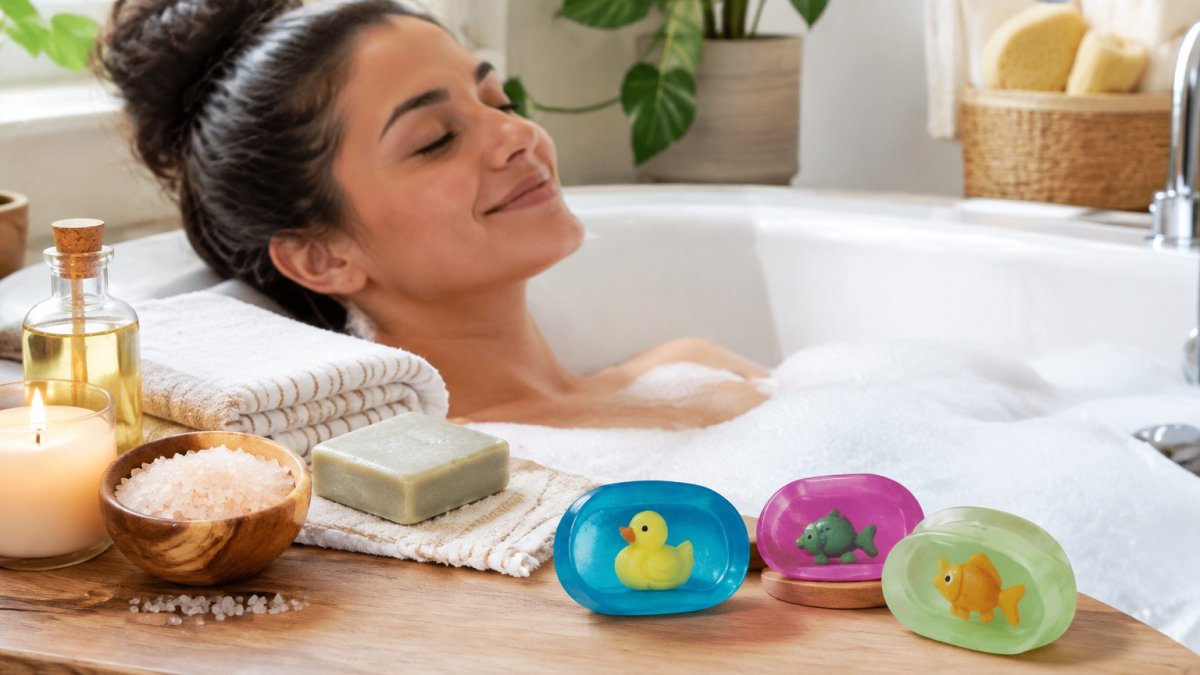
!A person enjoying a calm evening bath at home with a handmade bar of soap on a wooden tray, soft candlelight and a folded towel nearby
A bath salts and soap combination can anchor a weekly ritual. Try a bath salts set on the same night each week, and let the routine build around it. Many people find that a simple, repeated bath feels more restful than an elaborate one.
How Long Should a Self-Care Ritual Take?
A helpful ritual often takes five to fifteen minutes. That is long enough to slow down and short enough to repeat most days.
Longer rituals, such as a 30-minute bath on Sunday, can work too. The key is consistency. A five-minute ritual you do four times a week will do more for you than a long one you skip.
Keeping Your Ritual Going: Troubleshooting Missed Days
Missing a day does not undo your progress. What breaks a ritual is not the missed day; it is the story you tell yourself about it.
The 24-hour restart rule. If you miss a day, do the shortest possible version of the ritual within 24 hours.
Shrink before you skip. On busy or low-energy days, cut the ritual to its smallest unit rather than canceling it. A ten-minute bath becomes a two-minute hand wash with the same soap. A journal page becomes one sentence. A stretch routine becomes one stretch.
Separate the cue from the action. If you get bored with the activity, keep the time and place and swap what you do inside it. The candle, the playlist, or the specific towel is the ritual's anchor; the activity is interchangeable.
Plan for low-energy seasons. Illness, caregiving, a heavy work stretch, or a new baby will compress your ritual. Decide in advance what the minimum version looks like so you are not negotiating with yourself in the moment.
Watch out: treating a missed day as evidence that you failed is the most reliable way to quit. The ritual is a practice, not a performance, and a skipped day is data, not a verdict.
Adapt for changing schedules. If your schedule shifts, move the ritual to the new anchor moment rather than abandoning the old time. Brushing your teeth, the kids' bath, and the last light going off are all reliable anchors that survive schedule changes.
When to change the ritual entirely. If you dread the ritual for more than a week, it is a sign to change it, not to push harder. Swap the activity, shorten the time, or move it to a different part of the day.
A note on kids' bath routines. If your ritual is tied to bath time with children, our kids' soap line, sometimes called soap with a toy inside or surprise toy soap, can keep the routine playful for them while you protect your own quiet moment.
Start Your Own Ritual with a Simple Bath Routine
Ready to begin? Try this simple bath routine this week:
- Run a warm bath, not hot.
- Use one handmade soap you enjoy.
- Set a timer for ten minutes.
- Take three slow breaths before you step out.
- Note how you feel afterward.
If you want a set of relaxing options to choose from, browse our Best Relaxing Essential Oil Bath Soaps and pick one scent to start.
Kids' soap with a toy inside: Our kids' soap line, sometimes called soap with a toy inside or surprise toy soap, is a fun way to make bath time playful for children. Safety note: the embedded toys are a choking hazard for children under 3. Choose age-appropriate products and supervise bath time closely. We now have photos of our kids' soaps, so you can see the sizes and designs before you order. See the Soap Samples page for kids' options.
For more ideas, read our guide to luxurious self-care gifts worth buying.
Frequently Asked Questions
What is a self-care ritual?
A self-care ritual is a repeated, intentional practice that supports your physical, emotional, or mental well-being. Unlike a one-time treat, a ritual happens on a regular schedule and has a clear purpose, such as winding down at night or resetting after a stressful day. Examples include a warm bath, a few minutes of journaling, gentle stretching, or a gratitude practice. The regularity is what turns an isolated activity into a ritual that you can rely on.
How do I make a self-care routine I can stick to?
Start with one or two practices that take five to ten minutes and fit into an existing part of your day, such as your morning coffee or your evening shower. Choose activities you genuinely enjoy so you look forward to them rather than feeling obligated. Track your practice for a few weeks and adjust anything that feels like a chore. Consistency builds more reliably from small, manageable steps than from an ambitious plan you abandon within a week.
How long should a self-care ritual take?
Many people find that five to fifteen minutes is enough for a daily ritual to feel restorative. Longer practices, such as a fifteen to thirty minute evening bath or a weekend journaling session, can work well on a weekly basis. The right length is the one you can repeat consistently. A short ritual you do every day usually does more for your routine than a long one you skip most weeks.
What are some simple self-care rituals to do at home?
Simple options include a warm shower or bath with a fragrance you enjoy, a few minutes of breathing exercises, a short stretching session, drinking a glass of water first thing in the morning, or writing three things you are grateful for before bed. Many people pair a ritual with a sensory element such as a calming scent or a quiet space. Choose two or three that feel good, and rotate them if you get bored.
Start small, stay consistent, and let your ritual grow with you. FORYOURSOAP.COM offers handmade artisan soaps, bath salts and hand creams to help you build a routine that feels like yours.