 How-to
7 Steps to Find Truly Natural Bath Products
Quick Summary
To find truly natural bath products, read the full ingredient list rather than trusting front-label claims, since words like "natural" have no legal definition for cosmetics. Check the first five to seven ingredients for a gentle base, look for fragrance and essential oils, verify any certification in the certifier's database, and patch test new products before using them widely.
- Scan the first five to seven ingredients, since they make up most of the product.
- Watch for fragrance and essential oils, which are common irritants.
- Verify organic claims by searching the certifier's database.
- Patch test on your inner forearm and wait 24 to 48 hours before full use.
- Compare cost per use, not just price per bar.
Table of Contents
- Why Natural Bath Products Are Hard to Judge
- How to Read Bath Product Ingredient Labels
- Checking Natural, Organic, and Eco-Friendly Claims
- Choosing a Natural Bath Soap or Body Wash for Your Skin Type
- Picking a Natural Bath Soak, Bath Salts, and Bath Oils
- Kids Soap With a Toy Inside: Safety and Gift Guidance
- Judging Value and Environmental Impact Before You Buy
- Your Next Step: Build a Natural Bath Shopping Checklist
- Frequently Asked Questions
Why Natural Bath Products Are Hard to Judge
Natural bath products look simple on the shelf, but they are hard to judge. A bar can say "natural" on the front and still carry synthetic cleansers, heavy fragrance and preservatives further down the list. Most shoppers never see that until their skin reacts.
Here is the core problem. Terms like "natural," "organic," and "eco-friendly" are not always defined the same way across brands. Many businesses use them as marketing words rather than tested standards. So the label alone rarely tells the full story.
The good news is that you can check products with a few simple habits:
- Read the full ingredient list, not just the front label
- Notice where fragrance and essential oils appear
- Look for third-party certifications you can verify
- Test a small amount on your skin first
We walk through each step below, starting with the ingredient list.
How to Read Bath Product Ingredient Labels
In the United States, cosmetic ingredients must be listed on the package, and they appear in descending order by weight (the FDA).
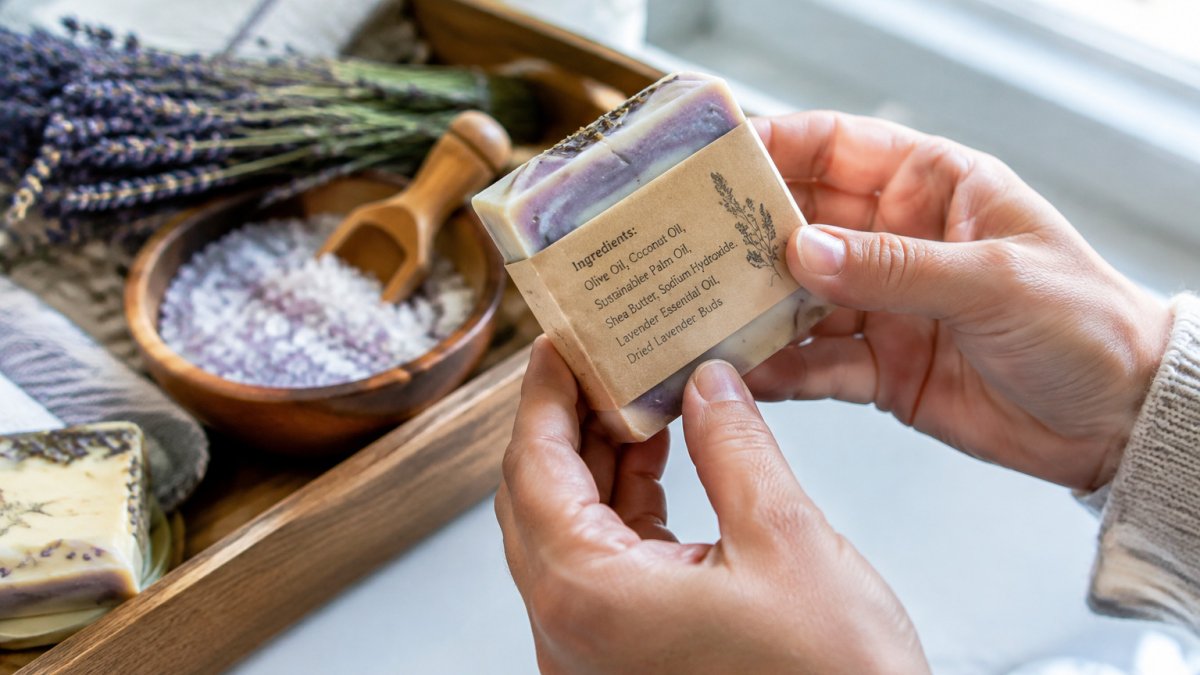
A practical method is to read the list in four passes rather than one.
Pass 1: The base. Scan the first five to seven ingredients. Look for water, plant oils, butters, or plant extracts. A bar that leads with a gentle base is usually a better starting point than one that leads with harsh detergents.
Pass 3: Fragrance and essential oils. Locate "fragrance," "parfum," or named oils such as lavender, eucalyptus, peppermint, and citrus.
Pass 4: Preservatives and additives. Anything after the fragrance is present in small amounts.
What to look for:
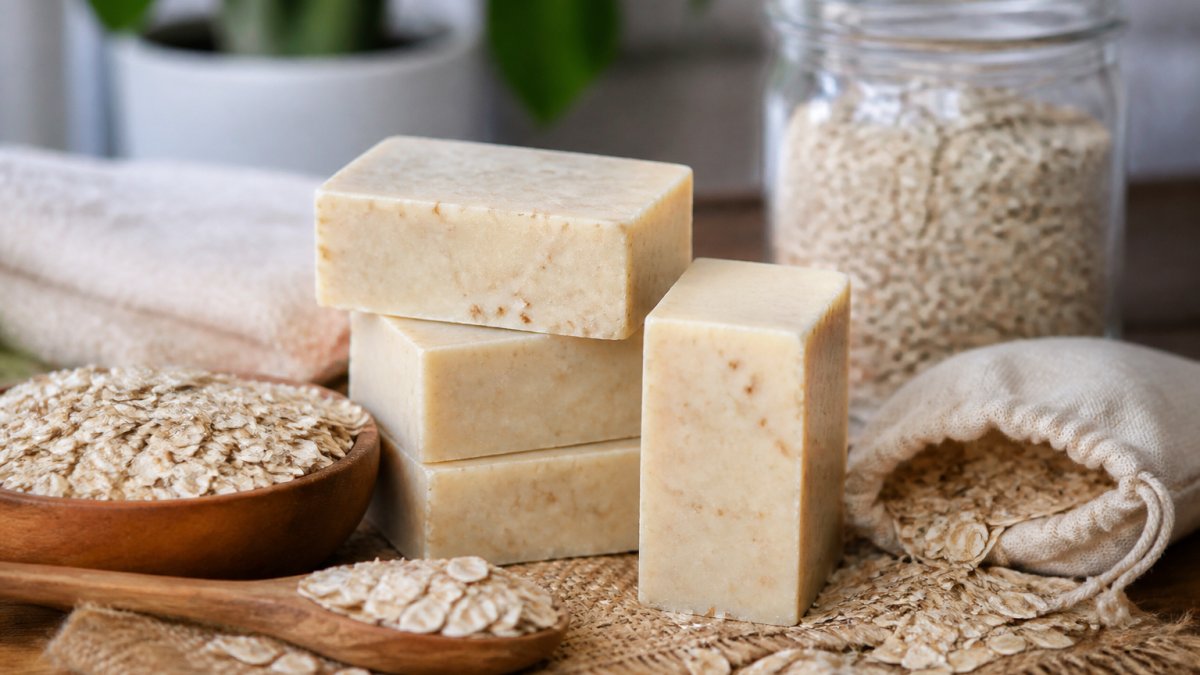
- Recognizable names, such as olive oil, shea butter, or oat kernel flour
- Clear plant-based or mineral ingredients, such as Epsom salt or magnesium flakes
- Short lists with fewer unfamiliar names
What to question:
- Long strings of chemical-sounding names near the top
- Vague terms like "fragrance blend" with no further detail
- Ingredients that make bold promises the label cannot back up
A common mistake is assuming a short list is always better. A short list with a harsh cleanser can still irritate sensitive skin.
Spotting Fragrance and Essential Oils on the List
Fragrance is one of the most common irritants in bath products, so it deserves a close look. The label may say "fragrance," "parfum," or list a blend of essential oils without naming each one.
Essential oils are natural, but "natural" does not mean gentle for everyone. Many people react to them, especially on broken or sensitive skin.
Here is a quick way to scan fragrance on a label:
- Fragrance or parfum listed: The product contains added scent, which may be a blend of many ingredients
- Essential oils listed by name: You know exactly which oils are present, so you can check them against your own history
- "Unscented" or "fragrance-free" on the label: Usually the better pick for sensitive skin, though still read the full list
Watch out: a product can be labeled "unscented" and still contain a masking fragrance added to cover the smell of other ingredients, so confirm the word "fragrance" does not appear further down the list.
Checking Natural, Organic, and Eco-Friendly Claims
Words like "natural," "organic," and "eco-friendly" appear on almost every bath product.
Treat each term separately, because each one is backed by a different level of proof.
"Natural." There is no legal definition for cosmetics, so the word is essentially a marketing statement.
"Organic." This one has real structure behind it.
"Eco-friendly." This is the vaguest of the three. Ask what the brand actually does, such as sourcing, packaging, or production, and whether it can point to specifics.
Here is a verification sequence you can run in a few minutes:
- Find the certifier's name. A logo without a named certifier is hard to verify. Note the exact program, such as USDA Organic or COSMOS.
- Search the certifier's database. Most recognized certifiers publish a searchable list of certified products. If the product does not appear, treat the claim as unconfirmed.
- Check the stated percentage. Some organic certifications require a set share of organic ingredients. Look for the percentage on the label or the certifier's page, and compare it to what the front label implies.
- Cross-check the ingredient list. A product that claims organic botanicals but lists them after the fragrance is using them in small amounts.
- Separate formula claims from packaging claims. Ingredient quality and environmental impact are different promises, and a brand can be strong on one and weak on the other.
We recommend treating "eco-friendly" as the vaguest term of the three.
Choosing a Natural Bath Soap or Body Wash for Your Skin Type
Your skin type should guide your choice more than any marketing claim.
Dry or eczema-prone skin: Look for soaps with plenty of oils and butters, such as olive, shea, or oat.
Oily or acne-prone skin: A lighter cleanser with a clear, simple base may suit you better. Still check for heavy oils that could clog pores.
Sensitive skin: Choose unscented options with short ingredient lists. Keep the first few ingredients gentle and familiar.
Shoppers with sensitive skin often ask how to tell whether a new soap will cause a problem. The honest answer is that no label can promise that.
Patch Testing and Allergy Safety
Patch testing is simple and worth doing before you use any new bath product all over your body. Here is a basic method:
- Apply a small amount of the product to a patch of skin on your inner forearm.
- Wash it off after a few minutes, or follow the directions on the label.
- Wait 24 to 48 hours and check for redness, itching, bumps, or swelling.
- If the area stays calm, you can try the product more widely.
If you have a known allergy or a skin condition such as eczema, talk with a dermatologist or allergist before trying a new product. They can point you toward ingredients to avoid based on your history.
For eczema-prone skin in particular, unscented formulas are usually the safer starting point. Patch test first, even with products labeled gentle.
Picking a Natural Bath Soak, Bath Salts, and Bath Oils
Bath soaks, salts, and oils serve different purposes, so judge them by what you want from them.
Bath salts and mineral soaks: Epsom salt and magnesium flakes are common choices for a relaxing soak.
Bath oils: Oils float on the water and can make the tub slippery, so use them with care.
A useful tip: keep the soak simple at first.
The table below sums up what each type of bath product is for and what to check on its label.
| Product | Best for | Key check |
|---|---|---|
| Bath salts and mineral soaks | A relaxing soak | Pure mineral content, minimal added fragrance |
| Bath oils | Moisturizing while bathing | Plant oil base, added essential oils |
| Bath soaks with essential oils | Calming scent | Fragrance is the main reason to buy |
| Plain mineral soak | Fragrance-sensitive skin | Start simple, add scent later |
Kids Soap With a Toy Inside: Safety and Gift Guidance
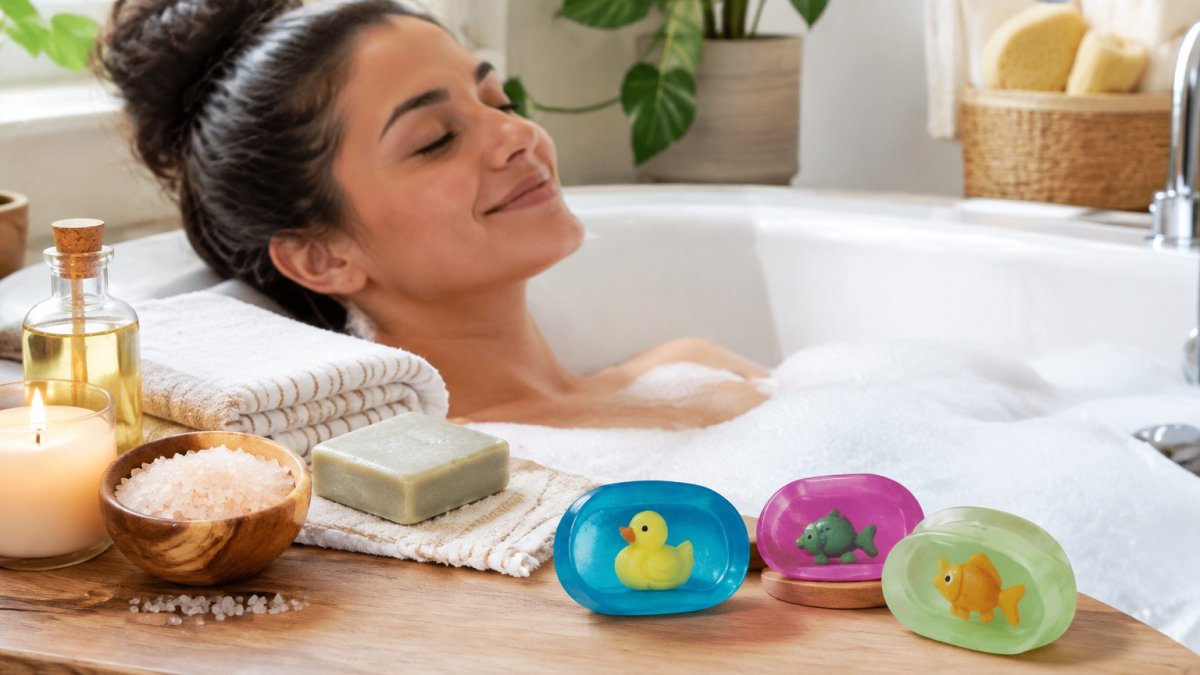
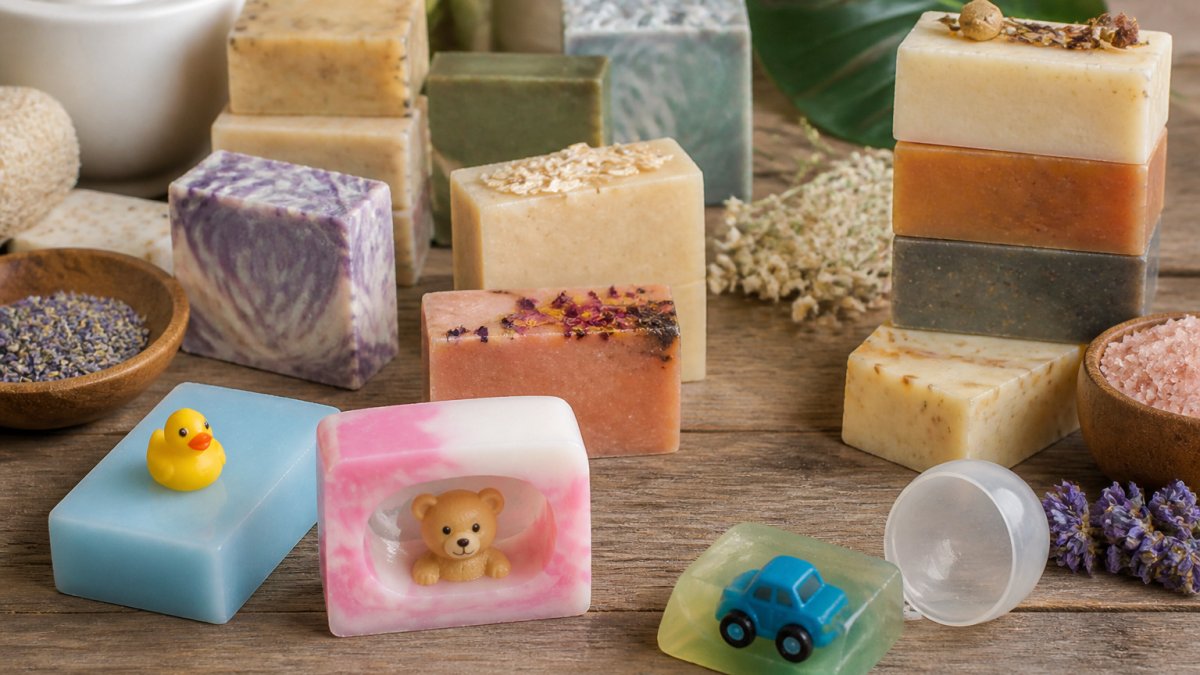
Kids soap with a toy inside, sometimes called surprise toy soap or kids novelty soap, is popular for bath time and party favors. Bath soap with a toy and party favor soap can make bathing more fun for children. They also make thoughtful gifts. Before you buy, know the safety rules.
Choking Hazard Warning for Children Under 3
Embedded toys are a choking hazard for children under 3. A small toy that a child can pull out or swallow is dangerous.
For older children, follow the age guidance on the package. Check that the toy is firmly sealed inside the bar and that the soap is intact before each use. Discard any soap where the toy is loose or exposed.
We now have photos of our kids soaps so you can see the size and design before you order. You can view the Soap Gift Basket or request Soap Samples 1 to check the soaps in person.
Judging Value and Environmental Impact Before You Buy
Price per bar is only part of the picture. Compare cost per use, which depends on how long the bar lasts and how much you need per wash. A larger, longer-lasting bar can cost more upfront and still be the better value.
Environmental impact goes beyond the formula. Consider:
- Packaging: plastic-free, recyclable, or minimal packaging
- Shipping: bulk or concentrated options that reduce waste
- Sourcing: brands that name their ingredient sources
Here is a simple way to compare two options:
- Divide the price by the number of uses to get the cost per use
- Note the packaging type and whether it can be recycled
- Check whether the brand explains its sourcing in plain terms
Your Next Step: Build a Natural Bath Shopping Checklist
Use this checklist the next time you shop for natural bath products:
- Scan the first five to seven ingredients for a gentle base
- Check for fragrance, essential oils, or an "unscented" label
- Verify any certification in the certifier's database
- Choose a formula that fits your skin type
- Patch test any new product for 24 to 48 hours
- Compare cost per use, not just price per bar
- Review packaging and sourcing claims
For sensitive or eczema-prone skin, start with an unscented option. You can also explore our unscented soap guide and learn which ingredients to avoid in our natural soap ingredients guide. To decode labels more closely, see our ingredient identification guide.
Shop our handmade artisan soaps, bath salts, and hand creams at FORYOURSOAP.COM, where you can take advantage of a 10% discount on your first purchase and an additional 10% discount with a promo code. Learn more and find the right fit for your routine today.
Frequently Asked Questions
What are some natural bath products available?
Natural bath products include bar soaps, liquid body washes, bath salts, bath soaks, bath oils, and body scrubs made with plant-based or mineral ingredients. Handmade artisan soaps often use botanical extracts and essential oils for fragrance. Compare each product's ingredient list rather than relying on the word natural on the front label, and look for recognizable plant oils, Epsom salt, or magnesium flakes near the top of the list. Check the full ingredient list before buying, and patch test any new product if your skin is sensitive.
How can you tell if a bath product is truly natural?
Words like natural, organic, and eco-friendly are not regulated uniformly for bath products, so the front label alone does not prove much. Read the full ingredient list, which in the United States must be printed in descending order by weight, and look for third-party certification seals if they matter to you. Be cautious when a product lists many synthetic fragrance components without disclosure. Ask the seller for the complete ingredient list if it is not shown online.
Are essential oils better than synthetic fragrance in bath products?
Essential oils are derived from plants and can be a good choice for people who prefer botanical scents, but they are not automatically gentler. Many essential oils can irritate sensitive skin, and fragrance blends can contain undisclosed components. Synthetic fragrance is not inherently harmful, but people with eczema or fragrance sensitivity often need unscented products. If you have a skin condition, check with your dermatologist before choosing a scented bath product, and patch test any new formula on a small area of skin first.
Do you have unscented options for sensitive skin?
Pricing depends on quantity, delivery, and the specific product, so check the product page or contact FORYOURSOAP.COM for current prices and availability. Look for a product labeled fragrance-free or unscented, and read the ingredient list to confirm that no fragrance or essential oil appears. Unscented does not always mean hypoallergenic, so patch testing is still a good idea. Consult your dermatologist if you have eczema or a history of reactions.