 How-to
How to Use Oatmeal Soap for Itchy Skin Relief
Last Updated: November 1, 2026
Quick Summary
Oatmeal soap gently cleanses itchy, reactive skin without leaving it feeling tight, making it a good choice for everyday washing. Use it in short lukewarm washes, lather in your hands rather than on your body, and apply moisturizer within a few minutes while skin is still damp.
- Check the label for colloidal oatmeal or avena sativa kernel flour, not plain oats.
- Start with two to three uses a week and add days only if skin stays calm.
- Patch test on the inner forearm for 24 hours before a full wash.
- An oatmeal bath suits widespread itch on intact skin; soak 10 to 15 minutes.
- Embedded toys in novelty soaps are a choking hazard for children under 3.
Table of Contents
- Why Itchy Skin Reaches for Oatmeal Soap
- Colloidal Oatmeal for Itchy Skin: What Makes It Different
- Oatmeal Soap for Eczema: What It Can and Can't Do
- How to Use Oatmeal Soap Without Irritating Your Skin
- Reading the Ingredient Label Before You Buy
- Oatmeal Bath for Itchy Skin: When a Bar Isn't Enough
- Soap vs. Leave-On Oatmeal Products: Matching the Product to the Itch
- Kids' Soap with a Toy Inside: Fun for Bath Time, With One Safety Rule
- Frequently Asked Questions
Why Itchy Skin Reaches for Oatmeal Soap
The benefits of oatmeal soap for itchy skin start with one simple idea: oatmeal is widely used in gentle cleansers for sensitive skin.
Many people with reactive skin have tried a long line of "gentle" bars that still left them itchy.
So what makes oats different? Two things:
- Oatmeal is commonly used for its soothing qualities on irritated skin.
Below, we'll show you exactly how to use oatmeal soap, how to spot a real oatmeal bar on the label, and when a bar is the wrong tool for the job.
Colloidal Oatmeal for Itchy Skin: What Makes It Different
Colloidal oatmeal is finely ground oat that stays suspended in water, and it is the form regulators recognize for skin soothing. The FDA monograph on skin protectant drug products lists colloidal oatmeal as a recognized skin protectant ingredient.
Here is the catch most shoppers miss. The word "colloidal" describes a particle size and a manufacturing process, not a marketing mood. Regular ground oats in a bar are not the same thing.
Ground Oats vs. Colloidal Oatmeal on a Label
Ground oats are coarser and add texture to a bar. Colloidal oatmeal is milled to a finer powder.
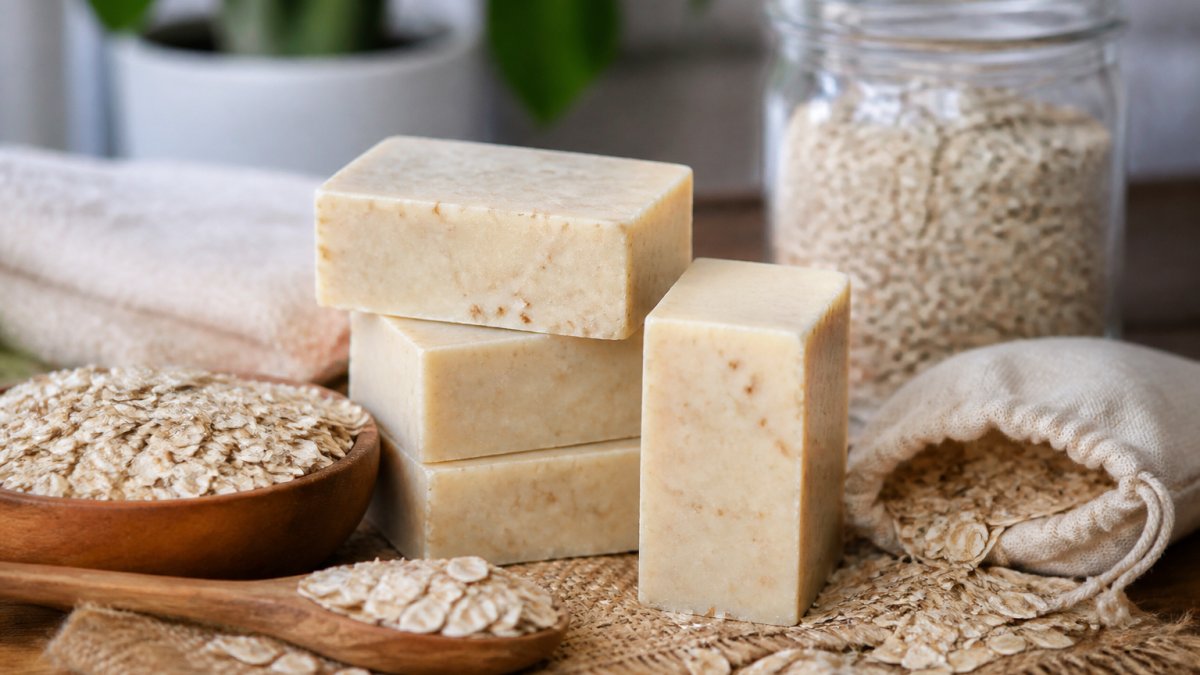
On a label, look for the exact words "colloidal oatmeal" or "avena sativa kernel flour." If a bar lists "oats" or "oatmeal" with no qualifier, treat it as a gentle scrub, not a treatment.
Check the ingredient list rather than relying on the front label. If you want help, see this guide to reading soap labels and spotting true natural ingredients.
Oatmeal Soap for Eczema: What It Can and Can't Do
Oatmeal soap is often chosen for everyday comfort, but it is not a treatment for a flare-up. That distinction matters.
A gentle oatmeal bar is typically used for:
- Cleansing the skin
- Everyday washing for reactive skin
What it cannot do:
- Replace a prescription treatment
- Clear cracked, weeping, or infected skin
- Fix a reaction caused by an ingredient still in the bar
If your skin is broken, oozing, or hot to the touch, stop and see a clinician. Readers who want more detail can explore unscented soap for eczema relief, including which soaps work and how to patch test safely.
For fragrance-free options, look for unscented bars and patch test before full use.
How to Use Oatmeal Soap Without Irritating Your Skin
Use oatmeal soap in short, lukewarm washes and follow with moisturizer within a few minutes.
Here is the sequence we recommend:
- Wet the skin with lukewarm water. Hot water pulls moisture out and makes itch worse.
- Lather the bar in your hands, not on your body. You get a gentler wash and less friction.
- Wash quickly. Keep contact under a minute for the body, and be brief on the face.
- Rinse fully. Leftover soap film is a common cause of irritation.
- Pat dry, don't rub. Leave the skin slightly damp.
- Apply moisturizer right away. This locks in water while the skin is still soft.
- Use it two to three times a week at first. Add more days only if your skin stays calm.
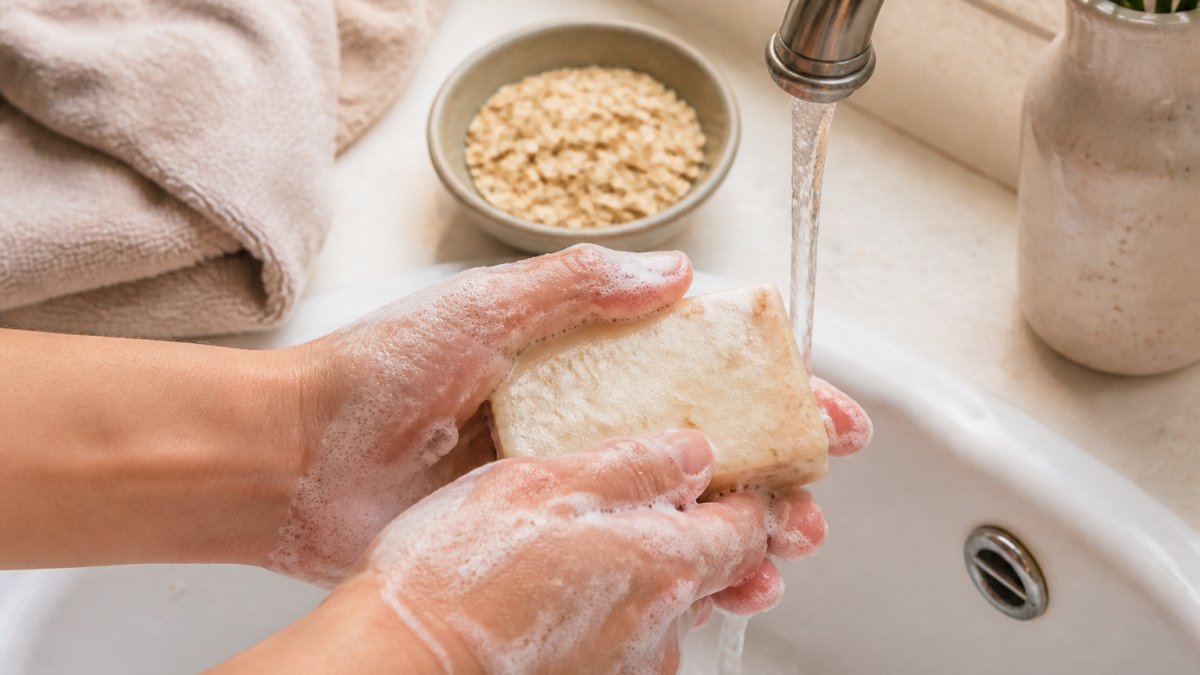
Watch out: scrubbing a textured oat bar hard against itchy skin feels good for ten seconds and backfires by evening. Friction triggers more itch. Let the lather do the work.
Patch Testing Before Your First Full Wash
Patch testing is the step almost everyone skips, and it is the one that catches a surprise reaction. A bar can contain ingredients your skin has not encountered before.
- Rub a small amount on the inner forearm
- Leave it for 24 hours without washing the spot
- Check for redness, swelling, or new itch
If you react, stop. A reaction to a bar does not always mean oats are the cause. It could be an essential oil, a fragrance, or a preservative.
Reading the Ingredient Label Before You Buy
A short ingredient list is the clearest sign of a bar built for sensitive skin. Ingredients appear in order by amount, so the first five names tell you most of what you need.
What to look for:
- Oatmeal or colloidal oatmeal near the top
- Oils and butters you recognize, like olive oil or shea butter
- Few or no fragrance ingredients if your skin is reactive
What to question:
- Long lists of synthetic surfactants
- Dyes and strong scent blends
- Claims on the front that the ingredient list does not back up
A bar can say "natural" and still contain a scent blend that may irritate reactive skin. To go further, learn which soap ingredients to avoid for healthy skin, including harmful chemicals and synthetic surfactants.
Oatmeal Bath for Itchy Skin: When a Bar Isn't Enough
An oatmeal bath makes sense when the itch covers a wide area, like after a bug bite outbreak or during a dry winter stretch.
How to do it:
- Run a lukewarm bath and add finely ground colloidal oatmeal
- Stir so it disperses instead of settling in clumps
- Soak for 10 to 15 minutes, no longer
- Pat dry and moisturize while the skin is damp
Skip the bath if you have open sores or a skin infection. Soaking may not be suitable in that case.
The trade-off is time and cleanup. A bar takes less time than a bath, which requires filling the tub and cleaning up afterward.
Which Itches a Bath Helps, and Which It Doesn't
An oatmeal bath is a comfort measure, not a treatment for every cause of itching. It is a comfort measure for some kinds of dry, surface-level itch, but it does not treat the underlying cause of itching.
A practical pattern: use the bath on bad itch days when the discomfort is widespread and the skin is intact, and use the bar for routine washing the rest of the week. If a bath leaves skin feeling tighter rather than calmer, the water was too hot or the soak ran too long, shorten it and moisturize sooner.
Soap vs. Leave-On Oatmeal Products: Matching the Product to the Itch
Soap rinses off, and leave-on products stay. That single difference should decide what you buy, because contact time is the variable that separates a rinse-off bar from a treatment.
A bar is on your skin for roughly 30 to 60 seconds before you rinse. Colloidal oatmeal needs time in contact with skin to coat it evenly and support the barrier, which is why the FDA monograph on skin protectant drug products lists colloidal oatmeal as a recognized skin protectant in leave-on and bath formats rather than as a cleanser.
| Product | Stays on Skin | Typical Contact Time | Best For | Limitation |
|---|---|---|---|---|
| Oatmeal soap bar | No | 30-60 seconds | Daily cleansing, mild itch, sensitive skin | Short contact time; little sustained soothing |
| Oatmeal bath | No | 10-15 minutes | Widespread itch, dry winter spells | Time and tub cleanup; not for open skin |
| Oatmeal lotion or cream | Yes | Hours | Ongoing dryness, barrier support | Not a cleanser; won't remove oil or sweat |
| Oatmeal ointment | Yes | Hours | Very dry, cracked patches | Heavy, occlusive feel |
A common mistake is expecting a bar to do a cream's job. It cannot. Soap cleans and soothes in the moment. Moisturizer holds the result. Many people use both: a gentle wash, then a moisturizer within a few minutes while skin is still damp.
One more distinction worth knowing: a bar labeled with plain "oatmeal" or "oats" is a gentle scrub, not a colloidal treatment. If you want the soothing ingredient competitors describe, check the leave-on product's label for "colloidal oatmeal" or "avena sativa kernel flour" and treat the bar as the cleansing step.
Kids' Soap with a Toy Inside: Fun for Bath Time, With One Safety Rule
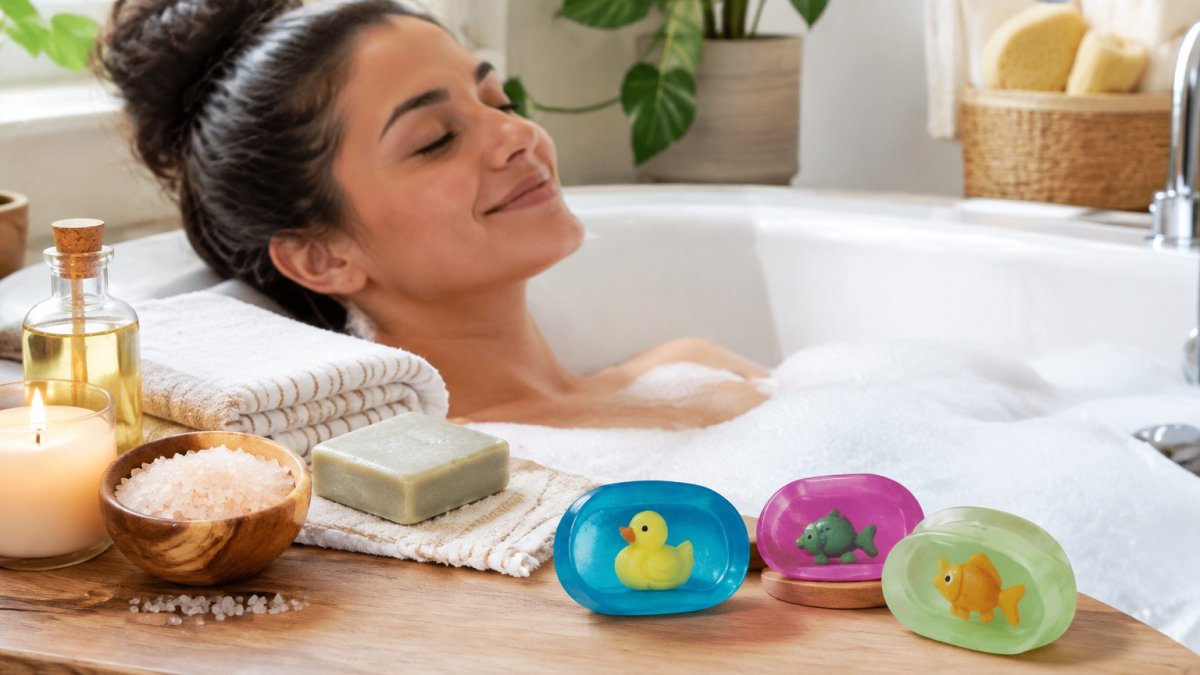
A bath soap with a toy inside turns a resistant toddler into a willing bather.
One rule overrides everything else: embedded toys are a choking hazard for children under 3. (Small Parts and Choking Hazard Labeling FAQs) Small parts can come loose as the soap wears down.
Age guidance we follow:
- Under 3: no soap with an embedded toy, full stop
- Ages 3 to 5: supervised use, toy checked after each bath
- Ages 6 and up: generally fine, with a reminder not to bite the bar
These bars also make popular party favor soap for birthdays and small gifts. If you are planning a party, order a few weeks ahead so you can check the toys yourself.
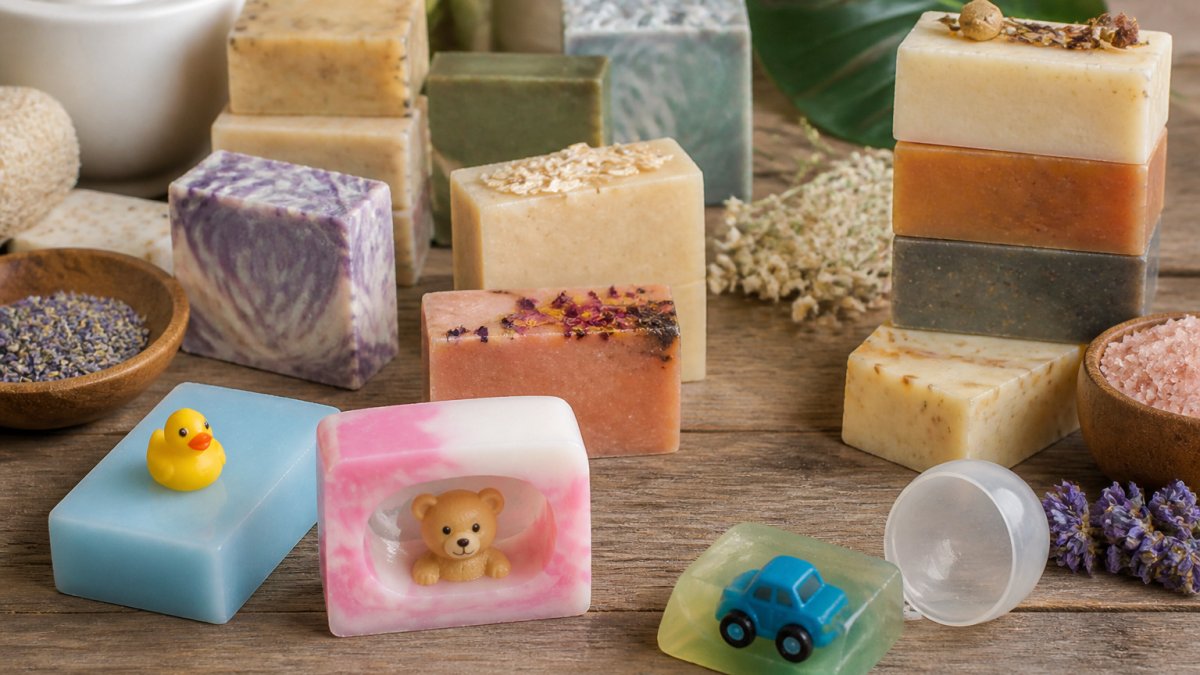
We now have photos of the kids' soaps on the site, so you can see the shapes and colors before you buy. Parents who want to try the format first can order soap samples to test a bar before committing to a full set.
Frequently Asked Questions
Can you use oatmeal soap every day?
Most people can use oatmeal soap daily, but it depends on your skin and the bar's formula. If your skin feels tight, dry, or itchy right after washing, cut back to every other day and follow with a moisturizer. People with very dry or reactive skin often do better using oatmeal soap a few times a week and a plain, fragrance-free cleanser on the other days. Watch how your skin responds over the first week or two and adjust from there.
Is oatmeal bar soap good for eczema?
Oatmeal soap for eczema can be used for gentle cleansing, but it is not a treatment for the condition. Colloidal oatmeal is a commonly used ingredient in gentle products for sensitive skin. Look for short ingredient lists, no added fragrance, and colloidal oatmeal high on the label. If a flare-up is oozing, cracked, or spreading, see a dermatologist rather than relying on soap alone.
How do you use oatmeal soap for itchy skin?
Wet your skin with lukewarm water, work the bar into a soft lather in your hands, and apply it with your palms instead of scrubbing with the bar directly. Rinse fully once washing is complete. Pat dry instead of rubbing, and apply a moisturizer within a few minutes while skin is still damp. Skip washcloths and loofahs on irritated areas, and patch test on your inner forearm first if you have sensitive skin or a known oat allergy.
Can oatmeal soap make sensitive skin worse?
It can, for two reasons. First, some bars labeled oatmeal contain added fragrance, essential oils, or exfoliating pieces that irritate reactive skin, so the oatmeal itself may not be the problem. Second, a genuine oat allergy is uncommon but real, and it may cause skin reactions. Patch test a small area for 24 to 48 hours before full use. If your skin stings, burns, or gets redder after washing, stop using the bar and switch to a plain, fragrance-free cleanser.
Bath time should not be a battle, and itchy skin should not be a daily worry. FORYOURSOAP.COM makes handmade artisan soaps with a wide range of fragrances and essential oils, plus hand creams and bath salts to round out the routine. If you have sensitive skin, our unscented options skip fragrance entirely. New customers get 10% off a first purchase, and you can add another 10% with a promo code. Get started with FORYOURSOAP.COM and build a bath routine your skin actually likes.