 how-to
How to Identify Natural Soap Ingredients
Table of Contents
- Why Reading Natural Soap Ingredients Matters
- How to Read Soap Labels Step by Step
- Natural Soap Ingredients List: What to Look For
- Ingredients to Avoid in Natural Soap
- Detecting Greenwashing and Unverified Natural Claims
- Kids Soap with Toy Inside: Safety and Ingredient Considerations
- Natural Does Not Always Mean Safe for Your Skin
- Conclusion
- Frequently Asked Questions
Last Updated: October 7, 2026
Why Reading Natural Soap Ingredients Matters
Learning to identify natural soap ingredients lets you make informed choices about what touches your skin daily.
Some soaps use plant-based oils and essential oils; others rely on synthetic additives and chemical foaming agents. Reading labels helps you avoid irritants and choose products aligned with your values.
At FORYOURSOAP.COM, our handmade artisan soaps are crafted with plant oils, butters, and essential oils.
How to Read Soap Labels Step by Step
Here's a repeatable two-minute method for any bar, plus a glossary for the Latin names on the back.
The 60-Second Label Checklist
Run these six checks in order. Fail two or more and the bar probably isn't the natural soap it claims to be.
- Find the ingredient declaration. Under FTC and FDA labeling rules, true soap is regulated as a cosmetic and must list ingredients in descending order of concentration. No list, stop here.
- Read the first five ingredients. These make up the bulk of the bar. You want plant oils, butters, water, and lye (sodium hydroxide or potassium hydroxide), not synthetic surfactants.
- Scan for the word "fragrance" or "parfum." A single generic term means the scent is undisclosed. Specific essential oils are listed by name instead.
- Check the colorants. Plant-based color comes from clays, botanicals, spirulina, indigo, or annatto. Synthetic color shows up as FD&C or D&C numbers.
- Look for preservatives. True bar soap is self-preserving thanks to its high pH. Parabens, methylisothiazolinone, and phenoxyethanol in a bar signal a synthetic-leaning formula.
- Match the marketing to the list. If the front says "shea butter" but shea sits near the bottom, the amount is token.
True Soap vs. Syndet Bars: Why the First Ingredient Matters
Before judging any ingredient, know what kind of bar you're holding.
- True soap is made by saponification: a fat or oil reacts with lye. The label shows oils plus sodium hydroxide or potassium hydroxide, and the result is naturally alkaline, usually pH 9 to 10.
- Syndet bars (synthetic detergent bars) are built from surfactants like sodium cocoyl isethionate, sodium lauryl sarcosinate, or sodium cocoyl glycinate. They can be milder at skin's pH but aren't "soap" traditionally, even when marketed as natural.
Neither is automatically better, you just can't evaluate the rest of the list until you know which one you're reading.
Ingredient Glossary: INCI Names and Common Aliases
Soap labels use INCI (International Nomenclature of Cosmetic Ingredients) names, so coconut oil appears as Cocos nucifera oil. Quick translation table:
| What you see on the label | What it actually is |
|---|---|
| Cocos nucifera oil | Coconut oil |
| Olea europaea fruit oil | Olive oil |
| Elaeis guineensis oil | Palm oil |
| Butyrospermum parkii butter | Shea butter |
| Theobroma cacao seed butter | Cocoa butter |
| Ricinus communis seed oil | Castor oil |
| Simmondsia chinensis seed oil | Jojoba oil |
| Argania spinosa kernel oil | Argan oil |
| Sodium hydroxide | Lye (consumed during saponification) |
| Sodium lauryl sulfate / sodium laureth sulfate | Sulfate surfactants |
| Parfum / fragrance | Undisclosed scent blend |
| CI 77891 / titanium dioxide | Whitening or opacifying agent |
| FD&C or D&C followed by a number | Synthetic dye |
Once you recognize a handful, most labels become readable in seconds.
Step-by-Step: Working Through a Real Label
Here's the checklist on a typical handmade bar.
- First ingredient: Olea europaea fruit oil, olive oil base. Good sign.
- Second: Cocos nucifera oil, coconut oil for lather.
- Third: Aqua, water.
- Fourth: Sodium hydroxide, the lye that drives saponification. It does not remain as lye in the finished bar.
- Fifth: Butyrospermum parkii butter, shea butter, a meaningful amount.
- Scent line: Lavandula angustifolia oil, named lavender essential oil, not "fragrance."
- Color line: Kaolin clay, mineral colorant, not a dye.
That bar passes every check. Compare it to one whose first five ingredients read: water, sodium laureth sulfate, glycerin, fragrance, and FD&C Yellow 5. Same shelf, very different product.
You don't need to memorize the whole INCI dictionary. Learn the ten or fifteen names you'll see most often in natural soap, and you'll spot the outliers instantly.
A Note on Kids' Bars
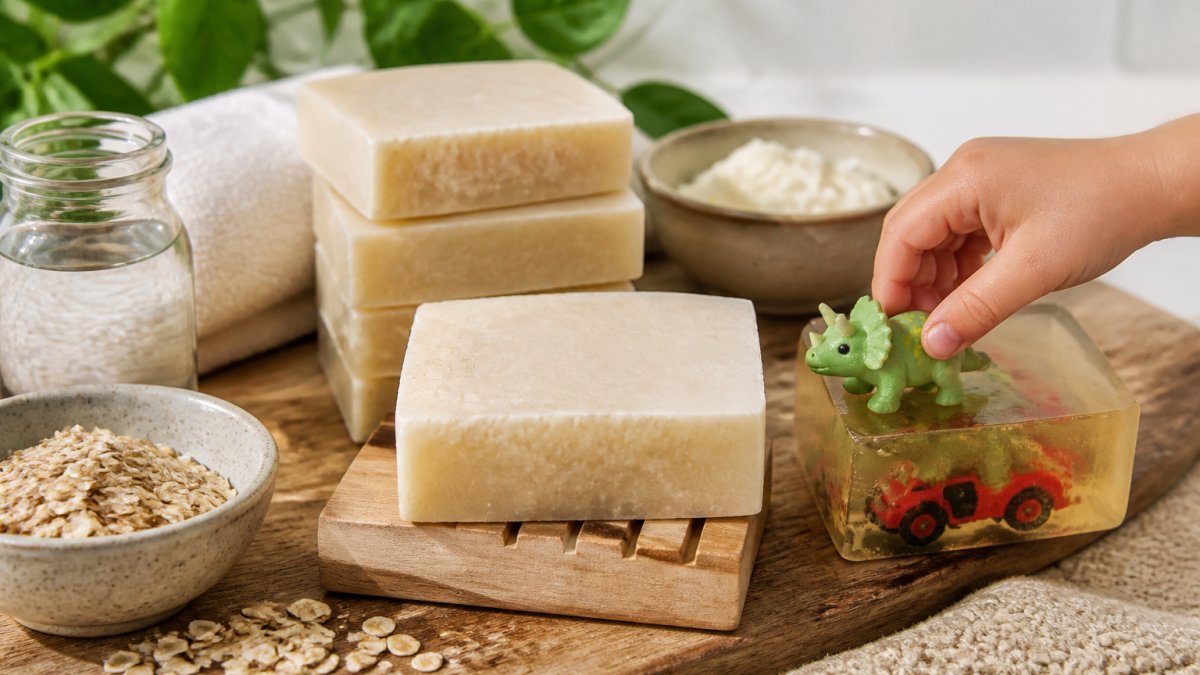
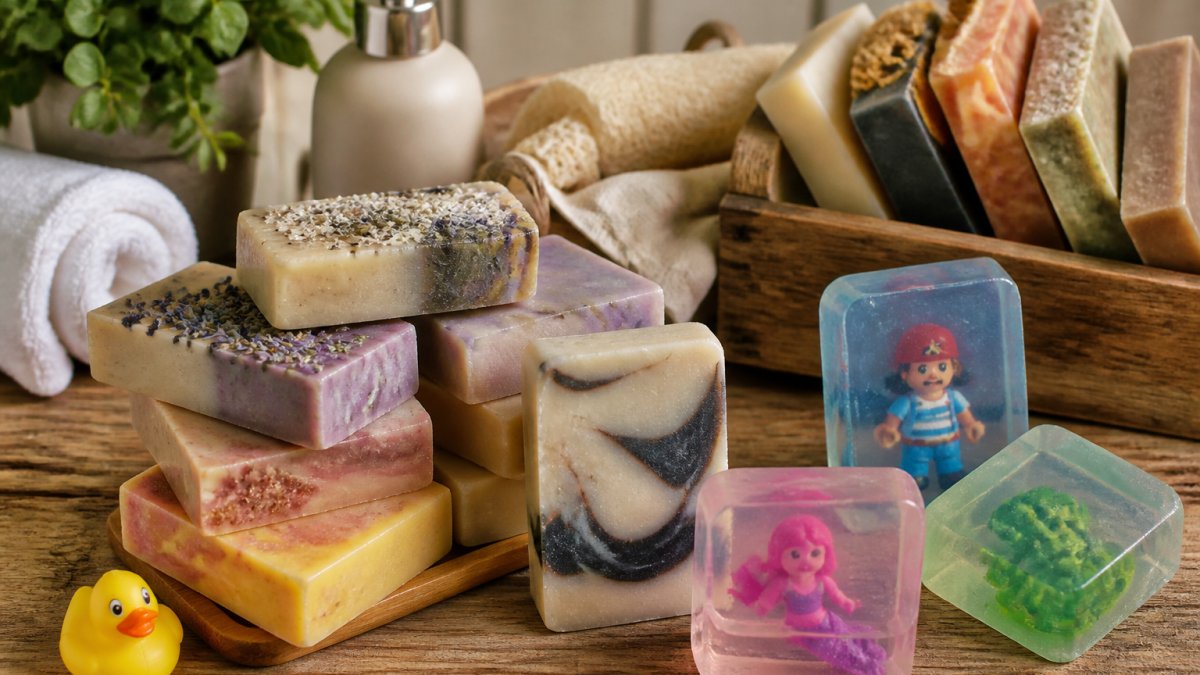
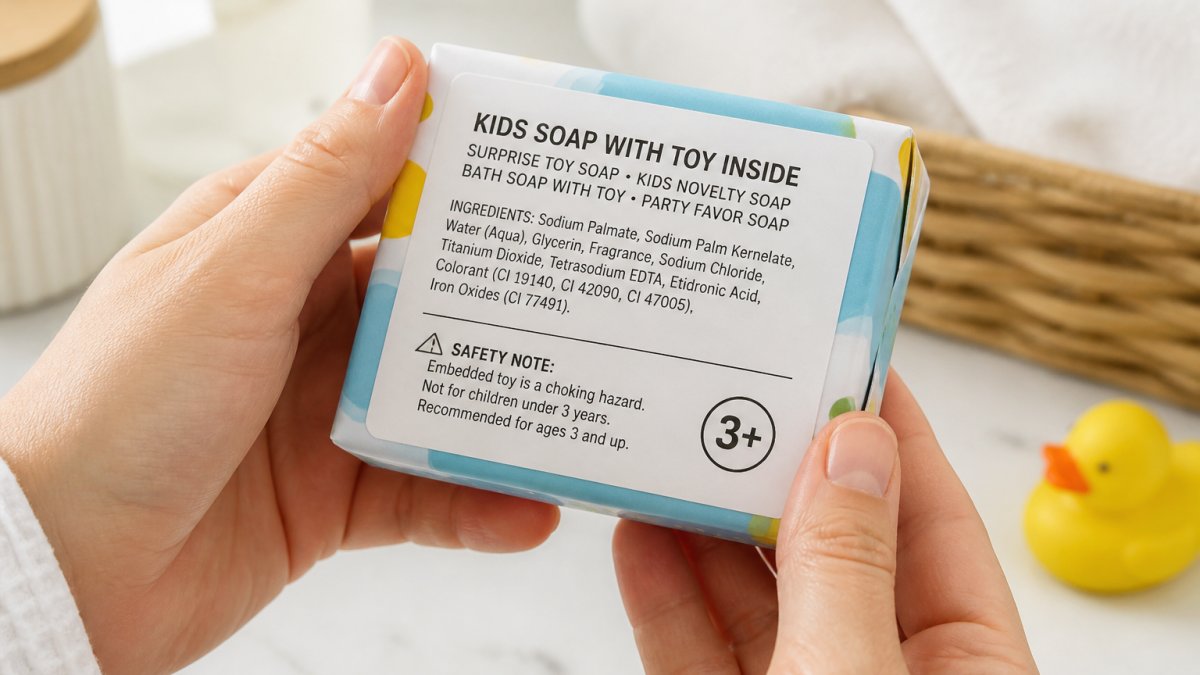
For kids' soap with a toy inside, the same checklist applies, plus one addition: check the age guidance on the package. Our kids' novelty soaps use the same plant-based oils, essential oils, and botanicals as our adult bars, and we now have photos of the kids soaps on our product and sample pages so you can see the ingredients and the embedded toy before you buy.
Natural Soap Ingredients List: What to Look For
The best natural soaps combine plant oils, butters, and botanicals thoughtfully.
Common Plant Oils in Handmade Soap
Plant oils are the foundation of natural soap. Each brings different benefits:
| Oil | Benefit | Look For |
|---|---|---|
| Coconut oil | Cleansing, lather | Listed in first 3 ingredients |
| Castor oil | Creaminess, moisture | Near top of list |
| Olive oil | Gentle, conditioning | First 5 ingredients |
| Argan oil | Luxury, nourishing | Any position (used sparingly) |
| Jojoba oil | Skin-balancing | Mid-to-lower list |
Look for oils listed by plant source: "Cocos nucifera oil" is coconut oil, "Olea europaea oil" is olive oil. Latin names indicate pure plant oils, not synthetics.
Beneficial Butters and Botanical Additives
Beyond oils, natural soaps often include:
- Shea butter, rich in vitamins, deeply moisturizing
- Cocoa butter, smooth texture, pleasant scent
- Aloe vera, soothes irritation
These appear lower on lists because they're used in smaller amounts, but they add real value, a soap with aloe vera or oatmeal offers more than basic cleansing.
Ingredients to Avoid in Natural Soap
Some ingredients should raise red flags:
Sulfates create bubbles but strip skin. Common ones: sodium lauryl sulfate and sodium laureth sulfate. They're cheap, which is why mass-market soaps use them.
Parabens (methylparaben, propylparaben, butylparaben) are synthetic preservatives that extend shelf life but can irritate sensitive skin and trigger allergies.
Synthetic dyes (FD&C, D&C colors) make soap look pretty but offer no skin benefit.
Phthalates hide under "fragrance" and are linked to hormone disruption and skin sensitivity. Avoid soaps listing only "fragrance" without named essential oils.
Triclosan was once common in "antibacterial" soaps; the FDA restricted it because it's no more effective than regular soap and can harm skin bacteria.
Detecting Greenwashing and Unverified Natural Claims
"Natural" is a marketing word, not a regulated one, the FDA and FTC don't define it for soap, so any brand can print it regardless of what's inside. Verify the claim yourself with this framework.
What "Natural" Actually Means on a Label
There's no federal standard for "natural" in cosmetics or soap. The FDA's informal guidance, natural means from a plant, animal, or mineral source and not substantially processed, isn't binding or enforced as a labeling standard, and the FTC polices deceptive advertising, not the word itself.
Certifications carry weight because they have published standards. Look for USDA Organic, NSF/ANSI 305 (made with organic ingredients), or COSMOS.
The Five-Question Claim Check
Run any soap through these questions before trusting its marketing.
- Is the full ingredient list published? Not a "key ingredients" highlight, the complete INCI declaration. If it isn't on the site or box, that's your answer.
- Is the scent disclosed? "Fragrance" or "parfum" is a legal catch-all that can hide dozens of compounds, including phthalates. Named essential oils are disclosed, no middle ground.
- Is the color disclosed? Botanicals, clays, and plant powders are traceable; FD&C and D&C numbers are synthetic. "May contain" plus dye numbers is a red flag.
- Are preservatives appropriate to the format? A true bar soap doesn't need parabens or methylisothiazolinone, finding them suggests a syndet formula.
- Does the maker answer sourcing questions? Ask where the shea, olive, or palm oil comes from. A maker who can name a supplier or region usually knows their formula.
Common Greenwashing Patterns
These phrases show up constantly and rarely mean what shoppers assume.
- "Chemical-free." Everything is a chemical, including water and shea butter. It signals marketing, not science.
- "Infused with" or "enriched with." These describe trace amounts. If the ingredient mattered, it would appear in the top five.
- "Hypoallergenic." The FDA has no definition. Any brand can use it; patch testing is the only real test.
How to Verify Without a Chemistry Degree
You don't need lab equipment. You need three habits.
- Compare the front to the back. Every front claim should trace to an ingredient on the back. If the front says "shea butter soap" and shea is ninth, the claim is technically true and practically misleading.
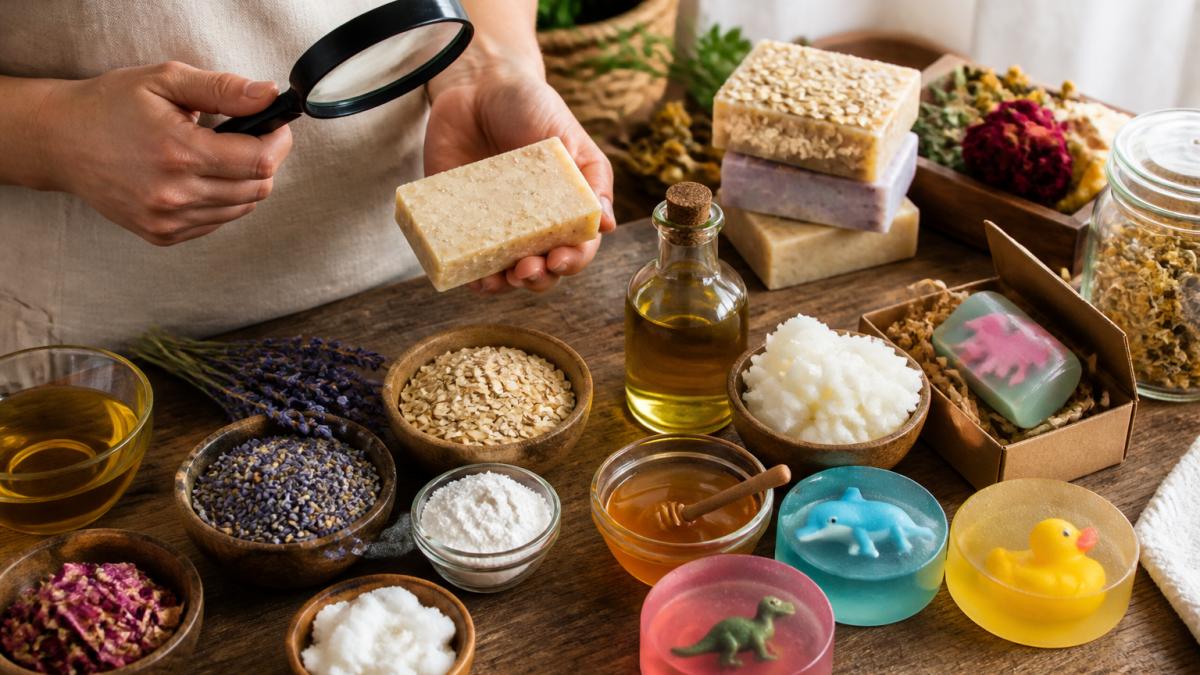
- Look for visible botanicals. Oatmeal, dried calendula, poppy seeds, and clay swirls are hard to fake. A perfectly uniform, brightly colored bar is more likely to use synthetic dye than a speckled, earth-toned one.
- Ask directly. Email the maker for the full INCI list and scent source. Small artisan brands usually answer; silence is informative.
Applying This to Kids' Bars
The same framework applies to kids soap with toy inside, surprise toy soap, and party favor soap, where cute packaging can outrun the ingredient list. Check the full INCI declaration, confirm the scent is named rather than "fragrance," and verify the age guidance on the package. Our kids' novelty soaps follow the same formulation standards as our adult bars, and we now have photos of the kids soaps on our product and sample pages so you can review ingredients and the embedded toy before ordering.
Kids Soap with Toy Inside: Safety and Ingredient Considerations
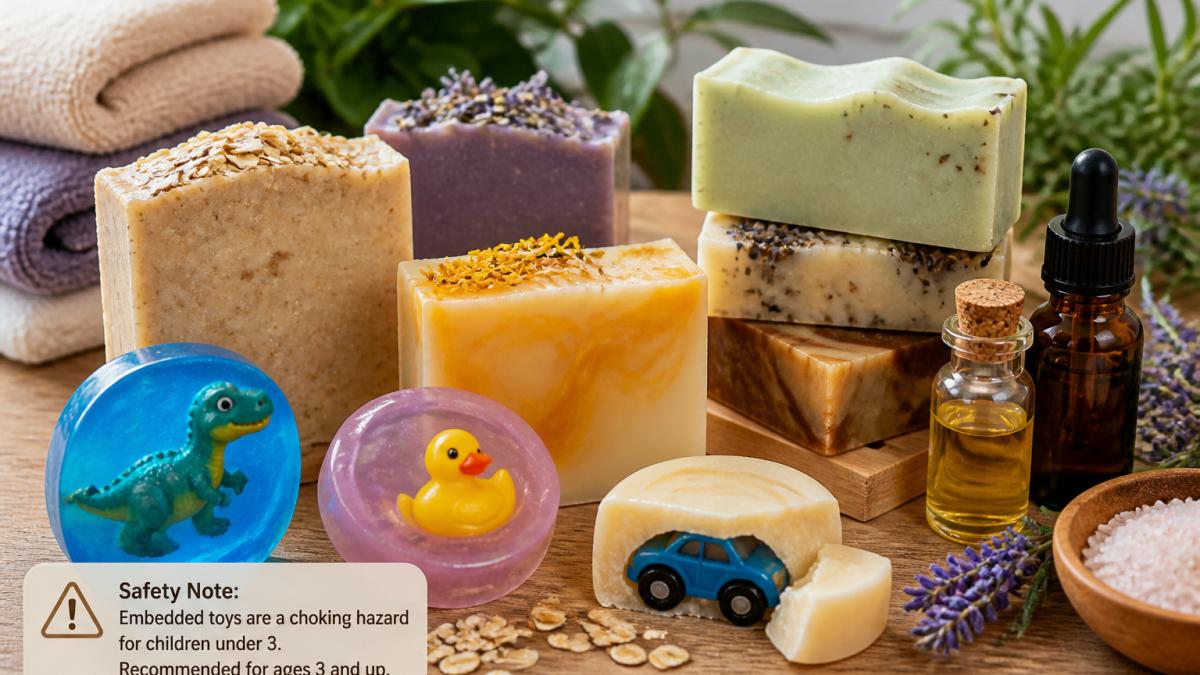
Kids soaps with embedded toys are fun party favors, but safety comes first. At FORYOURSOAP.COM, our kids' novelty soaps are designed for safe, supervised use.
Important safety note: Soaps with embedded toys are a choking hazard for children under 3 years old (Small Parts Ban and Choking Hazard Labeling).
For children ages 3-8, supervise bath time and ensure they don't bite or chew on the toy.
When selecting a kids' soap with a toy, check that:
- The toy is firmly embedded (not loose)
- It's large enough not to be a choking hazard
- The soap uses natural ingredients
Natural Does Not Always Mean Safe for Your Skin
Natural doesn't automatically mean safe. Poison ivy is natural; so is peanut oil, which causes severe reactions in people with allergies. Natural soaps are generally gentler than synthetic ones, but plant-derived doesn't mean reaction-free.
Common natural ingredients that cause sensitivity:
- Essential oils, concentrated and potent; lavender, peppermint, and citrus can irritate reactive skin.
- Plant butters, shea and cocoa butter nourish but can clog pores in acne-prone skin.
- Botanicals, dried herbs and flowers add texture but may irritate eczema-prone skin.
If you have eczema, psoriasis, or sensitive skin, start with the simplest bars: oils, water, and lye (which transforms during soap making). Avoid added essential oils, botanicals, and colorants until you know what your skin tolerates.
Conclusion
Learning how to identify natural soap ingredients puts you in control of what touches your skin. Understand ingredient order, recognize plant oils and butters, spot synthetic fragrance, and avoid harmful additives, then shop with confidence.
At FORYOURSOAP.COM, we craft handmade artisan soaps using plant-based oils, essential oils, and natural botanicals, no sulfates, parabens, or synthetic dyes. Every bar is made to nourish your skin and elevate your daily routine.
Frequently Asked Questions
What ingredients should be avoided in natural soap?
Avoid sulfates (sodium lauryl sulfate), parabens, synthetic dyes, and phthalates. Also watch for mineral oil, petrolatum, and triclosan. These are petroleum-derived or synthetic preservatives that contradict the natural soap promise. Check labels for sodium laureth sulfate, methylparaben, and propylparaben. When reading your natural soap ingredients list, if you cannot recognize or pronounce an ingredient, research it before purchasing.
How can you tell if a soap is truly natural?
True natural soap contains plant-based oils, butters, and botanicals as primary ingredients. Check the ingredient label for recognizable names like coconut oil, shea butter, aloe, oats, or essential oils. Avoid vague terms like 'fragrance' or 'parfum' without further specification. Look for handmade soaps that disclose their full ingredient list transparently. Greenwashing often uses words like 'natural' or 'organic' without certification or detailed ingredient transparency. Genuine artisan soap makers list every ingredient clearly.
Are essential oils considered natural soap ingredients?
Yes, essential oils are natural soap ingredients derived from plants through distillation or cold pressing. They differ from synthetic fragrance oils, which are lab-created compounds. Essential oils provide both scent and therapeutic properties, though their benefits vary. Synthetic fragrance oils offer broader scent options but lack plant-based origins. When reading ingredient labels, 'essential oil of [plant name]' indicates a natural fragrance source, while 'fragrance' or 'parfum' typically signals synthetic compounds.
Why is it important to check soap labels if I have sensitive skin?
Sensitive skin reacts to synthetic fragrances, dyes, sulfates, and certain preservatives even in products marketed as natural. Many people assume 'natural' means hypoallergenic, but botanicals like essential oils can trigger irritation. Reading the natural soap ingredients list helps you identify potential irritants specific to your skin. If you have eczema or dermatitis, look for unscented or lightly scented options with minimal additives. Always patch-test new soap on a small skin area first, especially when switching from commercial to artisan varieties.