 ultimate-guide
Are Handmade Soaps Worth the Price? A 2026 Guide
Table of Contents
- Why Handmade Soap Costs More Than the Drugstore Bar
- The Benefits of Cold Process Soap for Your Skin
- Handmade Soap vs. Mass-Market Bars: A Cost-Per-Use Breakdown
- Kids Soap with a Toy Inside: A Party Favor That Actually Gets Used
- How to Store Handmade Soap So It Lasts
- When Handmade Soap Isn't Worth It
- The Verdict: Who Should Buy Handmade Soap
- Frequently Asked Questions
Last Updated: October 4, 2026
Why Handmade Soap Costs More Than the Drugstore Bar
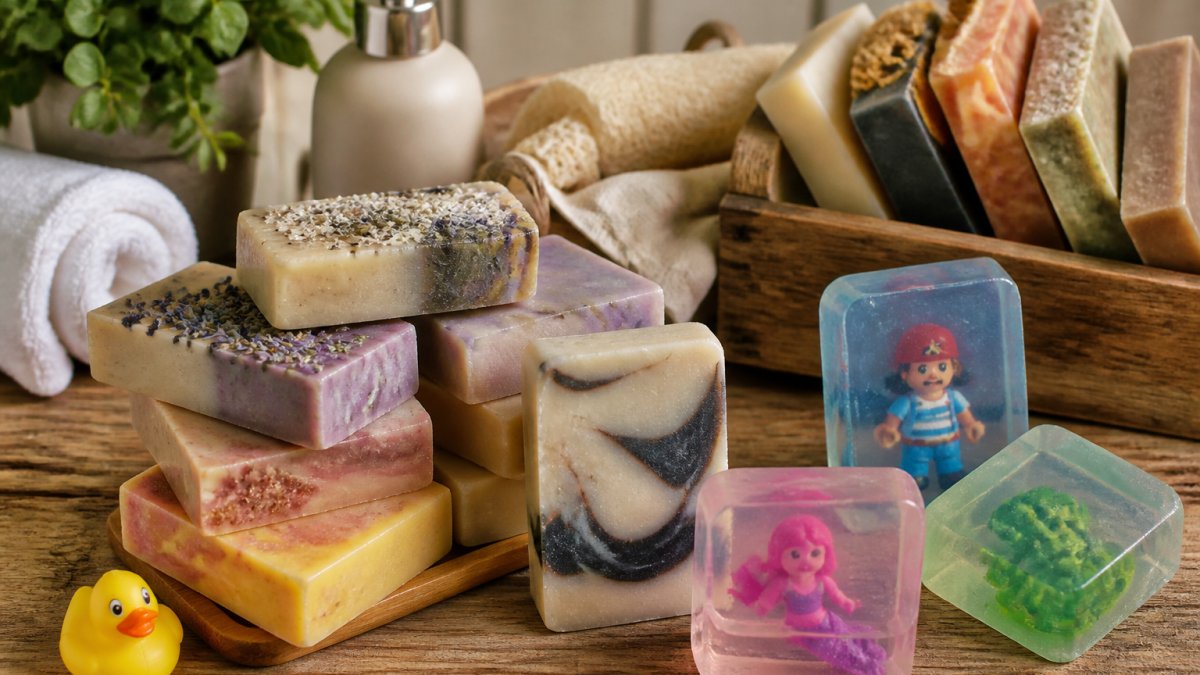
Are handmade soaps worth the price when a mass-market bar costs a fraction as much? Sometimes yes, sometimes no, the difference comes down to what's inside the bar and how it was made. This guide from FORYOURSOAP.COM breaks down the real cost drivers, the skin benefits, and when a drugstore bar is the smarter buy.
A handmade bar and a commercial bar aren't the same product in different packaging. They're made through fundamentally different processes, and that difference shows up in your wallet and on your skin.
What Actually Goes Into a Bar: Raw Materials and Labor
Saponification is the reaction between a fat or oil and an alkali that creates soap and glycerin. In cold process and hot process soap making, it happens slowly in small batches, which is why handmade bars take real time and hands to produce.
Raw materials drive the first cost layer. Artisan makers choose olive, coconut, shea, and castor oils, plus essential oils or synthetic fragrances, ingredients that cost more than the tallow and synthetic detergents in mass-produced bars.
Curing Time: The Six Weeks You're Paying For
Curing time is the weeks a cold process bar rests after cutting so excess water evaporates and the bar hardens. During that window the soap sits on a shelf earning nothing, it can't be sold, shipped, or replaced by the next batch.
That idle time is baked into the price of every hand-poured bar. Mass-produced bars skip the wait with continuous manufacturing and quick-hardening additives. The trade-off: curing gives a longer-lasting, milder bar; the factory gives a faster, cheaper one. Neither is a scam, they're just different products.
The Benefits of Cold Process Soap for Your Skin
The benefits of cold process soap start with what stays in the bar. Cold process soap making preserves glycerin, a humectant that draws moisture to your skin. Commercial manufacturers often extract glycerin to sell separately, leaving a bar that cleans well but strips more.
Glycerin, Skin Barrier Health, and Why Handmade Feels Different
Your skin barrier is the outer layer that holds moisture in and irritants out. Surfactants in any soap lift oil and dirt so water can rinse them away, but harsh formulas over-strip that barrier, leaving skin tight and dry.
A note on pH balanced claims: true soap is naturally alkaline, typically above neutral pH. "pH balanced" usually means the product was formulated closer to skin's natural acidity, which often points to a syndet bar rather than true soap. Neither is automatically better, it depends on your skin sensitivity.
Handmade Soap vs. Mass-Market Bars: A Cost-Per-Use Breakdown
Cost-per-ounce is the number that matters, not the sticker price. A handmade bar often weighs more and lasts longer because it's denser and lower in water content after curing; a mass-market bar can be lighter, softer, and gone in half the time.
Run the math on cost-per-use rather than cost-per-bar: divide the bar's price by the number of washes you get. A bar that costs more but lasts three times as long can come out ahead per wash, the calculation most shoppers never run, and the one that settles the "worth it" question fastest.
How to Actually Run the Cost-Per-Use Math
A fully cured cold process bar has lost most of its water weight, so what's left is concentrated soap. A mass-market bar is often milled with more water and fillers, so each wash dissolves more product. The result: a cured bar can deliver roughly two to three times the washes of a softer commercial bar of similar size.
To run your own comparison, do this:
- Weigh the bar on a kitchen scale before first use.
- Use it normally for one week and weigh it again.
- Divide the weight lost by seven to get grams per wash.
- Divide the bar's total weight by grams per wash to estimate total washes.
- Divide the bar's price by estimated total washes to get cost-per-use.
Do that for a handmade bar and a drugstore bar side by side and the gap often narrows or flips. The upfront price is higher; the per-wash number is frequently lower.
| Factor | Handmade Cold Process Bar | Mass-Market Bar |
|---|---|---|
| Glycerin content | Retained naturally | Often extracted |
| Ingredients | Oils, butters, essential oils | Detergents, fillers, hardeners |
| Lather quality | Creamier, lower foam | High foam, thinner |
| Bar density | Denser, slower to dissolve | Softer, dissolves faster |
| Typical washes per bar | Varies by use and storage | Roughly 25-40 |
| Cost-per-use | Higher upfront, often lower per wash | Lower upfront, higher per wash |
| Scent | Essential oils, can fade over time | Synthetic, long-lasting |
Why Liquid Body Wash Changes the Math
A bottle of body wash feels cheap per bottle but expensive per wash: pump dispensers encourage over-application, and the product is mostly water. A bar is used directly on the skin or a cloth with no wasted pump. Compare cost-per-wash rather than cost-per-container and a bar, handmade or not, usually wins.
For premium quality and luxury goods positioning, the honest answer is that you're paying for ingredients, craft, and a different sensory experience, not just a cleaning agent.
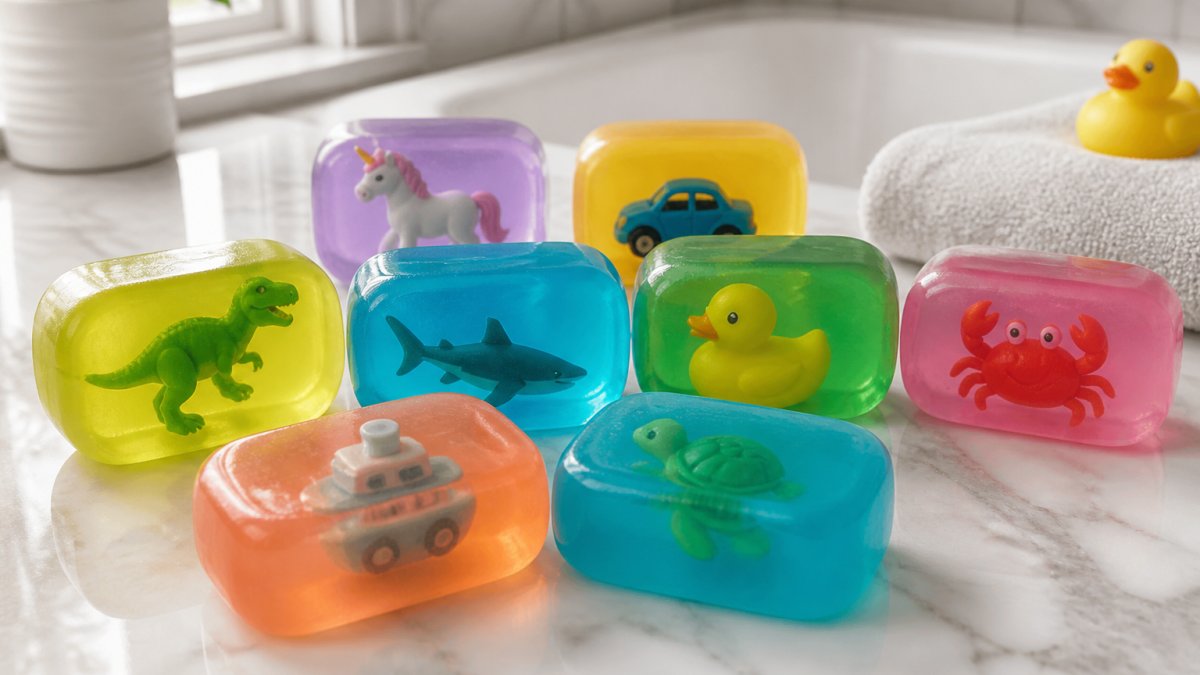
Kids Soap with a Toy Inside: A Party Favor That Actually Gets Used
Kids soap with a toy inside solves a problem every parent knows: party favors that end up in a drawer by the following week.
Our kids novelty soap line covers the whole cluster: bath soap with toy, party favor soap, and surprise toy soap in a range of colors and scents.
Safety First: Age Guidance and Choking Hazard Warnings
The embedded toy is a choking hazard for children under 3. Small parts can come loose as the soap dissolves, and anything small enough to fit through a toilet paper tube is a risk for that age group.
Age-appropriate guidance we follow and recommend:
- Under 3: do not use. Choose a plain bar with no embedded object.
- Ages 3-5: use only with adult supervision, and check the toy once it's fully exposed.
- Ages 6 and up: generally fine, but still inspect the toy for small detachable pieces.
- Always supervise bath time, and never leave a child alone with any soap containing an embedded object.
How to Store Handmade Soap So It Lasts
How to store handmade soap comes down to one rule: keep it dry between uses. Glycerin attracts moisture from the air, so a bar left in a puddle turns soft and dissolves far faster than it should. That's the mechanism behind the "my expensive bar vanished in two weeks" complaint, usually a storage problem, not a soap problem.
The Chemistry of Why Bars Melt Away
Glycerin is a humectant, meaning it pulls water from the air. In a steamy bathroom, a glycerin-rich bar constantly absorbs moisture, softening the surface so each wash carries away more product. A draining dish breaks that cycle by letting the bar dry between uses; a flat tray keeps the bottom wet, and that's where most of the waste happens.
Storage Rules That Actually Extend Shelf-Life
- Use a draining soap dish, not a flat tray that traps water. Look for ridges or slots that let air reach the bottom of the bar.
- Keep bars away from direct shower spray. A bar in the splash zone never fully dries.
- Store unopened bars in a cool, dry place, not a steamy bathroom cabinet. A closet or linen shelf beats the bathroom every time.
- For long-term storage, wrap bars loosely so they can breathe. Tight plastic traps moisture and can encourage rancidity in oils.
- Rotate stock so older bars get used first. Scent fades before the bar goes off, so the oldest bar is the one losing value fastest.
- Cut large bars in half if you use them slowly. The half you're not using stays dry and intact.
Shelf-Life: What to Expect and How to Tell a Bar Has Turned
Shelf-life for most cold process bars runs about a year when stored dry, though scent from essential oils can fade sooner than the bar itself goes off. Signs a bar is past its prime:
- Orange or brown spots, sometimes called DOS (dreaded orange spots), which signal the oils have begun to oxidize.
- A rancid or crayon-like smell instead of the original fragrance.
- A soft, tacky surface that never fully dries.
None of these make the bar dangerous, but they mean it's time to use it up or replace it. Stored cool and dry, a well-cured bar holds its shape and scent far longer than one left wet in the shower.
When Handmade Soap Isn't Worth It
Handmade soap isn't the right call for everyone. Skip it if you want the cheapest possible bar, go through soap at industrial speed in a shared household, or simply don't care about ingredients or scent.
It's also not a medical product. If you have a diagnosed skin condition, talk to your dermatologist before switching and patch-test any new bar on a small area first. Dermatological guidance beats marketing claims every time, for some people, a doctor-recommended fragrance-free syndet bar will always outperform artisan soap, and that's fine.
The Verdict: Who Should Buy Handmade Soap
Handmade soap earns its price for people who value natural ingredients, a gentler clean, and the sensory ritual of a good bar.
At FORYOURSOAP.COM, we make small-batch, hand-poured bars with many fragrances and essential oils, plus hand creams and bath salts to round out a routine or a gift set.
The real challenge isn't finding a bar that cleans. It's finding one that cleans without leaving your skin tight, dry, or irritated, and that you actually look forward to using.
Frequently Asked Questions
Why does handmade soap cost more than commercial soap?
Handmade soap is labor-intensive. Each batch is hand-poured, cut, and cured for four to six weeks before it's ready to sell. Commercial bars use synthetic detergents and mass-produced manufacturing that strips out glycerin for resale. Handmade soap keeps that glycerin, uses natural ingredients and essential oils, and is made in small-batch quantities. You're paying for raw materials, curing time, and the labor of an artisan, not a factory line.
How long does a bar of handmade soap typically last?
A well-cured handmade bar lasts about three to four weeks with daily use if you store it properly. The key is keeping it dry between uses. Use a draining soap dish, keep it away from direct water spray, and let it air out. If you rotate between two bars, each one lasts longer. Stored unused in a cool, dry place, handmade soap keeps for a year or more.
Is handmade soap safe for kids?
Handmade soap is generally gentle enough for children, but always check the ingredient list for essential oils or fragrances that could irritate sensitive skin. For our kids' soap with a toy inside, the embedded toy is a choking hazard for children under 3. These are designed for kids 3 and older who won't put small objects in their mouths. Adult supervision during bath time is always recommended.
How do I know if handmade soap is worth it for my sensitive skin?
Look for bars made with the cold process method, which retains natural glycerin, a humectant that draws moisture to your skin. Avoid synthetic fragrances and check for essential oils if you have known sensitivities. If you have eczema or a diagnosed skin condition, patch-test a small area first and consult your dermatologist.