 Ultimate guide
Why Choose Chemical-Free Bath Products
Table of Contents
- What 'Chemical-Free' Actually Means
- Best Natural Soap for Sensitive Skin
- Understanding Chemical-Free Soap Ingredients
- Fragrance-Free Soap for Sensitive Skin: When to Choose It
- How to Read Labels and Spot Greenwashing
- Kids Soap with Toy Inside: Fun Bath Time with Safety in Mind
- Why the Switch to Chemical-Free Bath Products Makes Sense
- Frequently Asked Questions
Last Updated: October 12, 2026
What 'Chemical-Free' Actually Means
Everything is made of chemicals, including water, salt, and soap itself. When we talk about chemical-free bath products, we mean products formulated without synthetic chemicals, harsh cleansers, or ingredients that commonly trigger irritation and allergies.
At FORYOURSOAP.COM, we approach chemical-free bath products as those made with natural ingredients and essential oils rather than synthetic fragrances, sulfates, or parabens. Your skin absorbs what you wash with, and many people find that switching to genuinely chemical-free soap reduces irritation and sensitivity.
"Natural" and "chemical-free" aren't regulated terms, so a product can claim either while still containing ingredients that bother sensitive skin. That's why reading ingredient lists matters.
Best Natural Soap for Sensitive Skin
Finding the best natural soap for sensitive skin means looking beyond marketing claims. Irritation, redness, or tightness means the formula isn't right for you, whatever the label says.
The best natural soap for sensitive skin typically contains minimal ingredients, avoids synthetic fragrances, and includes skin-soothing botanicals. Look for gentle bases like coconut or olive oil combined with oat extract, chamomile, or aloe, which many sensitive-skin users tolerate well.
One common mistake is assuming all "natural" soaps are safe for sensitive skin. A soap made entirely from plant oils can still cause problems if the essential oil concentration is high or you react to a specific botanical. Patch test on your inner arm and wait 24 hours before using it on your face or body.
Understanding Chemical-Free Soap Ingredients
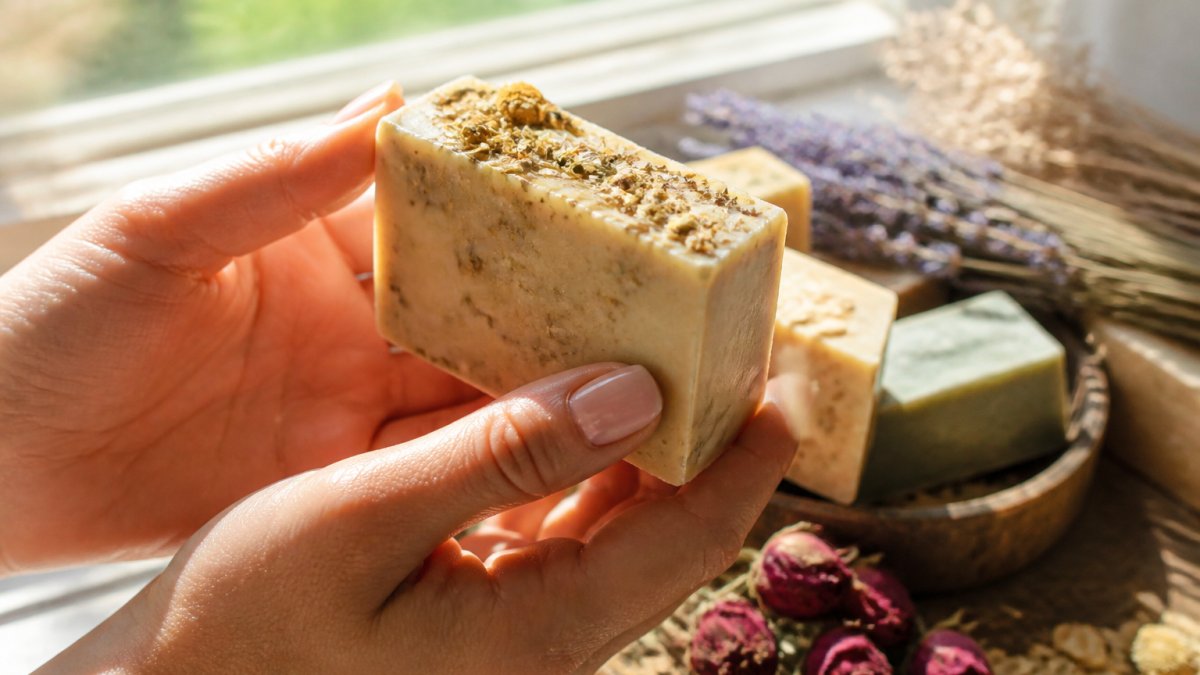
Understanding chemical-free soap ingredients means learning to read labels. A quality chemical-free soap typically contains a base of natural oils, water, lye (which reacts with oils through saponification), and optional essential oils, botanicals, or natural colorants.
Natural oils form the backbone of handmade soap: coconut oil for lather and cleansing, olive oil for moisture, shea butter for conditioning, and sustainably sourced palm oil for hardness and longevity. Together they clean without stripping your skin.
Ingredients to avoid in chemical-free formulations include synthetic fragrances, sulfates, parabens, and petroleum-derived colorants. When a label lists "fragrance" or "parfum" without specification, that's typically a synthetic blend, not an essential oil.
Essential oils offer fragrance plus skin benefits: lavender calms irritation, tea tree is antimicrobial, and chamomile soothes sensitive skin. They're concentrated, so a little goes a long way, and they can still trigger reactions in very sensitive skin, which is why fragrance-free options exist.
Fragrance-Free Soap for Sensitive Skin: When to Choose It
Fragrance-free soap for sensitive skin isn't a compromise; it's often the smartest choice if your skin reacts to aromatic compounds. If you have eczema, severe dermatitis, or a history of fragrance allergies, it eliminates an entire category of potential irritants.
Fragrance-free doesn't mean the soap smells bad. You get the subtle scent of the natural oils in the base, a mild, clean smell without added fragrance, which many people find refreshing after years of overpowering synthetic scents.
Choose fragrance-free soap when your dermatologist advises avoiding fragrance, when you've reacted to essential oils before, or during a sensitive-skin flare-up when you need to strip away variables. It also makes sense if you use fragranced lotion, perfume, or shampoo and want your soap to stay neutral.
The trade-off is narrower sensory appeal: bath time becomes functional rather than luxurious. For many people that's a fair exchange for skin that doesn't itch or break out. If you love scented soap, use fragrance-free on sensitive areas and reserve lightly scented options for less reactive skin.
How to Read Labels and Spot Greenwashing
Reading a label is the single most useful defense against greenwashing, marketing that sounds natural while hiding conventional ingredients. Here is a repeatable framework you can apply to any bar, bottle, or box in under two minutes.
Step 1: Find the ingredient list, not the front of the package. Front-of-pack words like "pure," "clean," "botanical," and "chemical-free" carry no legal definition for soap and cosmetics.
Step 2: Read the first five ingredients closely. Ingredients are listed in descending order by weight (with a few exceptions like colorants, which can appear in any order). The first several ingredients are the bulk of the formula.
Step 3: Decode the fragrance entry. This is where most greenwashing hides. "Fragrance" and "parfum" are catch-all terms that can each represent dozens of undisclosed compounds, and they are a common trigger for contact dermatitis and fragrance allergy.
Step 4: Flag the usual suspects by name. Watch for synthetic colorants listed as FD&C or D&C dyes, parabens such as methylparaben and propylparaben, and preservatives like methylisothiazolinone, which is a recognized contact allergen in rinse-off products.
Step 5: Check certifications, then check their limits. Third-party marks each verify something different. The USDA Organic seal covers agricultural ingredients, not whether a finished soap is irritation-free, and the NPA and EWG Verified marks apply their own criteria. A certification is a starting point, not a guarantee.
Step 6: Learn the synonym problem. Ingredients appear under multiple names, so a single search can miss them: vitamin E may appear as tocopherol or tocopheryl acetate, and coconut-derived cleansers as cocamidopropyl betaine or sodium cocoate. When you identify a trigger, note both its common and INCI name.
A quick example: a bar labeled "all-natural, chemical-free" lists sodium cocoate, water, glycerin, fragrance, and FD&C Yellow 5. The first three fit a natural soap base, but the generic "fragrance" and synthetic dye contradict the front-of-pack claim. That's greenwashing in one line.
FDA guidance on cosmetic labeling and ingredient names
Kids Soap with Toy Inside: Fun Bath Time with Safety in Mind
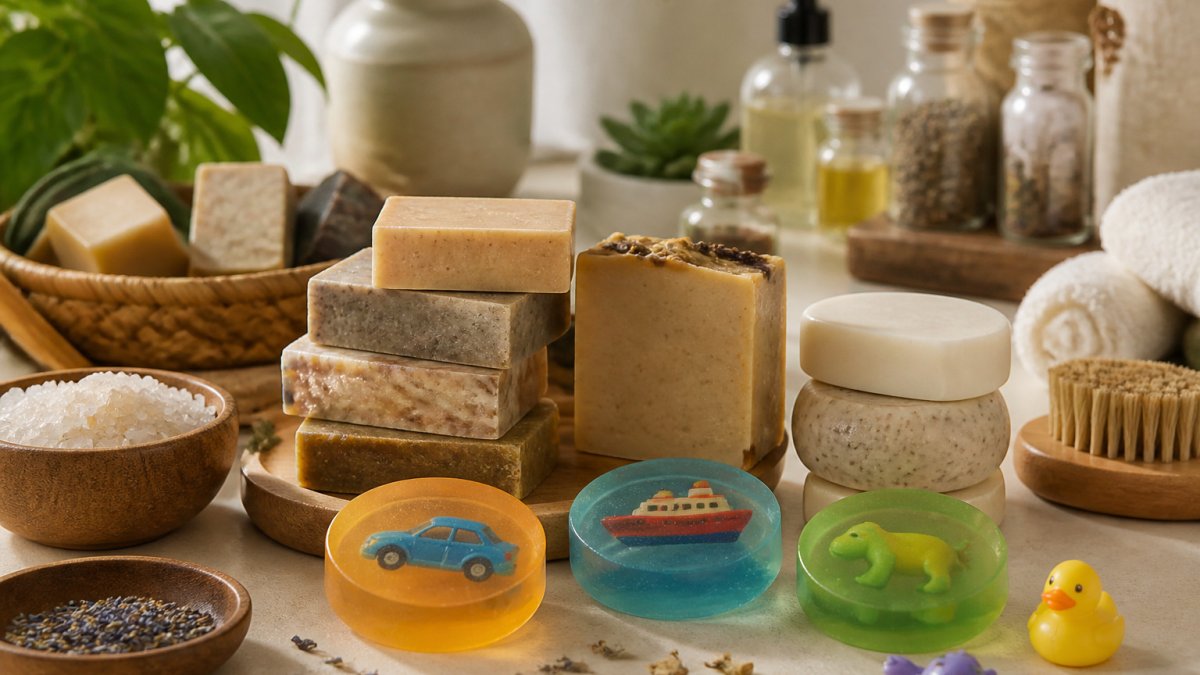
Kids soap with toy inside transforms bath time from a chore into an adventure, combining soap's cleaning function with the excitement of discovering a hidden toy. At FORYOURSOAP.COM, our kids soap with toy inside options bring joy to bath time while maintaining the quality of our chemical-free formulations.
The appeal is straightforward: children are motivated to use the soap because they're working toward the reward of the embedded toy. As they wash, the soap gradually dissolves, revealing the surprise inside, which encourages good hygiene habits without making bath time feel like an obligation.
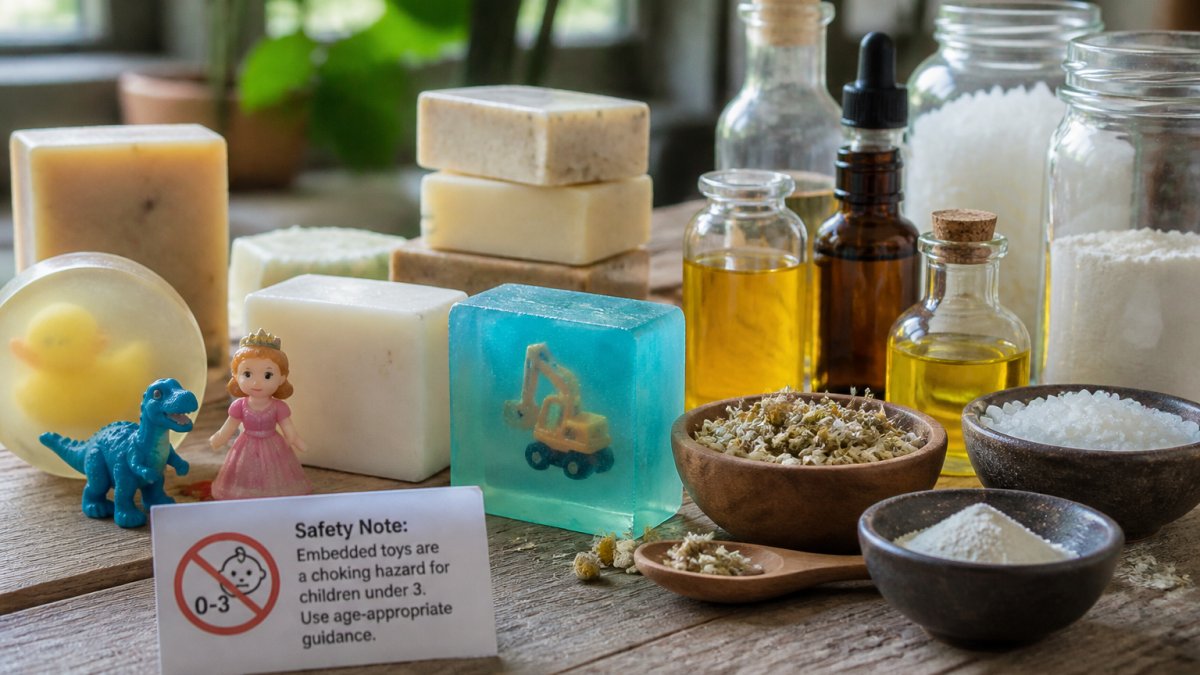
Safety is non-negotiable with kids soap with toy inside. The embedded toy poses a choking hazard for children under 3 years old (Small Parts Ban and Choking Hazard Labeling). These products are appropriate only for children ages 3 and up who can understand not to put small objects in their mouths. Parents should supervise bath time and remove the toy immediately once the soap has dissolved enough to release it safely.
Our kids novelty soap line uses the same natural ingredients and chemical-free formulations as our adult soaps, so children's skin is treated gently while they play. The embedded toys are designed to be large enough to pose minimal choking risk once released, and adult supervision is recommended during use.
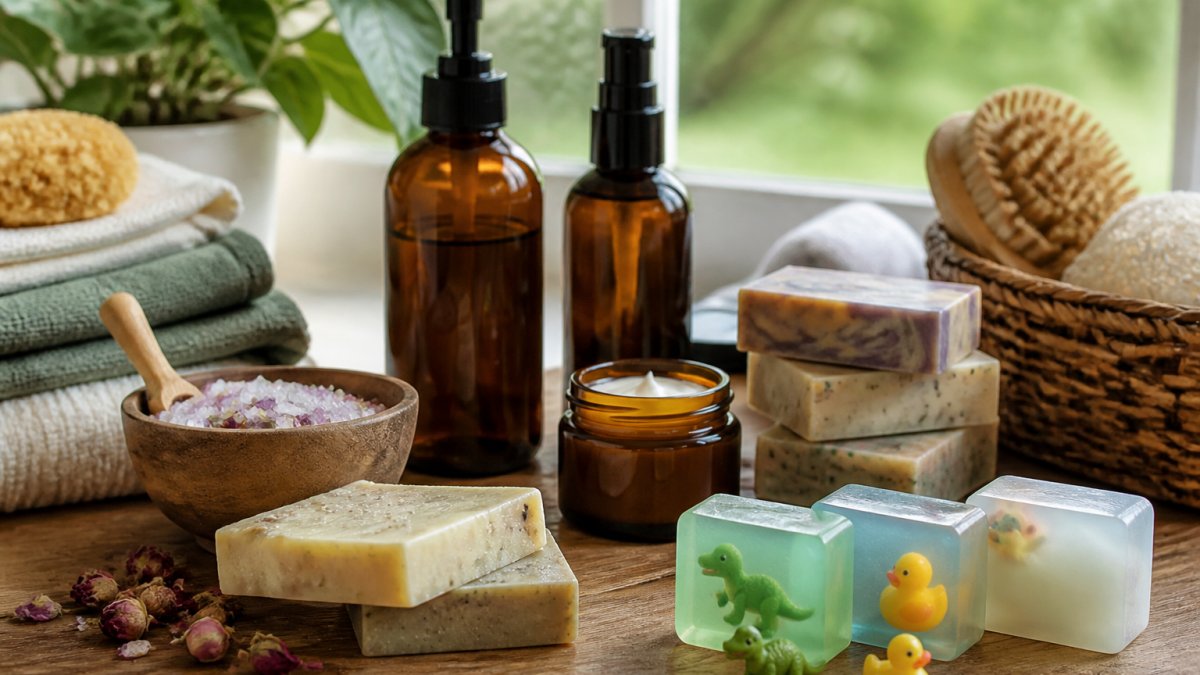
We now have photos of our kids soaps on our product pages, showing the soap design, the embedded toy, and the overall quality. Browse our kids soap collection to find the perfect bath-time companion, whether it's a birthday gift, party favor, or just a way to make daily washing more fun.
Why the Switch to Chemical-Free Bath Products Makes Sense
Bath time involves far more than a bar: bath soaks, salts, bubble products, oils, and products made for children.
Bar soap and body wash. Handmade, chemical-free soap preserves the natural glycerin that forms during saponification, while commercial manufacturers often remove it, leaving a bar that cleans but leaves skin tight.
Bath soaks and salts. Epsom salt (magnesium sulfate) and mineral bath salts are simple by nature, but the fragrance and dye in many commercial versions are the usual irritants.
Bubble baths and bath oils. These are the highest-risk category for sensitive skin because they leave residue on the skin and are often heavily fragranced.
The trade-offs are real. Fragrance-free products usually cost more per ounce than mass-market bars and may lather differently because they lack synthetic surfactants. Scented natural soaps fade faster on the shelf than synthetic fragrances.
Suitability by skin type. Dry skin: look for soaps high in olive oil or shea butter, and consider fragrance-free. Sensitive or allergy-prone skin: start fragrance-free and patch test. If you tolerate fragrance, essential-oil-scented soaps offer scent without synthetic blends.
Environmental effects. Natural soaps and mineral soaks are generally biodegradable and break down in water systems rather than accumulating as synthetic residues, a secondary but real benefit for anyone weighing what goes down the drain.
Cost over time. Handmade bars made with natural oils are denser and dissolve more slowly than many commercial bars.
A note on our kids' line. Our kids soap with toy inside collection covers kids soap with toy inside, surprise toy soap, kids novelty soap, bath soap with toy, and party favor soap in one place. Safety comes first: the embedded toy is a choking hazard for children under 3, and these products are intended for ages 3 and up with adult supervision. Remove the toy as soon as the soap dissolves enough to release it. We now have photos of the kids soaps on our product and sample pages so you can see the design, the embedded toy, and the finish before you buy. Browse the kids soap collection or request a sample to see the quality for yourself.
Frequently Asked Questions
What does 'chemical-free' mean for bath products?
Chemical-free doesn't mean products contain zero chemicals, everything is made of chemicals, including water and salt. Instead, it refers to bath products formulated without synthetic additives, harsh cleansers like sulfates, artificial fragrances, and potentially irritating preservatives. Natural bath products rely on plant-based ingredients, essential oils, and gentler preservation methods. This distinction matters for skin health, especially for those with sensitive skin or conditions like eczema.
Are chemical-free bath products better for sensitive skin?
For many people with sensitive skin, chemical-free options work better because they skip harsh sulfates, synthetic fragrances, and synthetic preservatives that trigger irritation and allergies. However, natural doesn't automatically mean hypoallergenic, some people react to essential oils or specific plant ingredients. The key is identifying which ingredients your skin tolerates. Fragrance-free formulations and products with minimal ingredient lists tend to be safest for sensitive skin conditions like dermatitis and eczema.
How can I tell if a soap is truly chemical-free and not just marketing?
Check the ingredient list on the product label, it's your best defense against greenwashing. Look for recognizable plant-based names (coconut oil, shea butter, lavender) and avoid terms like 'fragrance' or 'parfum,' which hide synthetic scent chemicals. Certifications like USDA Organic or EWG Verified add credibility, though they're not required. Shorter ingredient lists are generally safer. Reputable artisan soap makers publish full ingredient transparency and explain what each component does.
Is fragrance-free soap better than soap scented with essential oils?
It depends on your skin. Fragrance-free soaps eliminate the risk of synthetic fragrance irritation and are ideal for severely sensitive skin or eczema. Essential oil-scented soaps offer natural fragrance and aromatic benefits, but some people still react to them. Essential oils are plant-derived but concentrated, they can irritate reactive skin. If you have mild sensitivity, essential oil soaps may work fine. If your skin is very reactive, fragrance-free is the safer choice.